


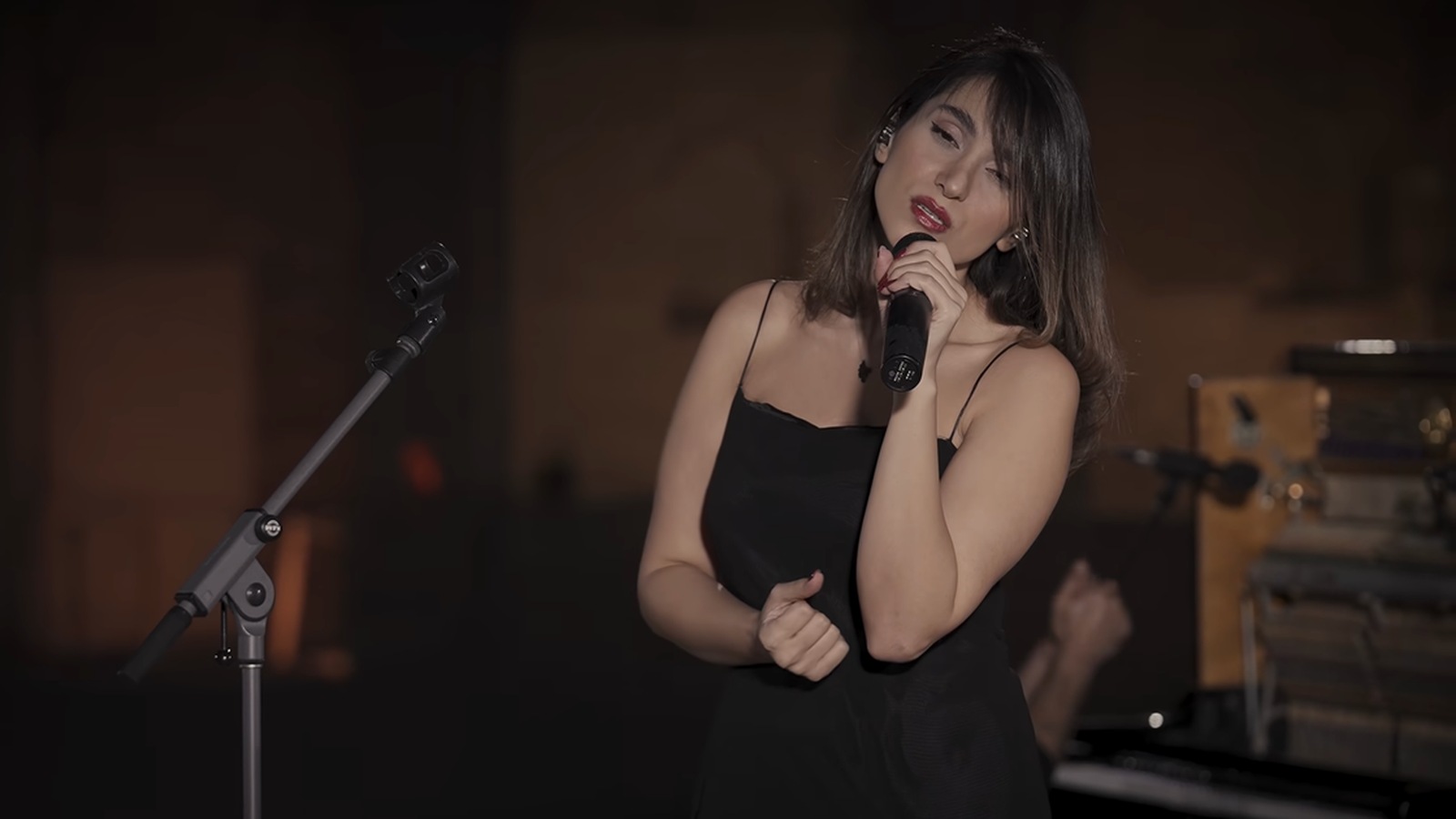
Execution of Sentence in Qom
On November 23, 2026, the Iranian singer Parastoo Ahmadi and four members of her production team underwent a brutal judicial punishment, receiving 74 lashes each at the Sentence Enforcement Unit of the Qom Prosecutor’s Office. This sentence was the culmination of a protracted legal ordeal that began following a livestreamed concert in December 2024 at the historic Deir-e Gachin caravanserai. In that performance, Ahmadi appeared without a hijab and performed alongside male musicians—acts that were deemed by the Iranian judiciary as clear violations of the country’s strict laws regarding modest dress and the prohibition of women singing in public. The legal process saw the group convicted in June 2026 of “outraging public decency” and producing “immoral” content. Despite the rigorous efforts of defense attorneys, including prominent lawyer Mostafa Nili, to secure a suspension or reduction of the sentence, an appeals court upheld the ruling in September 2026. The authorities proceeded with the physical punishment shortly thereafter, as reported by outlets such as AOL and CBS News. Beyond the lashing, Ahmadi and eight members of her team were handed a two-year ban on all “artistic activity” and a corresponding two-year travel ban, effectively severing her formal ties to the cultural sector of the Islamic Republic.
A Flashpoint for Resistance
The state’s decision to utilize corporal punishment against an artist has transformed Parastoo Ahmadi into a potent symbol of defiance. While the Iranian government frames the case as a matter of enforcing existing statutes, public perception—particularly among Iranian women—reveals a profound sense of shared victimhood and psychological resilience. For many, the lashes delivered to Ahmadi are not viewed merely as a disciplinary measure against a specific individual, but as an assault on the fundamental rights of all citizens to express themselves freely. Interviews conducted by Western media outlets underscore this shift in perspective. Marjan, a 41-year-old optician from Karaj, articulated this sentiment during a recent conversation with CBS News, stating that she felt a visceral connection to Ahmadi’s suffering, describing it as an experience of being “flogged for doing what I want.” This reaction highlights a broader trend in Iranian society where artistic expression, especially by women, has become inextricably linked to the struggle for bodily autonomy and political freedom.
This is not the first time Ahmadi’s work has been seen as a challenge to state authority. Her 2022 rendition of the song “From the Blood of the Youth of the Homeland” gained massive popularity during the “Woman, Life, Freedom” movement, positioning her as an influential voice against state-imposed restrictions. Supporters argue that the state’s harsh reaction is a testament to its fear of independent voices that operate outside the regime’s carefully curated narrative. The act of holding an “imaginary concert” in an empty venue was, by its very design, an attempt to bypass the rigid constraints of the formal stage, yet the online reach of her performance provided the exact evidence the judiciary required to move against her and her collaborators, including Mohsen Lashkari, Soheil Faghih-Nasiri, Amin Taheri, and Amir-Ali Pirnia.
Legal and Artistic Constraints
The legal arguments presented by the prosecution centered on the categorization of the concert as “obscene and indecent material.” However, human rights experts and legal observers, such as attorney Moein Khazaeli, have frequently challenged the premise of these charges, noting that the act of singing and performing music does not constitute a criminal offense under standard interpretations of the law. Critics argue that the expansion of “public decency” laws to include any performance by a woman without a head covering is a deliberate tool of state control, intended to enforce uniformity through fear. The two-year ban on artistic endeavors is designed to achieve a forced silence, ensuring that Ahmadi’s influence is curtailed within the borders of Iran. Yet, the viral nature of her performance suggests that such digital footprints are difficult to fully erase.
The cultural impact of this case reaches beyond the borders of the country. Actors like Nazanin Boniadi have spoken out against the sentencing, characterizing it as a reminder that the apparatus of repression within the country remains firmly intact despite various geopolitical discussions. The case of Parastoo Ahmadi serves as a stark illustration of the conflict between an artist’s personal conviction and a state that views non-conformity as a security threat. By choosing to perform in a historic site that bridges the gap between Iran’s rich past and its contentious present, Ahmadi utilized the power of history to highlight the fragility of contemporary freedoms. The public response suggests that the state’s efforts to suppress her have only served to cement her legacy as an icon of resistance, ensuring that her voice—even when formally silenced—remains a rallying cry for those who advocate for the basic human right to create and live without state-mandated restrictions.
As the legal and social dust settles on this incident, the situation remains a critical benchmark for observers tracking the intersection of human rights, creative freedom, and state-sanctioned repression in Iran. The transition from judicial sentencing to physical punishment highlights the regime’s shift toward direct, corporal deterrence, yet the ongoing public discourse indicates that such measures have not fully achieved the goal of psychological submission. For the time being, Ahmadi and her team are sidelined from public performance, but the ripple effects of her 2024 concert continue to circulate in the public imagination, framing the narrative of artistic defiance for a new generation of listeners in Iran.