


What the photograph shows
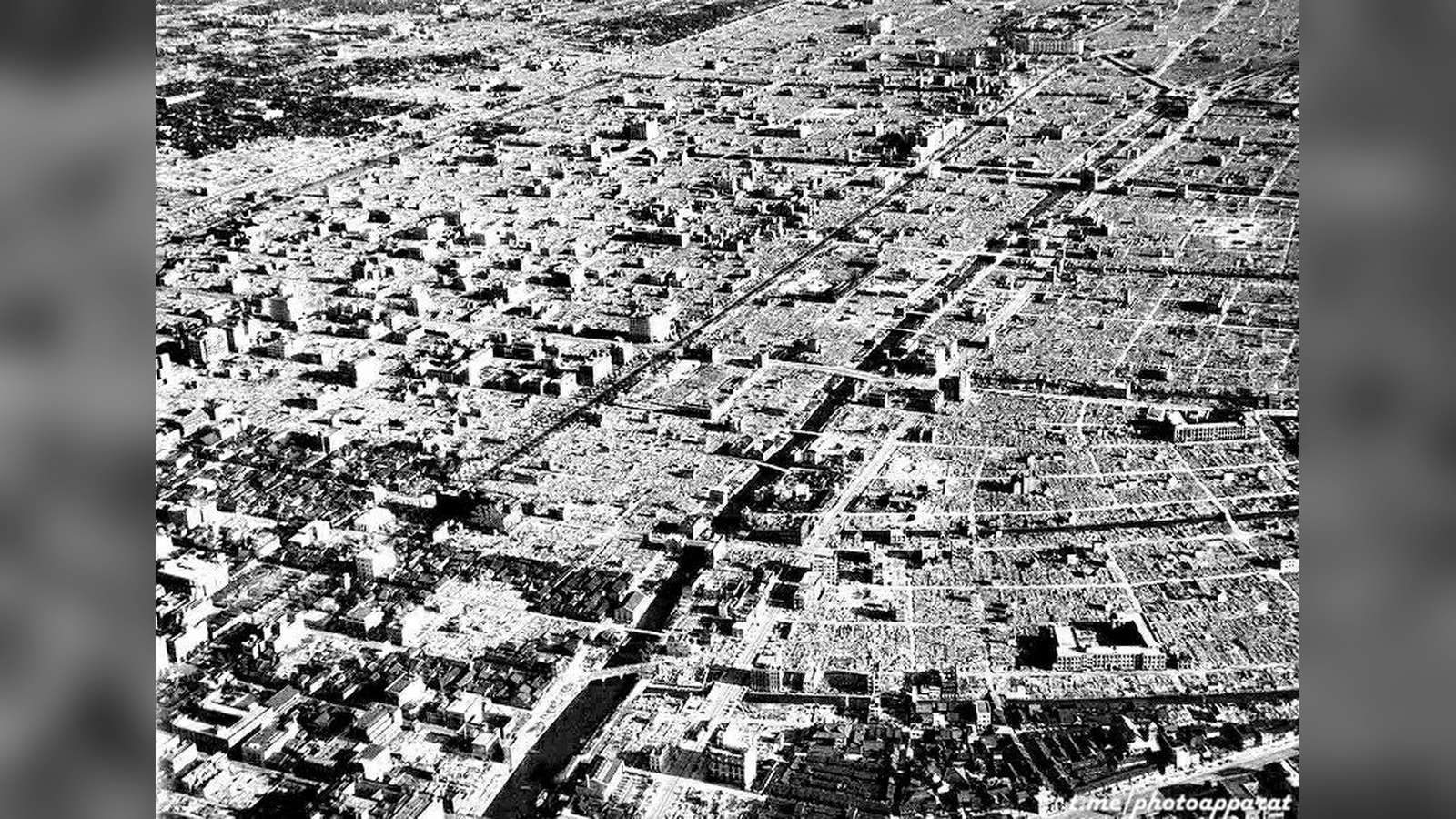
This stark, high-altitude aerial photograph captures the immediate, desolate aftermath of the firebombing of Tokyo, specifically targeting the city’s densely packed residential and industrial sectors. From the perspective of the reconnaissance camera, the organic, bustling layout of a major metropolis has been reduced to a haunting, monochromatic grid of ash and scorched foundations. The image reveals a landscape where the familiar patterns of streets are still visible, but the structures that once defined them have been obliterated. The visual texture is dominated by deep, charcoal-gray tones, indicating the total combustion of wooden housing. There is a chilling, clinical detachment in the frame; it does not show individual suffering, but rather the macro-level success of a tactical plan intended to erase a city’s ability to function.
The moment behind the image
The photograph documents the aftermath of ‘Operation Meetinghouse,’ a strategic firebombing raid launched on the night of March 9–10, 1945. Under the command of General Curtis LeMay of the XXI Bomber Command, 334 B-29 Superfortress bombers were deployed to Tokyo. Departing from the previous strategy of high-altitude precision bombing, these aircraft flew at significantly lower altitudes—between 5,000 and 9,000 feet—to maximize the impact of their incendiary payloads. The crews dropped hundreds of thousands of M-69 incendiary clusters, designed specifically to ignite the thin, wooden walls and paper shoji screens of Japanese urban architecture. The resulting conflagration was so intense that it generated its own localized weather system, a firestorm that sucked oxygen from the streets and created temperatures that melted glass and metal. The raid destroyed 16 square miles of the city, leaving over one million people homeless and creating a human catastrophe that remains one of the most lethal air raids in history.
Photographer and provenance
This image is a product of military reconnaissance. It was captured by a specialized U.S. Army Air Forces (USAAF) photo-reconnaissance unit, likely flying a modified B-29 or a dedicated scouting aircraft in the days immediately following the March 10 raid. These missions were commissioned to provide military planners with ‘bomb damage assessment’ (BDA) data. The photographers, often anonymous in the official records, worked under strict military orders to document the physical effectiveness of the new firebombing doctrine. The images were processed in mobile labs and shipped to headquarters in Guam or back to Washington to validate the strategic shift in the Pacific theater. While the individual behind the lens remains unknown, the photograph is part of the extensive visual record held by the U.S. National Archives and Records Administration (NARA), serving as a permanent, if grim, piece of military history. The clinical nature of the shot reflects the technical requirement for clarity over artistic intent, yet it inadvertently provides a harrowing record of the scale of destruction.
Historical context
The firebombing of Tokyo represents a pivotal and controversial shift in the American approach to the Pacific War. By early 1945, the U.S. military was frustrated by the slow progress of high-altitude precision bombing, which had been hampered by high-altitude winds and the decentralized nature of Japanese war production. General Curtis LeMay, recognizing the vulnerability of Japanese urban infrastructure, ordered the transition to night-time area bombing. This tactic effectively targeted the civilian populace living in proximity to small-scale industrial sites. The moral ambiguity of this decision haunted the commanders involved. LeMay famously admitted in his later years, ‘I suppose if I had lost the war, I would have been tried as a war criminal.’ This raid was not an isolated event but the opening of a campaign that would eventually target over 60 Japanese cities, leading to the total collapse of the Japanese home front long before the atomic bombings of Hiroshima and Nagasaki.
Why it still matters
This photograph serves as a haunting reminder of the human cost of industrial-scale, ‘total’ warfare. By looking down at the ruins from the detached perspective of the aerial camera, the viewer is forced to confront the chilling, mechanical logic of modern combat. It stands as a testament to the night that fundamentally changed the nature of the Pacific war, marking the transition into the final, desperate months of the conflict. It remains an essential artifact for historians and a sobering visual record of the devastating capacity of aerial bombardment to reshape the human landscape in a matter of hours. The image challenges us to consider the fine line between strategic necessity and the erasure of civilian existence, a theme that resonates through the history of 20th-century warfare.