


What the photograph shows
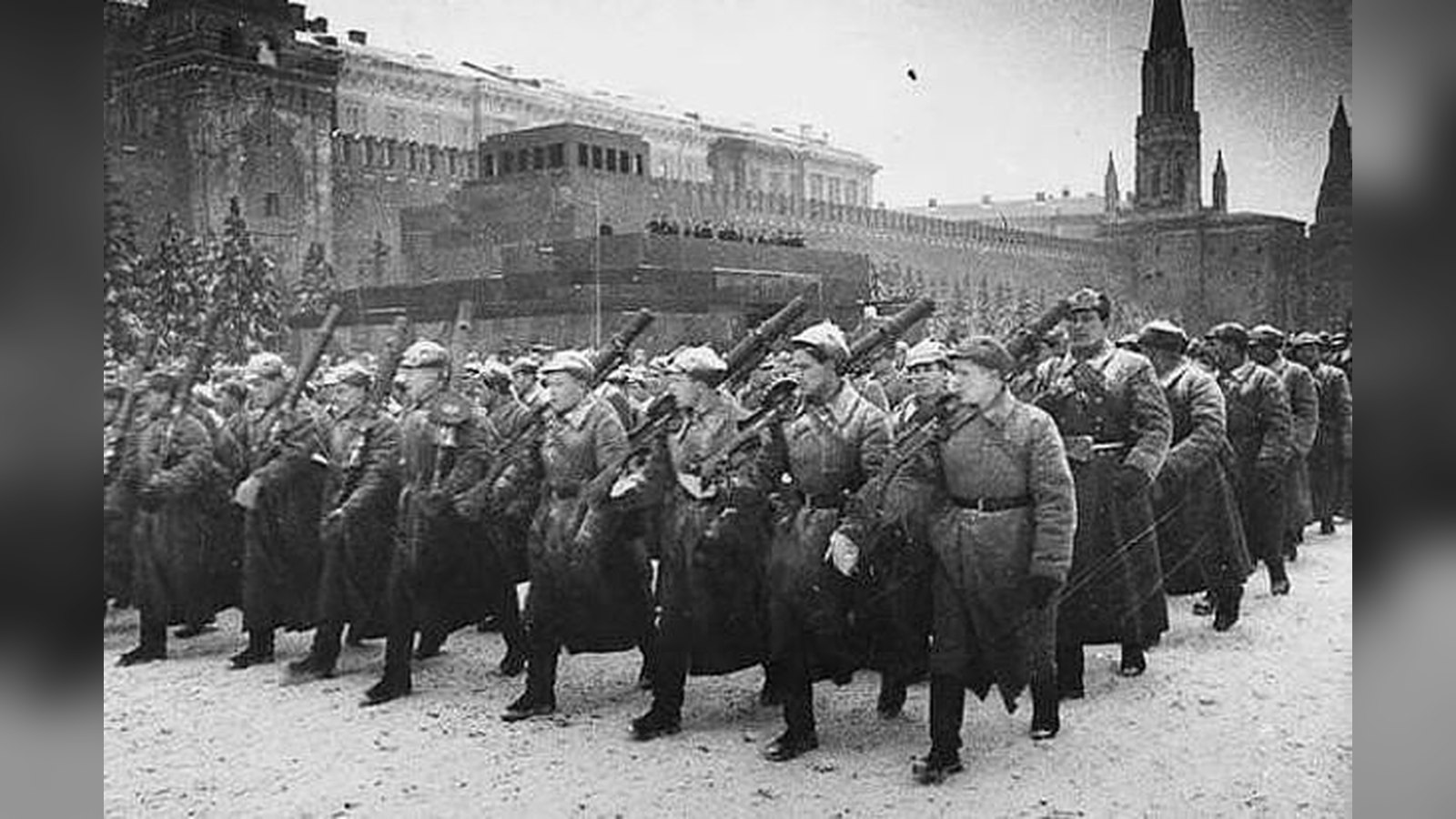
The photograph captures a young man in the standard-issue tunic of a Red Army soldier, his face frozen in a moment of quiet, perhaps naive, determination. The grain of the film softens the edges of his uniform, but the clarity of his eyes—fixed just beyond the camera lens—demands an uncomfortable intimacy. He is a boy, barely out of adolescence, yet his posture is stiffened by the weight of the rifle and the gravity of the era. This image is not merely a portrait; it is a representative fragment of an entire generation that was destined to vanish.
The moment behind the image
This photograph is emblematic of the millions of snapshots taken in the Soviet Union between 1941 and 1945. It represents the ‘1923 cohort’—the young men who turned 18 just as the Wehrmacht launched Operation Barbarossa. These were the boys who, having graduated from school or begun apprenticeships, were immediately swept into the meat grinder of the Great Patriotic War. The shutter click captured a singular individual, but historians use this image to illustrate a collective tragedy: for the cohort born in 1923, the survival rate was abysmal. By the war’s end, the demographic data suggests that roughly 80% of these young men were dead, missing, or permanently disabled.
Photographer and provenance
Like many images of the era, the specific photographer and the exact date of this portrait are often lost to history, frequently circulating in archives as anonymous snapshots found in family collections or state-run wartime propaganda repositories. Many such photos were taken by military correspondents or fellow soldiers using portable cameras, intended for families back home. The survival of such an image—often retrieved from the pockets of fallen soldiers or preserved by grieving mothers—transforms a generic military portrait into a personal relic of a lost life.
Historical context
The statistics surrounding the 1923 birth year are among the most chilling in modern demographic history. When the Soviet Union mobilized for war, the 1923-born generation was the primary pool for the initial waves of infantry replacements. They were sent to the front lines during the most desperate years of the conflict, particularly during the brutal battles of 1942 and 1943. Because they were at the ideal age for infantry service, they suffered disproportionately high casualty rates. This demographic void created a ‘missing generation’ that left a permanent scar on the Soviet population structure for decades to follow.
Why it still matters
Looking at this face today, we are forced to reconcile the individual with the statistic. It is easy to cite the 80% figure, but it is harder to look at the eyes of a boy who likely never held a job, married, or raised a child. This photograph serves as a visual anchor for the human cost of industrial-scale warfare. It reminds us that behind every terrifying percentage point in a history textbook is a human being whose story was cut short, leaving behind only a piece of paper and a memory of what might have been.