


Escalating Demands for Aviation Infrastructure
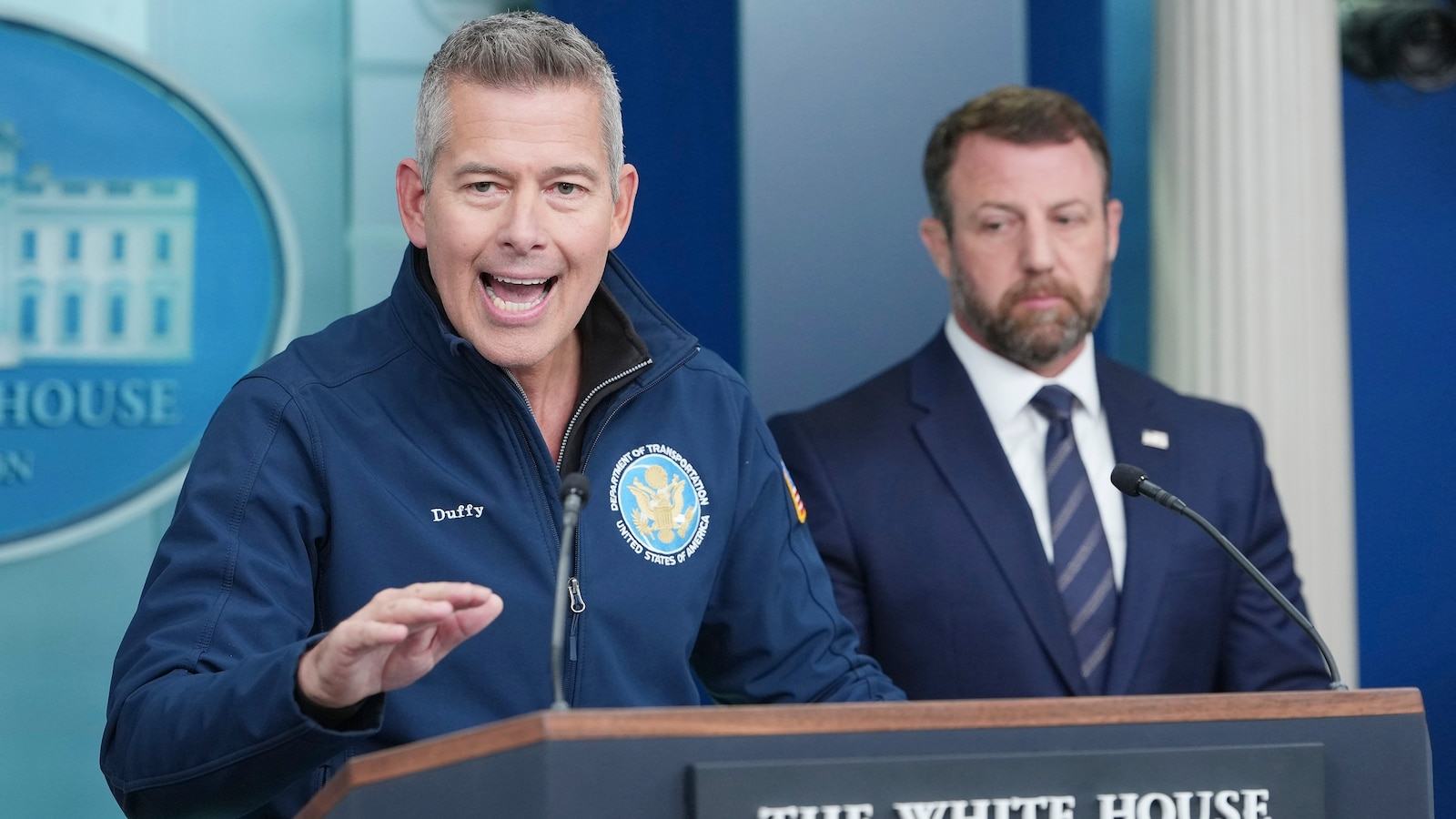
Following a massive nationwide ground stop that paralyzed U.S. air travel on November 13, 2026, U.S. Transportation Secretary Sean Duffy has formally requested an additional $50 billion from Congress to overhaul the Federal Aviation Administration’s (FAA) air traffic control infrastructure. The request, which was emphasized during a press conference on Saturday, November 14, represents a significant escalation in federal funding demands aimed at addressing systemic vulnerabilities within the national airspace. This latest ask arrives as the Department of Transportation (DOT) faces mounting pressure to modernize aging digital architecture and airport facilities, a process that has seen the requested figures balloon significantly over the past twelve months.
According to reports, the funding trajectory for these modernization efforts has shifted dramatically. In 2025, Congress appropriated $12.5 billion for air traffic control as part of the “Working Families Tax Cuts Act,” a bill signed by President Donald Trump. However, by September 2026, FAA Administrator Bryan Bedford testified that the agency required only an additional $10 billion to meet its modernization goals. Secretary Duffy subsequently raised that figure to $30 billion before the recent ground stop, finally settling on the current $50 billion target in the immediate aftermath of the November 13 incident.
The Path to Modernization and Fiscal Justification
Secretary Duffy has justified this record-breaking $50 billion request as a vital, non-negotiable investment required to ensure the long-term reliability of the U.S. aviation system. During his Saturday press conference, he contended that the initial $12.5 billion appropriation served merely as a down payment. He argued that the new, larger sum is intended to cover a comprehensive suite of upgrades, including the digitization of communications, the reconstruction of outdated airport infrastructure, and the construction of a brand-new air traffic control system. Despite the scale of this request, the DOT has yet to provide a detailed line-item breakdown of how the $50 billion will be allocated, a point of contention that has drawn criticism from fiscal hawks on Capitol Hill.
The secretary’s push for funding has nonetheless gained traction among key industry leaders. United Airlines CEO Scott Kirby publicly endorsed the request, stating on LinkedIn that the recent ground stop serves as a “call to action” for the federal government to prioritize full staffing and technological modernization to ensure safety and economic stability. Kirby emphasized that the FAA’s workforce, while dedicated, requires the necessary financial support to operate at 100% capacity. This industry backing provides a layer of political cover for the DOT as it navigates the complex legislative environment of the current lame-duck session.
Political Friction and Congressional Accountability
The proposal faces a complex reception on Capitol Hill, where the secretary is scheduled to meet with Senate Republicans. While some lawmakers acknowledge the necessity of infrastructure investment, others have expressed deep skepticism regarding the rapid growth of the funding request. Senator John Hoeven, R-South Dakota, a member of the Senate Appropriations Committee, noted that while certain communications technology upgrades are essential, the committee will demand rigorous accountability for how previous funds were utilized and how new capital will be managed. The tension is amplified by the fact that significant portions of the $12.5 billion allocated in 2025 remain unspent.
The legislative landscape is further complicated by the fact that the 119th session of Congress is set to conclude on January 3, 2027, with government funding currently relying on a short-term extension of fiscal year 2026 levels. Lawmakers who previously backed the $12.5 billion in the 2025 legislation now face the challenge of evaluating whether an additional $50 billion is a sustainable fiscal path or if the DOT must first demonstrate the efficacy of its existing modernization programs. Secretary Duffy has defended the lack of progress on existing funds by citing restrictive legislative parameters, claiming the DOT does not have the legal flexibility to move funds between specific workstreams, such as telecommunications and radar upgrades, without further congressional action.
Contrasting Perspectives on Governance
The debate has evolved into a broader critique of the administration’s management style. Representative Rosa DeLauro, the incoming chair of the House Appropriations Committee, characterized the request as a “$50 billion ransom” delivered without a transparent plan. Democrats have pointed to the fact that billions in funding from the 2021 Infrastructure Investment and Jobs Act remain stalled, accusing the current administration of failing to act as a competent partner in infrastructure delivery. In contrast, House Speaker Mike Johnson has signaled an openness to the request, stating that Congress intends to work on an aggressive legislative package to finish the year strong, acknowledging that some equipment currently in use dates back to the 1980s.
As the administration prepares to present its case to congressional leaders, the core conflict remains: the tension between the urgent need for technological parity in the national airspace and the demand for fiscal oversight. With the government facing a potential funding cliff on December 12, the window for negotiation is narrow. The outcome of the upcoming meetings between Secretary Duffy and Senate leadership will likely determine whether this $50 billion request is treated as a strategic national priority or a contentious point of partisan debate that forces the administration to return to the drawing board with more granular, evidence-based spending plans.
Reporting source: abcnews.com.