


Joint Base Andrews – U.S. President Donald Trump publicly addressed reports surrounding his covert departure from Turkey last month, confirming that the decision to employ a passenger-filled "decoy" Air Force One and secretly transfer him to a secondary military aircraft was directed entirely by the U.S. Secret Service and military commanders.
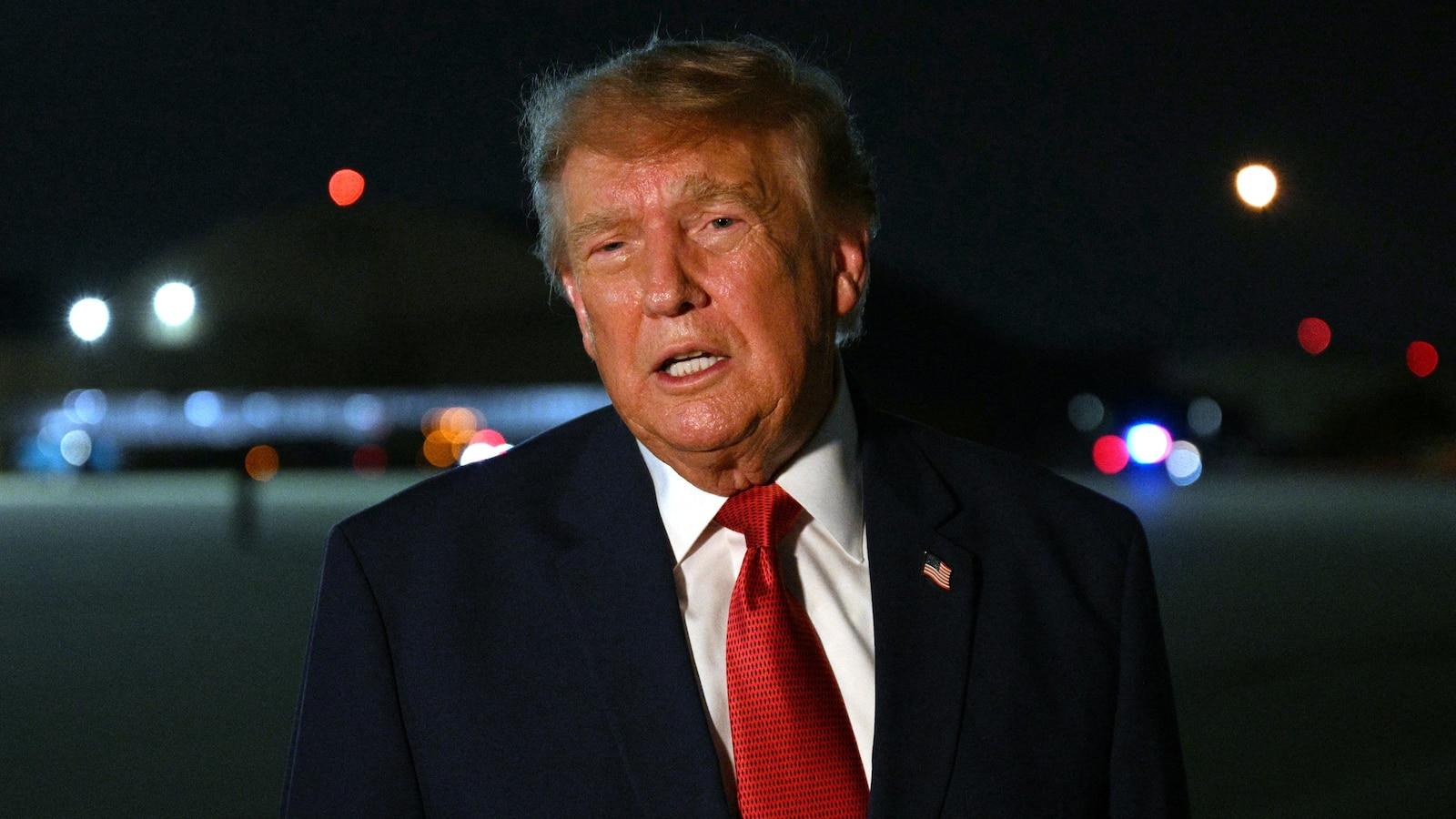
Speaking to reporters on the tarmac at Joint Base Andrews following an official visit to Ohio, Trump emphasized that he was simply following protocols established by his protective detail. "It’s only up to Secret Service. I just follow what they’d like to do," Trump said. "So I go by Secret Service and the military. They wanted me to go on a different flight, a different plane. Equal safety. But they wanted me to do it, so I do it. I do what they say."
The clandestine operational maneuver, first detailed in investigative reporting by The Washington Post and subsequently confirmed by government sources to ABC News, involved an elaborate logistical sequence. According to individuals familiar with the departure, Trump was transferred from the primary presidential Boeing VC-25 aircraft to an unmarked military transport plane using a specialized catering container vehicle at a Turkish airfield. The transfer was executed without the knowledge of the traveling White House press pool or the majority of presidential staff members aboard the main aircraft.
Mechanics of the Decoy Operation and Cabinet Division
The secrecy surrounding the operation extended into the highest ranks of the administration, creating a calculated division among Cabinet officials. Key national security and economic advisors were strategically placed on both aircraft to maintain normal operational appearances while ensuring continuity of government under heightened security protocols.
Sources confirmed that Secretary of State Marco Rubio and Treasury Secretary Scott Bessent were positioned aboard the main "decoy" Air Force One alongside standard presidential staff and accredited journalists. Meanwhile, Defense Secretary Pete Hegseth traveled on the unmarked military aircraft alongside Trump. All three Cabinet officials were fully briefed on the security rationale behind the split and the necessity of keeping the presidential transfer concealed during the transit out of Turkish airspace.
To prevent any visual detection or radio tracking from exposing the president’s absence, security teams implemented stringent protocols aboard the decoy jet. Reporters and staff traveling on the primary Air Force One were instructed by Secret Service personnel to keep all window shades strictly closed for the entire duration of the flight. Furthermore, official tracking data indicates that the primary aircraft’s transponder was turned off during critical flight corridors—an extraordinary safety precaution typically reserved for high-threat zones.
Risk Assessment and Threat Environment
When questioned directly about whether specific intelligence prompted the rapid adoption of decoy tactics, Trump downplayed personal concern while arguing that the secondary aircraft carried significant danger. "I guess there was a threat out there. I didn’t really ask too much about it. I get a lot of threats," Trump stated, adding his perspective that the non-standard military aircraft was potentially more vulnerable. "I think actually the plane that I flew on was at greater risk… because that would be the plane I think that they would be more likely to go for."
The covert departure occurred against a backdrop of heightened regional tensions and elevated threat advisories in the Middle East, particularly involving state-backed threats from Iran. Prior to the trip, public interest had focused on presidential transport choices, with Trump publicly claiming he would fly on the older Air Force One model rather than a recently gifted Qatari Boeing 747-8, citing plans to send the newer airframe to a U.S. military base in the U.K. for service member tours. However, security agencies had advised against using specific platforms due to actionable security assessments.
Responding to inquiries regarding the breach of traditional transparent protocols, the White House issued an official statement noting, "As the President has said recently, there are many enemies of America who have their sights on him, and we use every tool at our disposal to address those threats."
Media Protocols and Historical Precedent
The revelation that the presidential press pool was intentionally misled about Trump’s location during an international flight has reignited debates over executive security balance and presidential transparency. Under longstanding traditions governed by the White House Correspondents’ Association, representative media pools accompany the president to provide continuous public accounting of the commander-in-chief’s movements, especially during foreign travel.
While the secrecy of the Turkey departure stands out for its elaborate staging, security experts note that deceptive transport strategies have precedent in modern presidential logistics. In March 2000, President Bill Clinton utilized an unmarked secondary aircraft during a sensitive visit to Pakistan following intelligence warnings regarding surface-to-air missile threats. During that operation, press members flew on the main presidential aircraft while Clinton disembarked separately under heavy guard, with details confirmed to the press corps only after arrival.
As Congress and security analysts evaluate the operational execution of the recent flight, federal protective agencies maintain that deceptive tactics remain essential tools when countering state and non-state threats against executive leadership.