


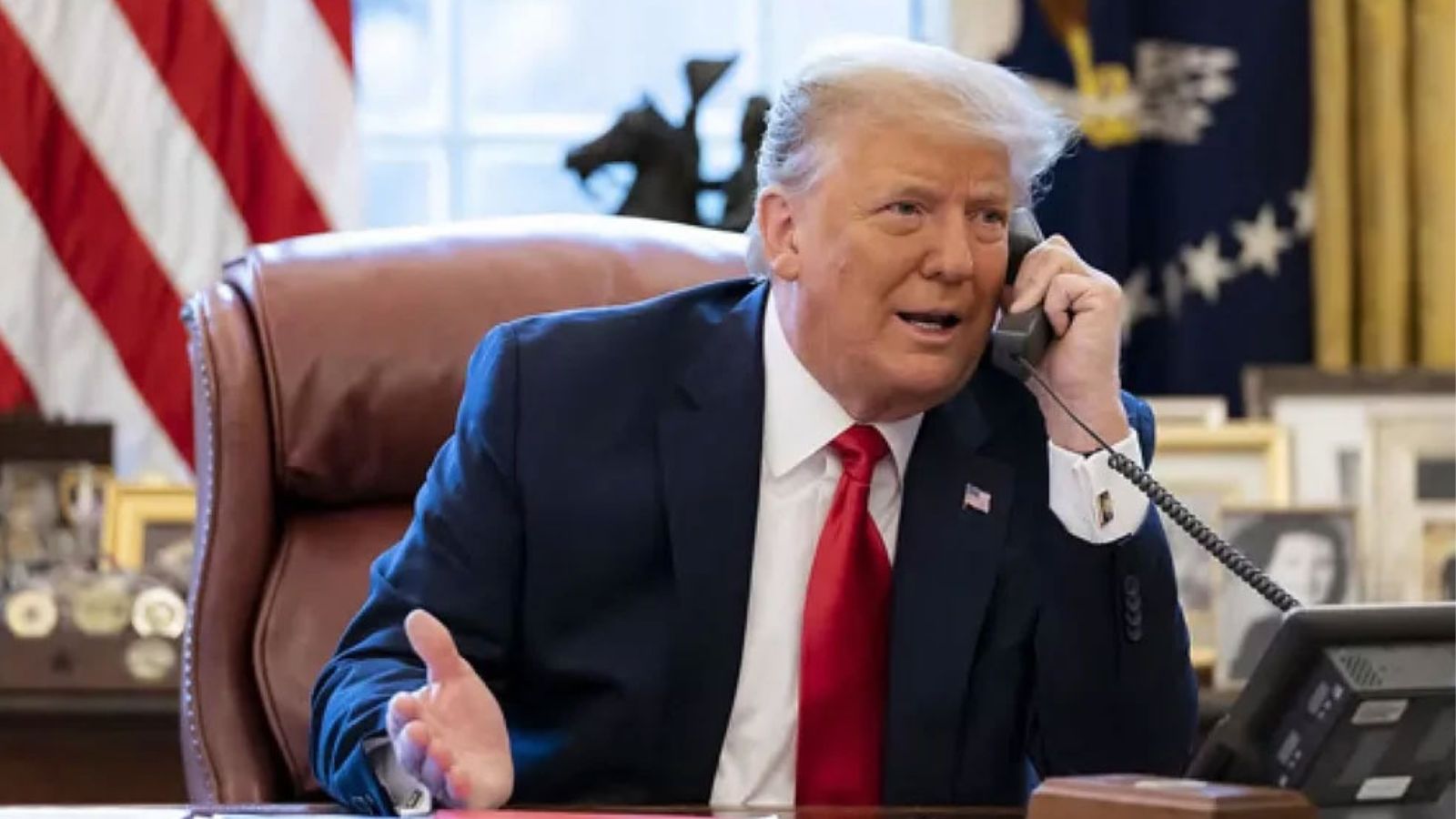
- Donald Trump had an effective conversation with Mexico’s president.
- Border issues were among the topics discussed.
- Trade relations were also on the agenda.
- The Armenian-language report offered no detailed outcomes.
In a move illustrating ongoing diplomacy between the United States and Mexico, an Armenian-language report described a productive conversation between Donald Trump and Mexico’s president. The account frames the exchange as constructive, with both leaders addressing bilateral issues that have long assumed a central role in their relationship. While the Armenian report does not provide a verbatim record, it signals that the two leaders found common ground in a discussion that touched on security at the border and the economic ties that bind their two economies.
According to the report, border issues were among the topics discussed. The article notes that the talk covered border management, migration considerations, and law enforcement cooperation. The text does not reveal any specific policy proposals, timelines, or formal commitments. Observers caution that such reports often reflect a high-level, outcomes-oriented framing rather than granular detail and should be weighed alongside official statements from either government.
On trade, the Armenian-language summary indicates attention to cross-border commerce and investment. It references the broader framework of bilateral trade, including the mechanics of supply chains and the movement of goods and services across the border. Again, the report does not disclose concrete steps or announced agreements, leaving room for subsequent clarification from official channels.
Context matters for readers unfamiliar with the cadence of US-Mexico diplomacy. The two sides have a long history of negotiating on energy, manufacturing, and agricultural trade, and more recently have focused on supply-chain resilience and regional economic integration. High-level conversations like the one described can set the tone for future negotiations, signal willingness to engage, and help maintain stable channels even when domestic political winds shift away from or toward more protectionist stances.
Analysts and international watchers often scrutinize these disclosures for signals about policy direction. In this case, the Armenian report’s emphasis on border security and economic ties points to the persistent prioritization of border management and trade facilitation as shared interests. Because no official communiqués accompanied the Armenian narrative, readers should seek confirmation from the Mexican presidency and from Trump’s camp before drawing conclusions about timing, scope, or enforcement actions.
Beyond the specifics of this encounter, the episode underscores how bilateral diplomacy unfolds in a global environment where public statements are measured, and details can lag behind optics. For international audiences, the report offers a snapshot of ongoing engagement and the enduring importance of cross-border cooperation in North America, a relationship that continues to shape regional stability, investment, and the daily lives of people who live in border communities.
In the broader sense, today’s reported conversation underscores the continued role of high-level dialogue in managing a complex bilateral relationship; while the Armenian report provides limited operational detail, it signals a willingness on both sides to maintain communications that could enable concrete steps should future conditions align.