


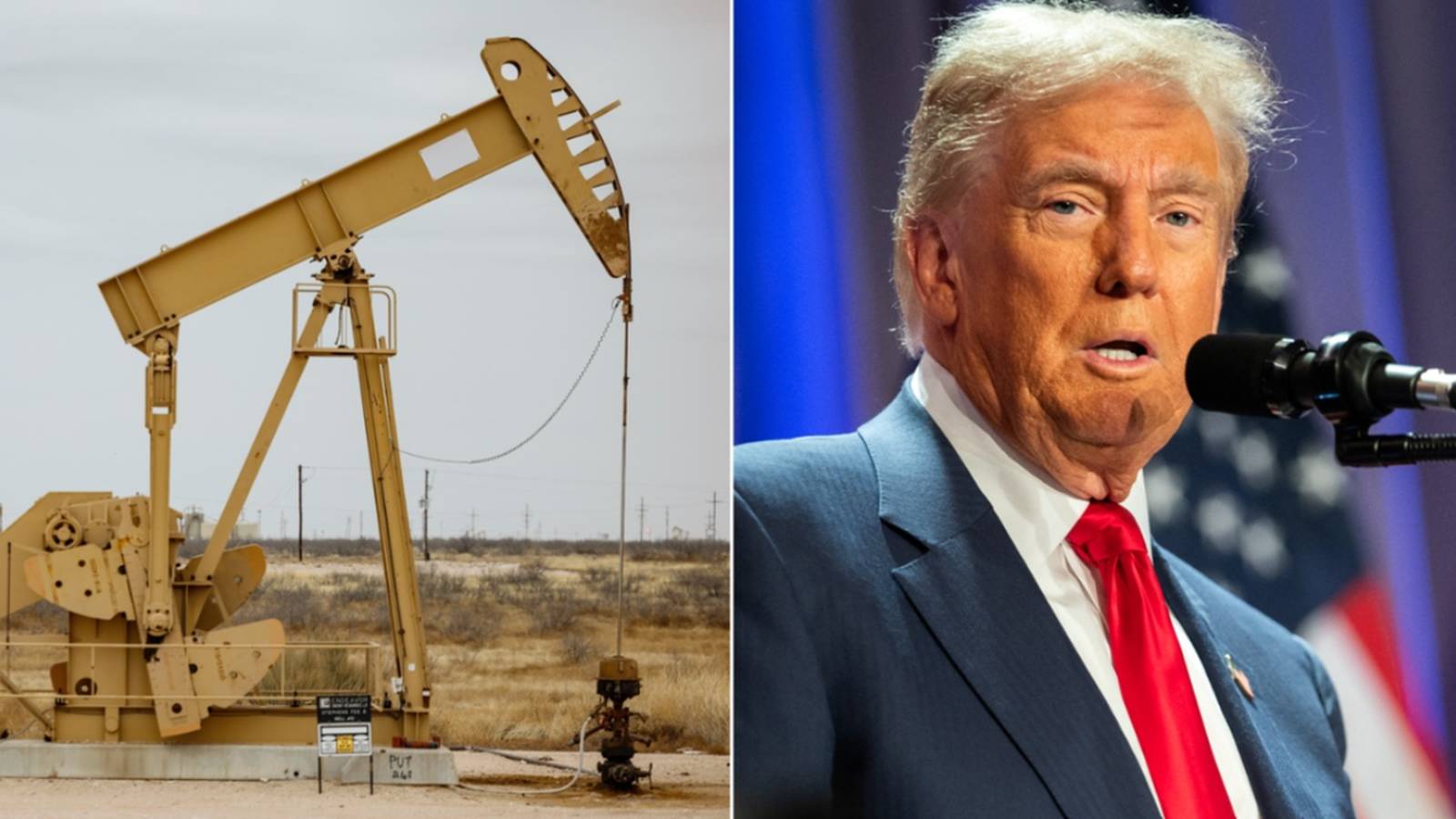
BILLINGS, Mont. (Azat TV) – President Donald Trump announced on Tuesday, October 28, 2026, during a campaign rally in Lubbock, Texas, that his administration is officially terminating a series of Biden-era regulations designed to curb planet-warming methane emissions from oil and gas drilling. Speaking in support of Texas Republican Senate candidate Ken Paxton, Trump framed the policy reversal as a crucial step to lower regulatory burdens and increase domestic fuel supplies amid persistently high energy prices linked to the war in Iran.
The rollback targets federal standards implemented under former President Joe Biden that regulated existing wells and required energy producers to locate and repair major gas leaks. According to reporting by NPR, the administration estimates that dismantling these requirements will save energy producers and consumers $45 billion in compliance costs while unlocking approximately 210 million barrels of oil, an amount roughly equivalent to 10 days of total U.S. petroleum consumption.
Dismantling Key Provisions and the ‘Super Emitter Program’
Environmental Protection Agency Administrator Lee Zeldin previewed the structural rollbacks, noting that the agency is eliminating its “Super Emitter Program.” That initiative previously required corporations to investigate and rapidly fix major methane releases discovered at oil and natural gas infrastructure sites. In addition, the EPA is establishing significantly less restrictive regulatory standards for small, marginal wells.
Administration officials argue that the prior framework disproportionately penalized smaller independent operators. Zeldin stated that the Biden-era regulations would have imposed roughly $18 billion in direct regulatory costs on the domestic energy sector while holding back production potential. The original federal rule, finalized in 2024, was projected by previous officials to prevent 58 million tons of methane emissions by 2038 and yield $98 billion in long-term public health and environmental benefits.
While previous regulations focused only on new oil and gas wells in the United States, the Biden rule had expanded federal oversight to regulate existing wells. Operators also would have needed to plug leaking methane from smaller wells that produce just six percent of the nation’s oil and gas while accounting for up to half of all methane emissions from oil and gas fields, according to federal estimates and independent reporting.
Broader Regulatory Context and Environmental Opposition
The elimination of the methane restrictions aligns with a broader Republican campaign to methodically dismantle federal climate change policies enacted under the Biden administration. Recent federal rollbacks have included revoking a foundational scientific finding on greenhouse gas emissions, lowering vehicular fuel economy standards, and moving to repeal pollution caps for coal-fired and natural gas power plants.
Environmental organizations strongly condemned the decision, arguing it removes critical safeguards against a potent greenhouse gas that drives near-term global heating. Methane is estimated to be responsible for roughly a third of planetary warming and possesses a short-term atmospheric potency far greater than carbon dioxide. Fred Krupp, president of the Environmental Defense Fund, criticized the move in statements covered by NPR, stating that the policy grants companies a “free pass” to vent valuable energy resources directly into the atmosphere at the expense of American consumers.
Additional criticism came from regional advocates. Max Lopez, an attorney with the Environmental Law & Policy Center, told reporters that the rollback will impose a heavier pollution burden on front-line communities and make the domestic energy sector less efficient. Celerah Hewes, a senior manager for state field campaigns at Moms Clean Air Force, described the policy change as a severe blow to ongoing efforts to safeguard children’s health and the regional climate.
The policy shift also follows legislative actions taken by Congress shortly after Trump took office, which included repealing a waste emissions charge approved under the 2022 climate law. That fee program would have levied up to $1,500 per metric ton of methane on energy producers exceeding specific emissions thresholds, marking the first time the federal government directly taxed greenhouse gas emissions.