

Quick Read
- President Trump has formally raised the possibility of occupying Kharg Island to control Iran’s oil exports.
- The island houses over 8,000 civilians, creating a significant humanitarian risk in the event of a ground invasion.
- AI-generated disinformation, including fake footage of captured U.S. troops, is complicating the information landscape on the ground.
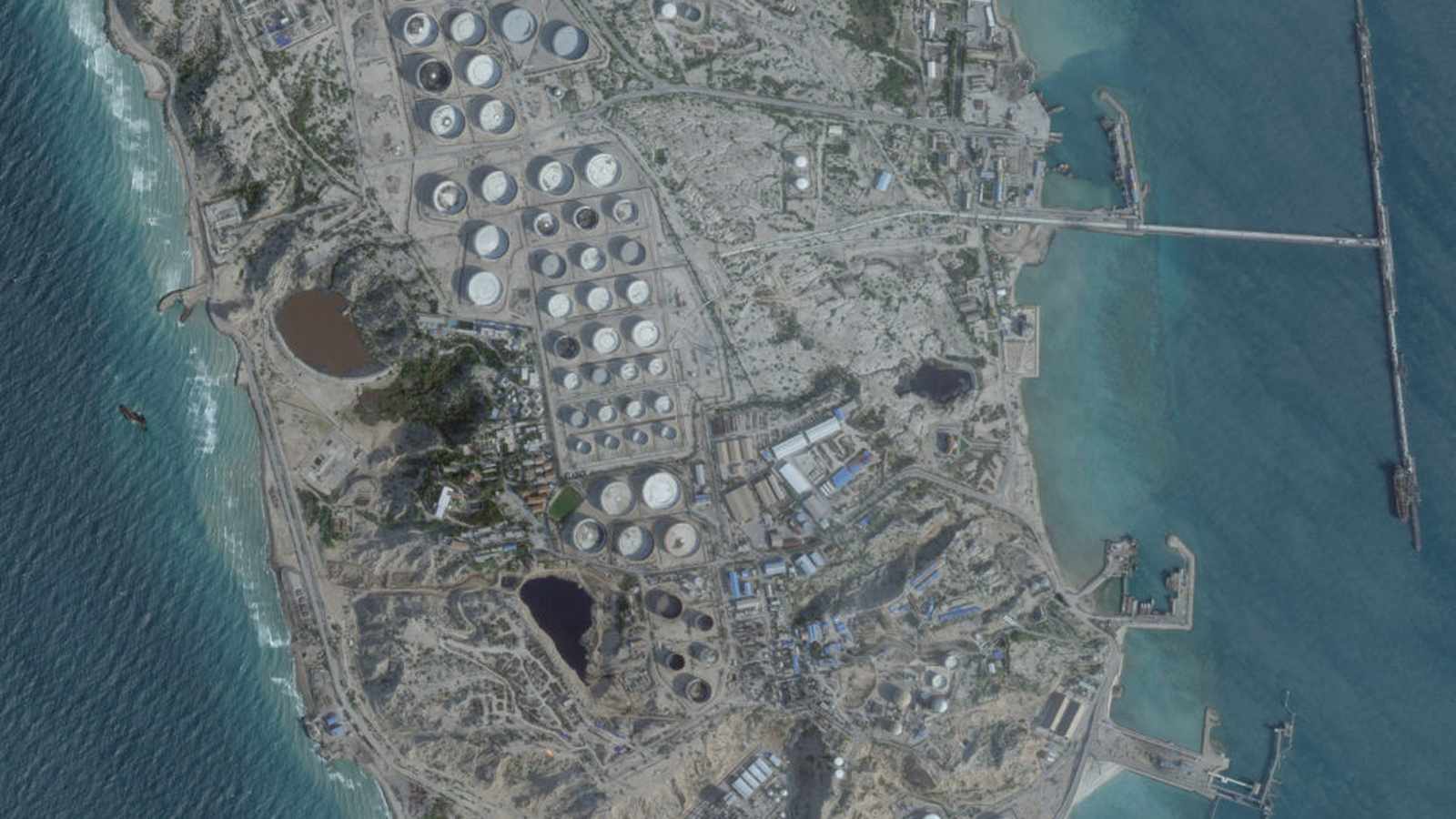
WASHINGTON (Azat TV) – The strategic focus of the ongoing conflict between the United States and Iran has shifted toward the potential physical occupation of Kharg Island, a critical terminal through which nearly 90 percent of Iran’s crude oil exports flow. President Donald Trump, in comments made on March 30, 2026, signaled that his administration is actively weighing the seizure of the island, a move that would represent a dramatic escalation from the targeted airstrikes conducted earlier this month.
Military Logistics of the Kharg Island Operation
The prospect of a ground invasion of Kharg Island has sparked intense debate among military planners and regional experts. While the U.S. military previously executed a series of airstrikes on March 13 that reportedly hit over 90 military sites on the island—including naval mine storage and missile bunkers—President Trump has recently indicated that a more permanent footprint may be necessary. Unlike the mobile warfare seen in other theaters, seizing Kharg would require placing American troops in a stationary, vulnerable position just 33 kilometers off the Iranian coastline, well within range of Tehran’s extensive drone and missile arsenal.
Proponents of the operation, including high-ranking officials and legislative hawks, argue that controlling the island would provide the United States with unprecedented leverage over Iran’s economic lifeline. However, the logistical reality is complicated by the presence of over 8,000 permanent civilian residents and thousands of oil industry workers. Unlike remote military outposts, the island serves as a functioning city, and aid groups have expressed grave concerns regarding the lack of evacuation routes following the destruction of the island’s primary airport in recent strikes.
Economic Stakes and Global Stability
The potential seizure of Kharg carries profound risks for global oil price stability. As a central node for Iranian energy exports, any disruption or total occupation of the terminal could trigger severe market volatility. Financial analysts warn that while the administration has expressed a desire to capture the flow of oil to weaken the Iranian regime, the act of holding the island hostage could force a wider, regional conflict. Reports from the ground indicate that Iran has already moved to reinforce its military presence on the island, with parliamentary officials vowing that the territory would become a “graveyard for aggressors” should a landing occur.
The Proliferation of Misinformation
Amid the heightening tensions, the information space surrounding the island has become increasingly volatile. Recent days have seen a surge in viral, AI-generated, and manipulated media—including fake videos purporting to show the capture of U.S. Marines on the island—aimed at destabilizing public perception. Fact-checkers, including those at France 24, have repeatedly debunked these claims, noting they are part of a broader pattern of disinformation designed to amplify the sense of crisis as the two nations move closer to a direct ground engagement.
The shift from tactical infrastructure strikes to the explicit discussion of territorial occupation signals a dangerous evolution in the conflict; should the United States proceed with a land-based operation, it would likely transform the war from a contained regional struggle into an open-ended occupation, fundamentally altering the energy security architecture of the Persian Gulf and significantly raising the threshold for a wider, multi-front war.