


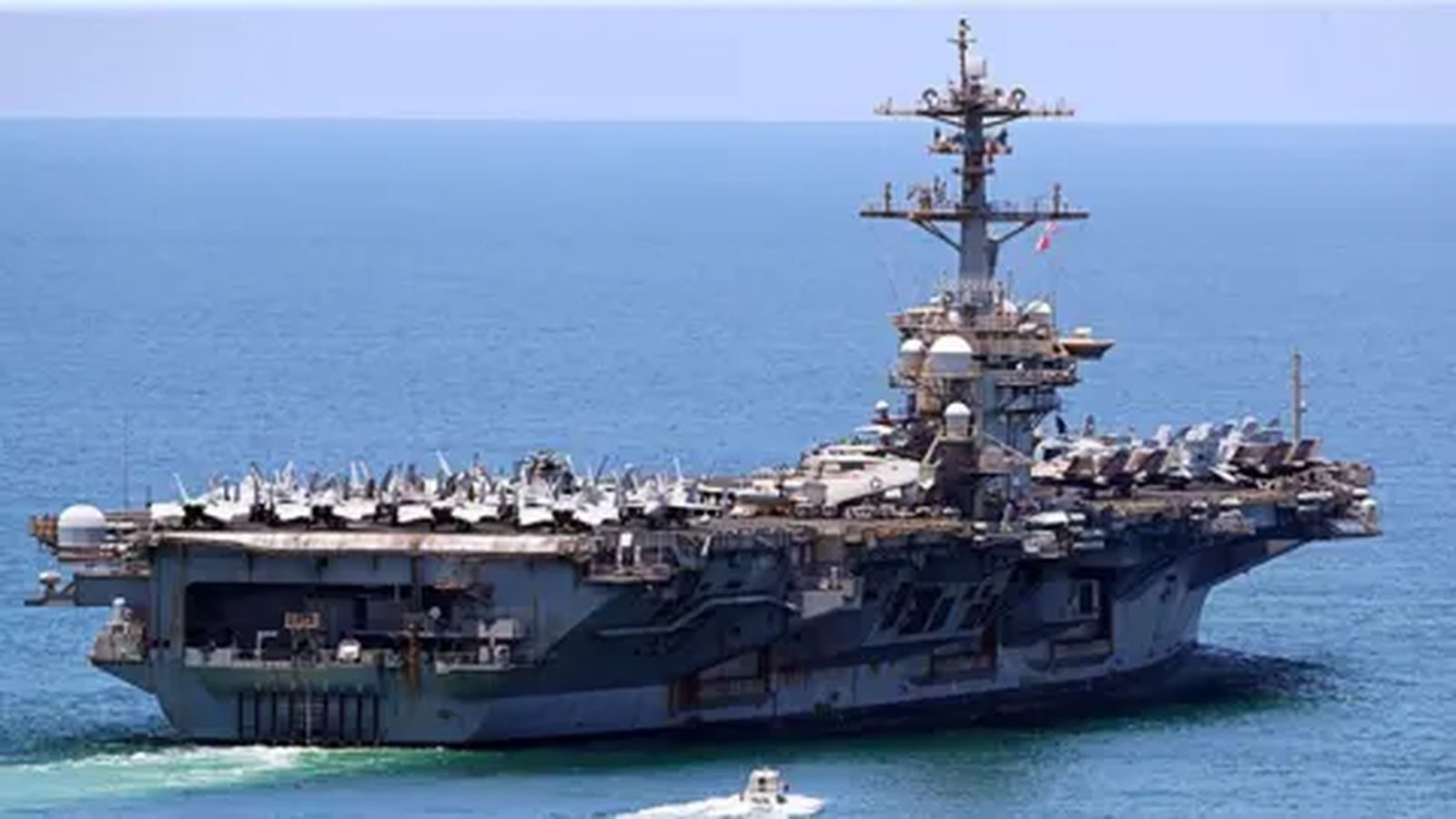
The U.S. Navy has confirmed eight suicide attempts within the USS Abraham Lincoln carrier strike group since the start of its extended deployment, which included nine months supporting operations in the Iran war. This disclosure, made by Acting US Navy Secretary Hung Cao in a letter to Senator Kirsten Gillibrand, has intensified concerns regarding the mental health challenges faced by service members during prolonged deployments and fueled a political debate over military welfare.
Senator Gillibrand, a member of the Senate Armed Services Committee, had specifically questioned the health and well-being of personnel aboard the fleet. Cao’s letter, obtained by ABC News, stated, “Since the beginning of LINCOLN’s deployment, there have been a total of eight suicide attempts across the strike group — this number includes the LINCOLN crew and Sailors from the carrier air wing, strike group and destroyer squadron staff, escorting destroyers, and all embarked aviation squadrons.”
Disclosure Amid Prolonged Deployment and Political Scrutiny
The USS Abraham Lincoln carrier strike group commenced its deployment approximately 10 months ago, initially slated for a standard six-month mission to the Pacific. However, it was redirected to the Middle East earlier this year due to the ongoing war with Iran, significantly extending its time at sea. The deployment has spanned a record 286 days at sea, docking in Thailand earlier this month and making it 307 days into its mission, just 19 days short of the USS Gerald R. Ford’s recent post-Vietnam War carrier deployment record of 326 days, as reported by TWZ.
Despite the official confirmation of suicide attempts, a Navy official told ABC News that the number is not considered “out of the norm for a long deployment.” This assessment aligns with Navy records, which indicate 356 suicide attempts across the broader Navy ranks in 2024, representing a nearly 50% increase in attempted suicides over three years. The Lincoln strike group typically carries between 4,500 and 5,000 service members, including the carrier air wing, destroyer squadron, and escorting ships like the USS Frank E. Petersen Jr., according to The American Legion.
The disclosure follows months of mounting concerns about the conditions aboard the USS Lincoln. In August, media reports highlighted family member worries about mental health, food shortages, and mail disruptions. Acting Navy Secretary Cao initially dismissed these reports as “dishonest” in an X post, stating they distracted from the focus on the enemy. However, in his letter to Senator Gillibrand, Cao confirmed that a piping issue aboard the USS Lincoln and reduced meal options (from two to one) during high-tempo operations had occurred, though he stated both issues were resolved.
Contrasting Official Stances and Administration Responses
The administration’s response to the reports of deteriorating conditions and mental health issues has drawn sharp criticism. President Donald Trump and Defense Secretary Pete Hegseth had previously dismissed concerns. In August, Trump stated the vessel hadn’t been deployed for “nearly long enough,” while Hegseth claimed reports of sailors struggling were “completely misrepresented.”
Admiral Brad Cooper, commander of U.S. Central Command, also weighed in with a social media post in August, asserting that “the Lincoln currently has among the lowest number of cases related to mental health” among the Navy’s 11 active aircraft carriers. While acknowledging that “it doesn’t mean that all is perfect” and that long deployments are “uniquely challenging and tough,” Cooper’s statement aimed to contextualize the situation.
Senator Gillibrand, however, strongly condemned the administration’s stance. In a statement to ABC News, she criticized Trump and Hegseth for dismissing concerns that “turned out to be serious and deteriorating conditions for our service members.” She called the treatment of service members “completely unacceptable,” further adding, as reported by The American Legion, that “this administration can find endless taxpayer dollars for bombs, ballrooms and billionaires but cannot take care of our service members.”
Ongoing Challenges and Future Outlook
The extended deployment of the USS Lincoln is a direct consequence of the ongoing conflict in Iran. President Trump had initially estimated the war would last four to six weeks, but it is now nearing its eighth month, with 50,000 American service members remaining deployed in the region. Since the U.S. and Israel launched strikes against Iran, 18 U.S. service members have been killed and over 800 wounded.
The Lincoln Strike Group departed the Middle East late last month, replaced by the USS George Washington, and is now en route to its home port in California. The carrier took on stores, mail, and equipment in Guam, and 13 Fleet and Family counselors are now aboard to run return-and-reunion classes, according to Tyler Barker in an email to Stars and Stripes. A homecoming date has not been publicly announced, but the ship is expected to undergo a Drydocking Planned Incremental Availability (DPIA) after returning stateside, potentially shifting its homeport to Naval Base Kitsap-Bremerton in Washington state, as indicated by Chief of Naval Operations Adm. Daryl Caudle in June.
Efforts to improve logistics and quality-of-life issues for future deployments are also underway. Chief of Naval Operations Adm. Daryl Caudle and Master Chief Petty Officer of the Navy John Perryman have highlighted plans to increase storage aboard the aircraft carrier USS Theodore Roosevelt for food, hygiene products, and other supplies. The Roosevelt is expected to relieve the USS Washington in the Arabian Sea for a deployment projected to last more than seven months, signaling a continued need for robust support for service members on extended missions.