


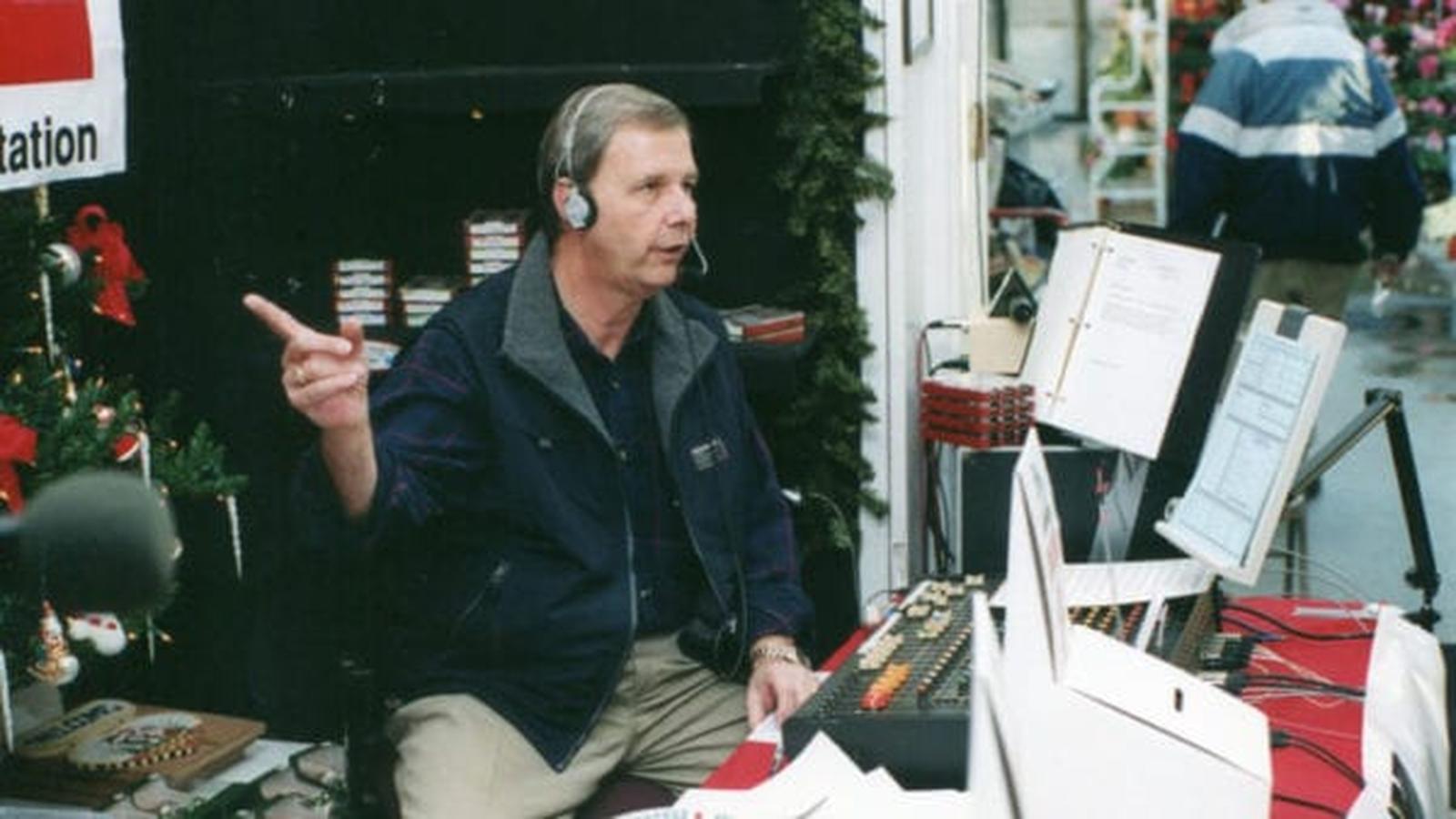
The sudden dismissal of 22 employees at Baltimore’s historic WBAL Radio, alongside the elimination of the bulk of its local talk-show programming, has sent shockwaves through the American regional broadcasting landscape. The cuts, which gutted the station’s award-winning news department and removed long-serving local personalities, serve as a stark indicator of the accelerating decline of legacy terrestrial news radio in the face of shifting consumer habits and consolidated corporate ownership.
The Immediate Impact on Baltimore’s Airwaves
According to reports from former employees and industry analysts, the layoffs at WBAL—a station owned by Hearst—spanned multiple departments, affecting journalists who had spent decades building the outlet’s reputation. Among those let go were prominent midday talk host T.J. Smith, afternoon host Angelette Aviles, and veteran reporter Scott Wykoff, a long-time fixture of Baltimore local reporting. While morning broadcasts hosted by C4 and Bryan Nehman will remain local, the remainder of the station’s weekday lineup has been severely compromised.
This report draws on information published by baltimorefishbowl.com.
The financial motivations behind the decision are straightforward. With average annual newsroom salaries hovering around $50,000, the elimination of 22 positions is estimated to save Hearst upwards of $1.1 million annually. However, the cultural and civic cost to the Baltimore metropolitan area is far more difficult to quantify. For decades, local radio stations functioned as essential community pillars, providing immediate public safety updates, local political accountability, and a shared civic square.
A Century of Regional Dominance
The contraction comes less than a year after WBAL celebrated its 100th anniversary with a high-profile gala at M&T Bank Stadium in October. For much of its history, WBAL was a dominant force in Maryland media, standing alongside the Baltimore Sun and WJZ-TV. Between 1990 and 2010, the station’s newsroom secured 21 national Edward R. Murrow Awards, including three honors as the best large-market radio news operation in the United States.
WBAL’s historical significance was built on its immediate, on-the-ground reporting of defining regional events. The station was the first to report the departure of the Baltimore Colts to Indianapolis in March 1984, provided continuous coverage of Hurricane Gloria in 1985, and drove local political accountability through investigative reporting. Its disclosures of corruption directly led to the prosecution of Baltimore City Council President Walter Orlinsky and City Comptroller Jacqueline McLean. Talk show hosts like the late Ron Smith, who hosted from 1984 until 2011, fostered civil, bipartisan discussions that anchored the station’s commercial and ratings dominance during the pre-digital era.
The Regulatory and Technological Shift
The decline of WBAL and similar stations is not an isolated phenomenon, but rather the result of structural shifts dating back to the Telecommunications Act of 1996. The deregulation introduced by the Act allowed large media conglomerates to acquire multiple stations in single markets, leading to widespread consolidation and the systematic elimination of redundant local newsrooms. While Hearst focused primarily on television—reaching 24 million households across 39 states—WBAL Radio and its sister station WIYY/98 Rock became outliers in a corporate portfolio heavily weighted toward visual media.
Simultaneously, rapid technological developments have eroded the unique utility of local AM/FM radio. Real-time school closures, weather warnings, and traffic updates—once the exclusive domain of local broadcasters—are now delivered instantly via smartphone notifications, text alerts, and specialized navigation applications like Waze. Meanwhile, music and long-form commentary have largely migrated to on-demand streaming services like Spotify and localized podcast feeds.
The National Trend of Contraction
The challenges facing WBAL reflect a broader national crisis for legacy radio. In August 2024, New York’s iconic WCBS Newsradio ended its historic 57-year all-news format. Earlier, CBS shuttered its network radio news operation after nearly a century of continuous broadcasting. Even with high-profile broadcasting rights, such as serving as the flagship station for the Baltimore Orioles and Baltimore Ravens, WBAL’s audience share has steadily deteriorated. In the Nielsen Audio ratings released on August 11, the former market leader had fallen to 10th place in the Baltimore metropolitan area, lagging behind public radio alternative WYPR.
The restructuring of WBAL highlights the growing deficit in local investigative journalism and immediate, community-focused reporting. As commercial stations scale back local programming to preserve profit margins, the responsibility of maintaining an informed public increasingly falls on underfunded public broadcasters and digital-only news startups, leaving a visible void in the traditional regional media ecosystem.