


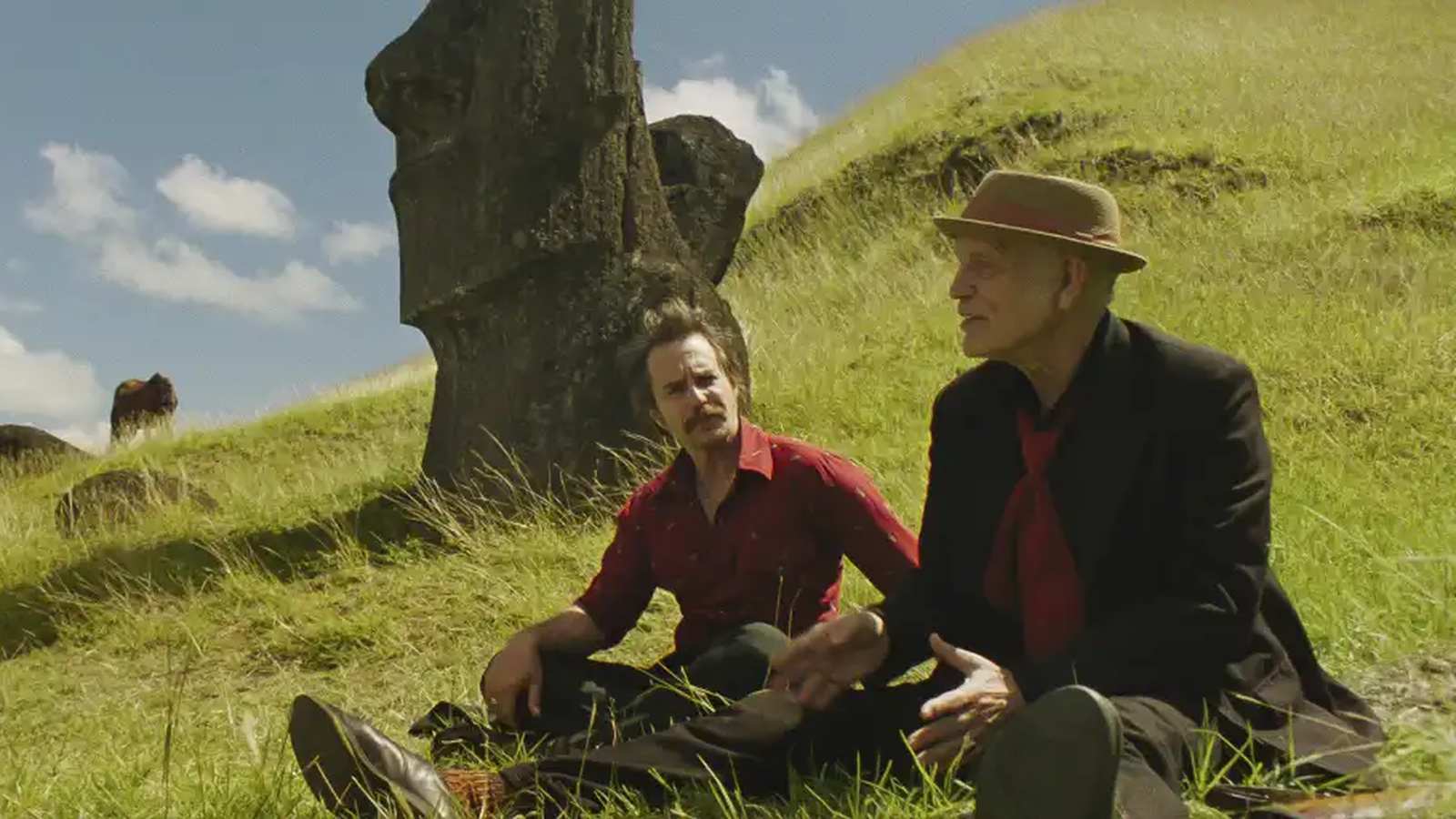
Released in theaters this November 2026, filmmaker Martin McDonagh’s dark comedy Wild Horse Nine centers on two CIA operatives stationed in Santiago, Chile, during the turbulent months leading up to the 1973 military coup against President Salvador Allende. As NPR reported in a review published on November 6, 2026, the film stars John Malkovich as veteran agent Chris Carlisle and Sam Rockwell as his younger partner, Lee Chesterfield. The project arrives following Malkovich’s Best Actor win at the Venice Film Festival for his performance in the film.
While McDonagh is widely recognized for regional settings in previous works such as In Bruges and The Banshees of Inisherin, his latest feature largely shifts to Easter Island, located more than 2,000 miles off the Chilean coast. The narrative pairs the writer-director’s signature profanity-laced dialogue and dark tonal shifts with a narrative structure echoing a comic Western, though critical reception has highlighted distinct tonal tensions regarding its historical backdrop.
Plot and Historical Setting
The story opens in Santiago in 1973, where Carlisle and Chesterfield prepare for a week-long vacation on Easter Island. Carlisle, whose decades of foreign policy interventions include toppling governments in Guatemala and the Congo, is suffering from terminal cancer and early-onset dementia. Enabled by a steady regimen of morphine, his inhibitions are severely compromised.
In an early encounter with Chilean college students, Carlisle bluntly reveals their covert mission to destabilize the democratic government, a reckless breach of protocol that rattles the cautious Chesterfield. Back in South America, a dyspeptic CIA bureau chief monitors the pair, recognizing Carlisle’s declining mental state as an operational liability. Simultaneously, Chesterfield faces distracting phone calls from his estranged wife, played by Parker Posey.
Critical Reception and Tone
Critics have noted that Wild Horse Nine adopts a more deliberate, unhurried pace compared to McDonagh’s earlier, staccato-driven films. Much of the runtime focuses on the bickering dynamic between Carlisle and Chesterfield as they navigate Rapa Nui. During their travels, a local student prompts friction by pointing out the island’s Indigenous name, provoking a reactionary dismissal from Carlisle—a character whose career has left him indifferent to the sovereignty of local populations.
Reviewers have observed that the film attempts to balance cynical political history with sentimental elements, notably through Carlisle’s terminal diagnosis and subsequent existential reflections. While Malkovich’s performance has earned individual praise—including his recognition in Venice—critics like Justin Chang have questioned the narrative’s choice to invite audience sympathy for an architect of authoritarian dictatorship.
Release and Distribution Context
The theatrical rollout places McDonagh’s latest tragicomedy in direct competition with major autumn releases, testing whether audiences will embrace a historical dark comedy that examines American covert operations through the lens of a character study. As exhibition schedules expand through November, industry observers are tracking how international and domestic box offices respond to the film’s provocative thematic blend.