


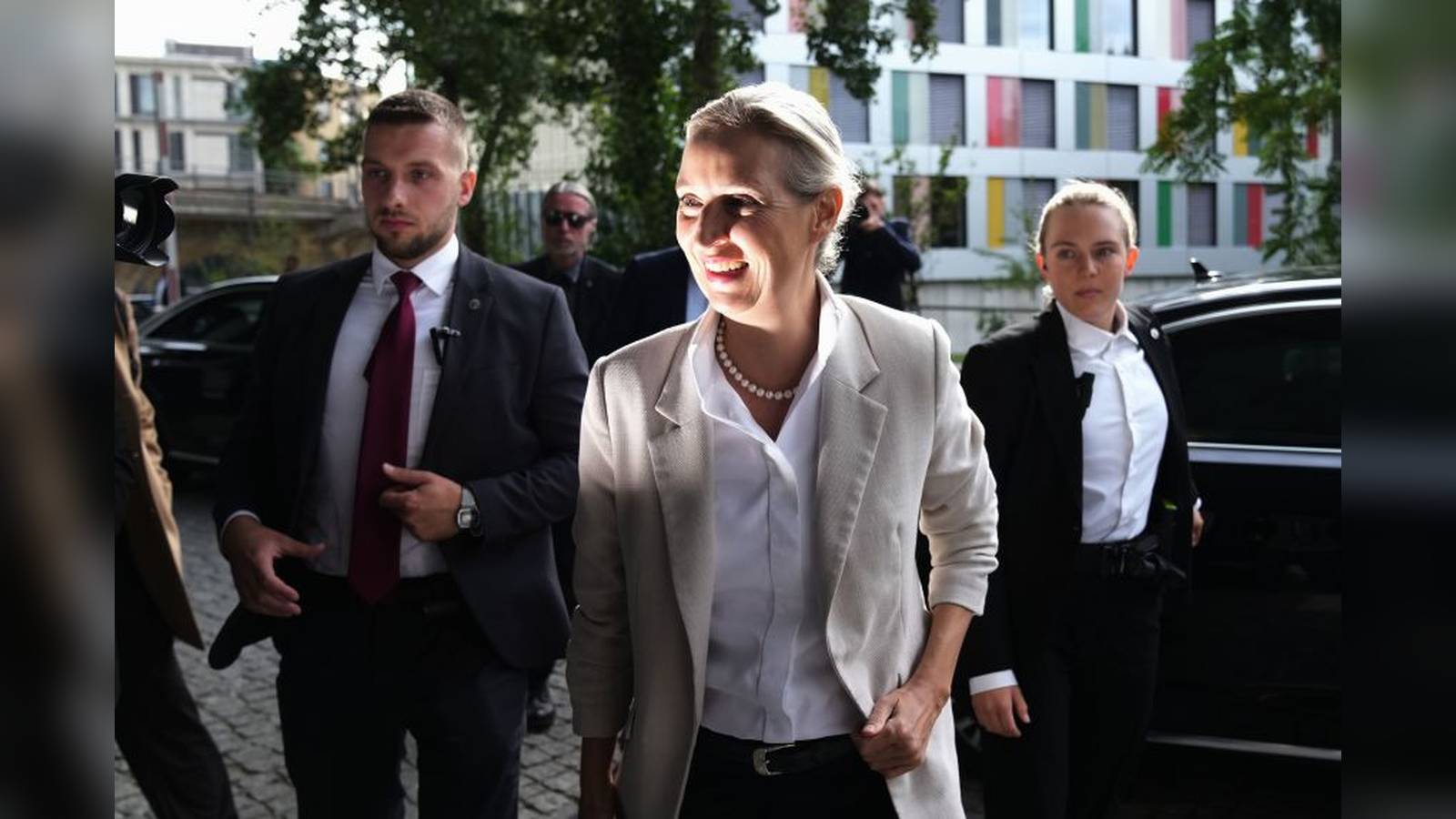
In a watershed moment for German politics, the Alternative for Germany (AfD) has secured its most significant state-level victory to date, winning 39 out of 83 seats in the Saxony-Anhalt parliament. According to PinkNews, the party captured 43.8 percent of the vote, sending shockwaves through the country’s established political order. While the AfD fell short of an absolute majority that would allow it to govern alone, the result represents a massive electoral surge. Reports by CNN indicate that the center-right Christian Democratic Union (CDU) lost more than half of its 2021 vote share, while the AfD more than doubled its previous performance in the eastern German state.
The Saxony-Anhalt Breakthrough and the Electoral Shift
The fallout from the election has immediately reverberated in Berlin. CDU Chancellor Friedrich Merz stated that the AfD’s victory has shaken his party “to its very foundations” and warned of far-reaching consequences across Germany. As reported by the Associated Press, the triumph has renewed fears of an ascendant far-right across Europe, where mainstream leaders are struggling with inflation, migration, and geopolitical tensions. This triumph comes at a critical juncture, with upcoming regional elections in Berlin and Mecklenburg scheduled to take place in less than two weeks, providing another test of the political establishment’s strength.
Alice Weidel: A Study in Ideological Contradiction
At the center of this political earthquake is Alice Weidel, the co-leader of the AfD, whose personal life stands in stark contrast to her party’s nationalist and socially conservative platform. As detailed by GO Magazine, Weidel is a lesbian woman raising two adopted sons with her long-term partner, Sarah Bossard. This family structure directly conflicts with the AfD’s official family policy, which actively promotes the traditional nuclear family consisting of a mother and a father as the societal ideal.
Despite leading a party that has actively campaigned against LGBTQ+ rights, opposed same-sex marriage, and been linked to materials accusing the LGBTQ+ community of promoting pedophilia, Weidel maintains that her personal identity does not conflict with her political beliefs. According to PinkNews, Weidel has been with Bossard—a Sri Lankan-born film producer adopted by a Swiss family—since 2009. The couple lives in Einsiedeln, Switzerland, though Weidel splits her time between Berlin and her official German residence in Überlingen. Weidel has stated that legalizing gay marriage is “unimportant” to her, and despite 17 years together, the couple remains unmarried. In an interview highlighted by GO Magazine, Weidel rejected the label “queer,” stating, “I am not queer, but I am married to a woman I have known for 20 years.”
The Policy Agenda: Nationalism, Russia, and “Vision 2026”
Under Weidel’s leadership, the AfD has adopted a highly nationalist and restrictive policy agenda. In Saxony-Anhalt, the party campaigned on its “Vision 2026” manifesto, which draws heavy inspiration from the populist policies of former US President Donald Trump. As reported by GO Magazine, the manifesto outlines plans to deport Ukrainian war refugees if the conflict remains confined to eastern Ukraine. Additionally, the plan proposes placing the children of refugees in separate classrooms in German schools to emphasize the temporary nature of their stay in the country.
The AfD’s platform also envisions a major shift in Germany’s foreign policy, advocating for significantly closer relations with Russia. This pro-Moscow stance has raised alarms among Western allies, especially as the war in Ukraine continues. The party’s growing influence is also receiving attention from conservative forces abroad. Days before the Saxony-Anhalt vote, US Vice President JD Vance met with Weidel. Vance had previously attacked Germany’s political “firewall” against the far-right during his speech at the 2025 Munich Security Conference, signaling a growing alignment between the MAGA movement in the United States and European populists, according to CNN.
Geopolitical Ripples and the European “Firewall”
The Saxony-Anhalt results are part of a broader, though non-linear, rise of far-right parties across Europe. While Giorgia Meloni’s Brothers of Italy has managed to govern stably by adopting a more moderate, EU-friendly stance, other far-right movements have faced setbacks. As the Associated Press notes, Hungary’s Viktor Orbán suffered a major electoral defeat to a former ally, and Geert Wilders in the Netherlands saw his coalition face internal crises over hardline migration policies. Meanwhile, in the United Kingdom, the Reform UK party led by Nigel Farage has dominated debates on immigration despite holding few parliamentary seats, though it has recently struggled with funding and special election losses.
The political landscape in Europe now braces for critical elections in France and Spain next year. In France, Marine Le Pen remains a front-runner to succeed President Emmanuel Macron, while in Spain, the anti-immigrant Vox party continues to gain ground in regional coalitions, as reported by the Associated Press. The AfD’s breakthrough in Saxony-Anhalt serves as a stark warning to mainstream European parties that the traditional strategies used to isolate the far-right may no longer be effective. With Germany’s next federal election scheduled for 2029, the established parties face the urgent task of addressing the underlying voter discontent that is driving support toward populism.