


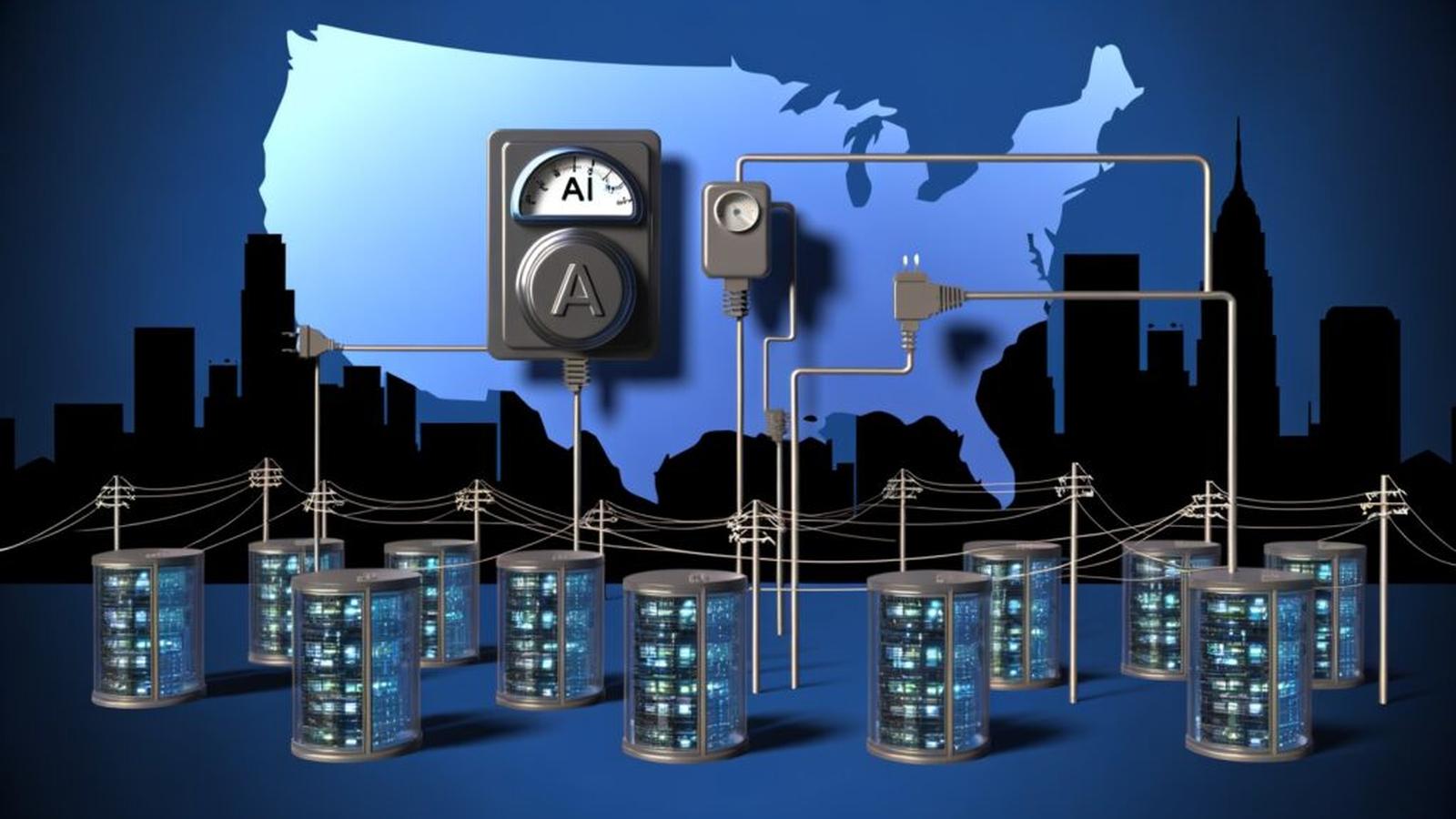
The insatiable appetite of artificial intelligence (AI) for computational power is driving an unprecedented boom in data center construction. Yet, this digital expansion is colliding head-on with a very physical reality: strained power grids, increasingly stressed water basins, and a mounting wave of community opposition. What was once considered a purely technical or capital deployment challenge has rapidly evolved into a complex socio-economic and political debate, forcing tech giants to fundamentally rethink their approach to infrastructure development.
As of 2026, AI-driven data centers have become among the fastest-growing loads on regional power systems globally. Their proliferation accelerates grid congestion, complicates long-term energy planning, and, critically, contributes to upward pressure on electricity tariffs for households and small businesses. This tension has not gone unnoticed. Across the United States, voter anger over surging electricity prices is spreading, cutting across traditional partisan lines and putting the issue squarely on the 2026 midterm election ballot, as reported by USA Today.
The AI Energy Crunch and Public Backlash
The sheer energy demands of these massive facilities have transformed them into a prominent ‘villain’ in the public eye, especially as Americans grapple with high utility bills. Jefferies analysts predict that every political candidate running for office this election year will be compelled to take a definitive stance on data centers and AI. This is no longer merely a state or local issue; it has escalated to a federal topic, shaping the national election narrative.
Even President Donald Trump, a proponent of data centers as vital for the U.S. economy and its AI race with China, has acknowledged the public’s concern. In January 2026, he stated on Truth Social that his administration was working on deals to ensure Americans wouldn’t bear the brunt of higher electricity bills. “I never want Americans to pay higher Electricity bills because of Data Centers,” Trump wrote, adding that while data centers are key to the nation’s boom, “the big Technology Companies who build them must ‘pay their own way.’”
This sentiment echoes across the political spectrum. In Virginia, often dubbed the “data center capital of the world” due to its immense concentration of facilities, Democrat Abigail Spanberger successfully campaigned for governor last November by pledging to lower utility bills. She explicitly called for data centers to “pay their own way and their fair share,” rather than burdening ratepayers. A study from Carnegie Mellon University and North Carolina State University last year estimated that data centers and cryptocurrency mining could increase average electricity bills by 8% by 2030, potentially exceeding 25% in heavily concentrated areas like northern Virginia. The fear of this backlash is palpable among technology companies, threatening the very expansion of AI infrastructure.
Microsoft’s New ‘Social Contract’ for AI Infrastructure
Recognizing this escalating tension, Microsoft announced a significant shift in its strategy for AI data centers in the United States on January 13, 2026. This move, which Smart Water Magazine describes as “more than a corporate update,” signals a fundamental recalibration of priorities. Microsoft’s new framework rests on three critical pillars: absorbing incremental electricity costs, co-investing in grid upgrades, and advancing towards its 2030 water-positive objective with transparent public reporting at regional, site, and basin levels.
By committing to internalize the additional power costs associated with its sites and to help finance network reinforcements, Microsoft explicitly acknowledges the political sensitivity of the issue. For utilities, this offers a clearer investment signal and mitigates the risk of infrastructure upgrades being held hostage by public opposition. For local authorities, it counters the narrative that households and small businesses are subsidizing the digital economy’s most capital-intensive assets. Microsoft’s Vice Chair and President Brad Smith articulated this position, stating, “Especially when tech companies are so profitable, we believe that it’s both unfair and politically unrealistic for our industry to ask the public to shoulder added electricity costs for AI. Instead, we believe the long-term success of AI infrastructure requires that tech companies pay their own way for the electricity costs they create.”
This proactive stance follows a costly lesson learned by Microsoft in October 2025. The company withdrew from plans to develop a hyperscale data center in Caledonia, Wisconsin, after sustained community opposition. Concerns ranged from land use and traffic to electricity demand and, crucially, water availability. This episode, widely reported by specialized media like Data Center Dynamics, became a stark reminder that technical readiness and capital strength alone are no longer sufficient for expansion. Early engagement, transparency, and a credible sharing of impacts and benefits have become indispensable prerequisites.
Beyond Power: Water and Critical Resource Demands
The strategic pivot extends beyond electricity to water, where cooling requirements place data centers at the heart of debates about allocation, particularly in basins already facing scarcity. Microsoft’s reaffirmation of its water-positive ambition, anchored to a 2030 horizon, gains significant weight through its insistence on basin-level accountability. Rather than relying on global offsets, the company is committing to replenish more water than it withdraws in the same catchments where impacts occur, supported by site-specific disclosure. This involves a mix of advanced cooling technologies, increased use of reclaimed water, and targeted replenishment projects tailored to local hydrology. For water utilities and basin authorities, this emphasis on granular reporting shifts the discussion from abstract sustainability claims to verifiable local outcomes, hinting at a future where data-center water performance becomes a routine input to permitting decisions and long-term resource planning.
The resource demands of AI infrastructure extend even further. In a significant development, Amazon recently struck a deal to purchase the first new U.S.-mined copper in over a decade to fuel its AWS AI data centers. As reported by Tom’s Hardware, this two-year agreement with Rio Tinto for copper from Arizona’s Gunnison Copper’s Johnson Camp mine highlights the intense pressure on raw material markets. Nearly half of this copper will be mined using Rio Tinto’s low-carbon Nuton process, which significantly reduces the mine-to-market chain, uses substantially less water, and produces lower carbon emissions. This deal, while substantial, will only satisfy a fraction of Amazon’s needs, as each mammoth data center requires tens of thousands of tons of copper. This underscores a broader concern that only 70% of 2035 copper demand could be met given the aggressive AI expansion, as noted by industry watchers in 2025.
The confluence of power grid strain, water scarcity, and community resistance signals a new era for AI infrastructure. The days of unchecked expansion are over. Companies like Microsoft are not just recalibrating their operational strategies; they are actively rewriting the ‘social contract’ for technology development. The imperative is clear: future growth in the AI sector hinges not on bypassing communities, but on aligning with them, demonstrating tangible local benefits, and internalizing the true environmental costs. Data may be digital, but the foundational elements of power, water, and public trust are profoundly local and increasingly non-negotiable.