


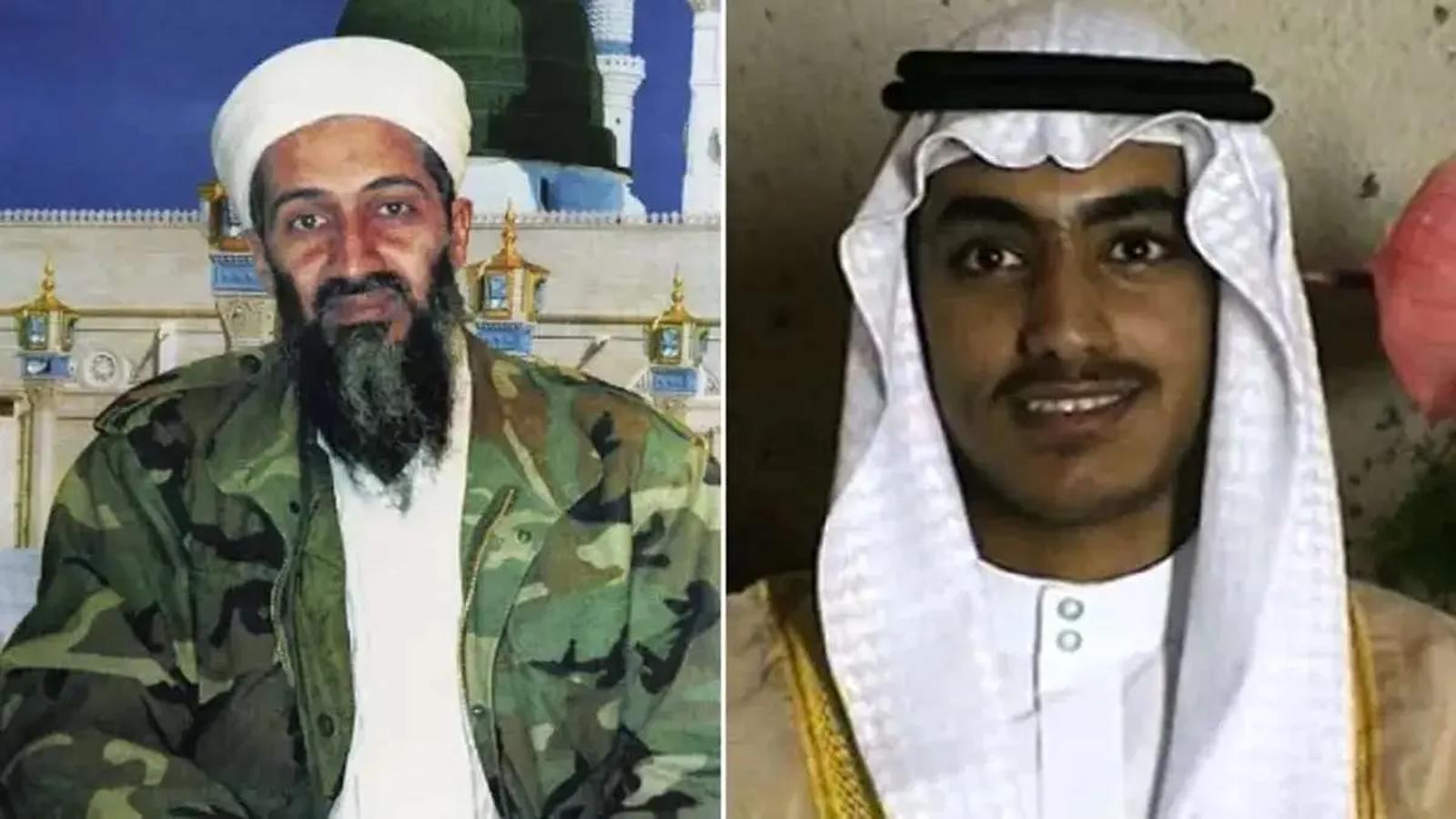
Twenty-five years after the September 11 attacks, al-Qaeda has turned to a familiar face from its founding lineage to navigate one of the most prolonged leadership crises in its history. In a 52-minute video released by the group’s As-Sahab Media Foundation to mark the 25th anniversary of 9/11, the long-presumed-dead Hamza bin Laden, son of the group’s founder Osama bin Laden, made a conspicuous return to the organization’s propaganda apparatus. According to an analysis by the Small Wars Journal, the release represents a calculated effort to maintain internal cohesion within a highly decentralized global network.
The video, titled “A Quarter Century of the 11 September Raids,” features Hamza bin Laden appearing three times against a cracked mud wall, identified as “the mujahid sheikh.” Notably, the production carries no English translation, indicating that its primary target is al-Qaeda’s Arabic-speaking base. This release marks the second time in three months that the group has revived Hamza’s voice, despite official U.S. assessments maintaining that he was killed in a July 2019 counterterrorism operation in the Afghanistan-Pakistan region.
A Leadership Vacuum and the Shadow Emir
Al-Qaeda’s decision to resurrect Hamza’s image is directly tied to its ongoing succession crisis. The group has gone four years without officially naming a new emir since Ayman al-Zawahiri was killed by a U.S. drone strike in Kabul—an event al-Qaeda has never publicly acknowledged. While the United Nations Analytical Support and Sanctions Monitoring team has identified Saif al-Adel as the group’s de facto leader, al-Adel remains physically absent from the video, though his strategic writings dominate its narrative.
Al-Adel, a veteran commander who has managed to survive decades of counterterrorism campaigns, has opted to remain in the shadows. Operating as a named emir makes a leader an immediate target, and al-Adel’s geographical whereabouts remain highly uncertain, with reports placing him variously in Iran or Afghanistan. Furthermore, formally naming al-Adel as the emir would trigger the complex requirement of bay’ah (oaths of allegiance) from highly autonomous regional affiliates, some of whom may resist formal subordination. Al-Adel’s historical ties to Iran, a Shi’a power, also remain a point of vulnerability that rivals like the Islamic State exploit to undermine his credibility among Sunni Salafi-jihadists.
The Strategy of Symbolic Unity
By positioning Hamza bin Laden as a central figure, al-Qaeda bypasses these structural hurdles. As the founder’s son, Hamza possesses inherited authority that does not require a formal bay’ah to be effective. This allows the central leadership to project continuity and legitimacy without forcing regional branches to publicly debate succession.
The video heavily integrates al-Adel’s strategic doctrines with the bin Laden brand. It highlights al-Adel’s commentary on Robert Greene’s The 33 Strategies of War, arguing that the 9/11 attacks were never meant to destroy the United States directly, but rather to deplete its resources, damage its global prestige, and exacerbate internal political and economic divisions. Footage of the U.S. withdrawal from Kabul is presented alongside Hamza’s calls for a renewed global jihad to “terrify the enemies of God in Washington, London, and Tel Aviv.” Hamza explicitly invokes Abdullah Azzam’s seminal 1987 treatise “Join the Caravan” to recruit new fighters.
Recruiting the Next Generation
The strategic deployment of the bin Laden name is also a response to demographic shifts within the movement. Individuals born in 2001 are now 25 years old, meaning an entire generation of potential recruits has no living memory of the September 11 attacks or Osama bin Laden as an active leader. For this demographic, the founding emir is a historical figure encountered through archival media.
By linking Hamza directly to his father’s legacy, al-Qaeda seeks to transform historical narrative into an active inheritance. While modern al-Qaeda affiliates operate with high levels of financial and operational independence, they remain dependent on the central organization’s founding mythology. The resurrection of Hamza bin Laden serves not to rebuild the centralized hierarchy of 2001, but to provide a shared symbolic anchor for a fragmented global network.