


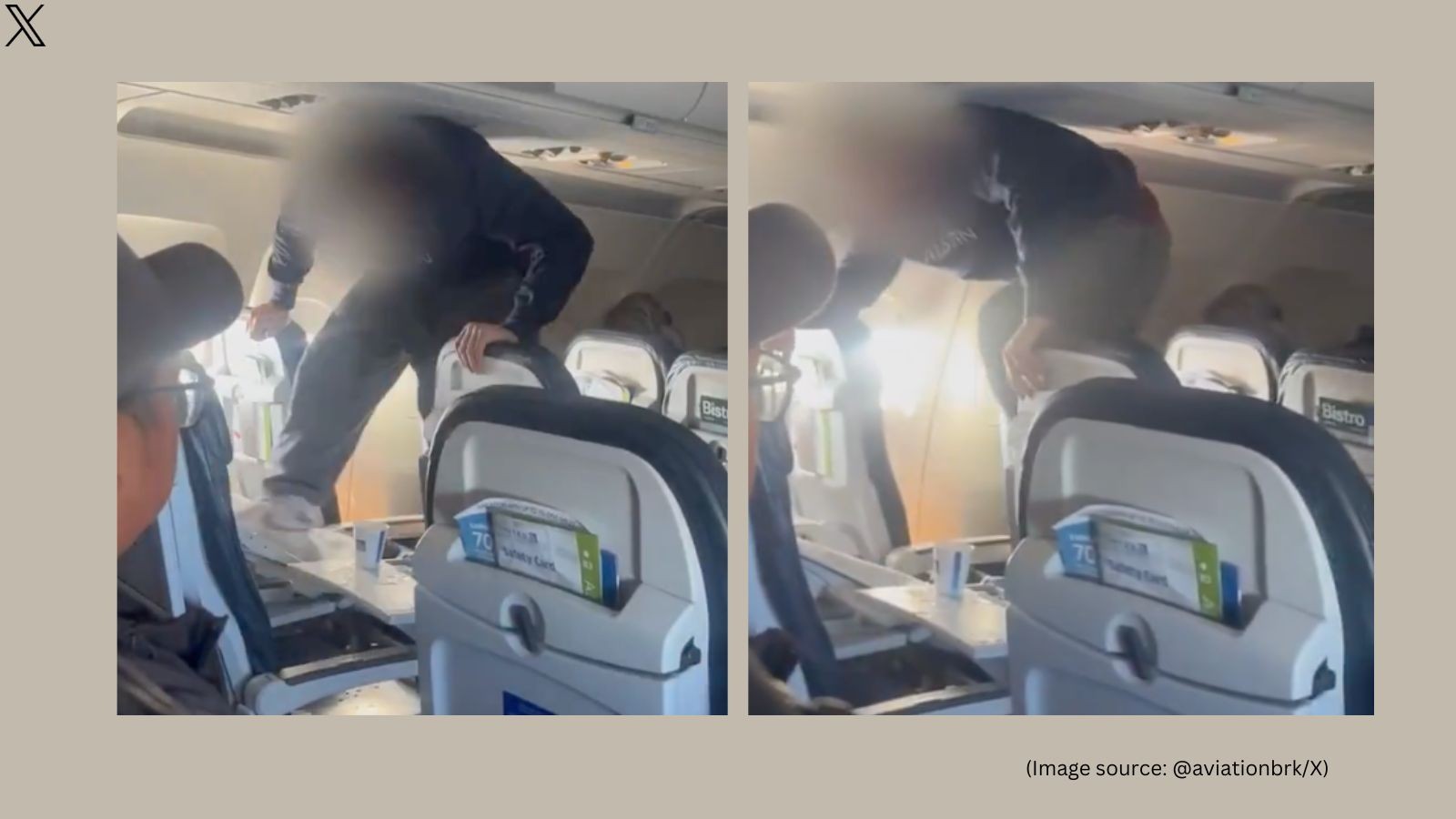
A severe altercation in the first-class cabin of an American Airlines flight bound for Newark Liberty International Airport forced an emergency diversion to Baltimore on Thursday night, highlighting the severe challenges commercial air carriers and flight crews face in managing violent inflight disruptions. Flight 618, which departed from Dallas Fort Worth International Airport, landed at Baltimore/Washington International Thurgood Marshall Airport around 10:15 p.m. after an unruly traveler allegedly launched a physical and verbal assault against surrounding passengers and crew members.
According to eyewitness accounts and law enforcement reports, the disruption began approximately halfway into the flight when 67-year-old Arthur Lundeen of Arizona became increasingly hostile. Witnesses noted that Lundeen began shouting profanities, racial slurs, and homophobic epithets, directed both at cabin staff and nearby travelers. The situation escalated rapidly into physical violence when Lundeen struck the passenger seated adjacent to him, damaged personal electronics, and pushed a female passenger who attempted to intervene and de-escalate the confrontation.
This report draws on information published by CNN.
Passenger Intervention and Cabin Containment Protocols
As flight attendants worked to control the escalating threat, several male passengers—including retired New Jersey police officer Juan Mejia and fellow traveler Richard Olenick—stepped forward to assist the flight crew. Recognizing the immediate safety hazard to the cabin, flight attendants supplied the men with flexible restraint ties, commonly referred to as zip ties or flex cuffs, to secure the individual’s wrists.
The physical struggle intensified as Lundeen resisted the restraints, biting Mejia and attempting to bite Olenick during the confrontation. To prevent further injury and secure the passenger, the flight crew provided rolls of heavy-duty duct tape from the aircraft’s emergency supply kits. Working in accordance with tactical advice from Mejia, the passengers taped Lundeen’s upper body and arms securely to his seat while deliberately avoiding his mouth and nose to ensure unobstructed breathing.
Despite being bound with flex cuffs and duct tape, Lundeen continued to thrash against his seat for the remainder of the flight. Olenick resorted to sitting on Lundeen’s lap for approximately 15 minutes to keep him pinned until the aircraft completed its emergency descent into Baltimore. Both Mejia and Olenick later noted that heightened awareness surrounding the approaching 25th anniversary of the September 11, 2001 terrorist attacks intensified their urgency to neutralize any potential cabin threat instantly.
Law Enforcement Custody and Criminal Charges
Upon touching down at BWI Marshall Airport, officers from the Maryland Transportation Authority Police boarded the Boeing aircraft. Passengers reported that Lundeen initially refused voluntary compliance with law enforcement officers, requiring police to physically remove him from the aircraft. Paramedics evaluated Lundeen at the scene for a minor pre-existing arm abrasion noticed during his removal before he was formally processed into custody.
State authorities initially charged Lundeen with second-degree assault and disorderly conduct. Concurrently, the Federal Bureau of Investigation’s Baltimore Field Office initiated a parallel inquiry. FBI agents are coordinating directly with the U.S. Attorney’s Office for the District of Maryland to evaluate potential federal charges, specifically interference with flight crew members and attendants—a severe felony under federal aviation statutes.
American Airlines issued an official statement commending the flight crew and helpful passengers for their decisive conduct. “The safety and security of our customers and team members is our top priority and we do not tolerate violence,” the carrier stated, confirming that after the disruptive passenger was removed by police, Flight 618 cleared security protocols and resumed its flight path to Newark.
Regulatory Trends and Industry Penalties
The incident underscores the persistent challenge confronting civil aviation regulators and airline operators regarding severe cabin misconduct. The Federal Aviation Administration (FAA) reported that commercial airlines have logged over 1,160 unruly passenger incidents across the United States in 2026 alone. While regulatory interventions and public awareness campaigns have been expanded, inflight physical assaults remain a major concern for frontline aviation personnel.
Under current federal regulations, the FAA maintains a zero-tolerance policy for cabin violence and crew interference. In addition to potential federal prison sentences, individuals convicted of interfering with flight operations face statutory civil penalties exceeding $43,000 per violation. Federal agencies and commercial carriers continue to emphasize that inflight emergency kits—which standardly contain flex cuffs and duct tape—are vital safety instruments utilized strictly to protect aircraft integrity and passenger survival during acute emergencies.