


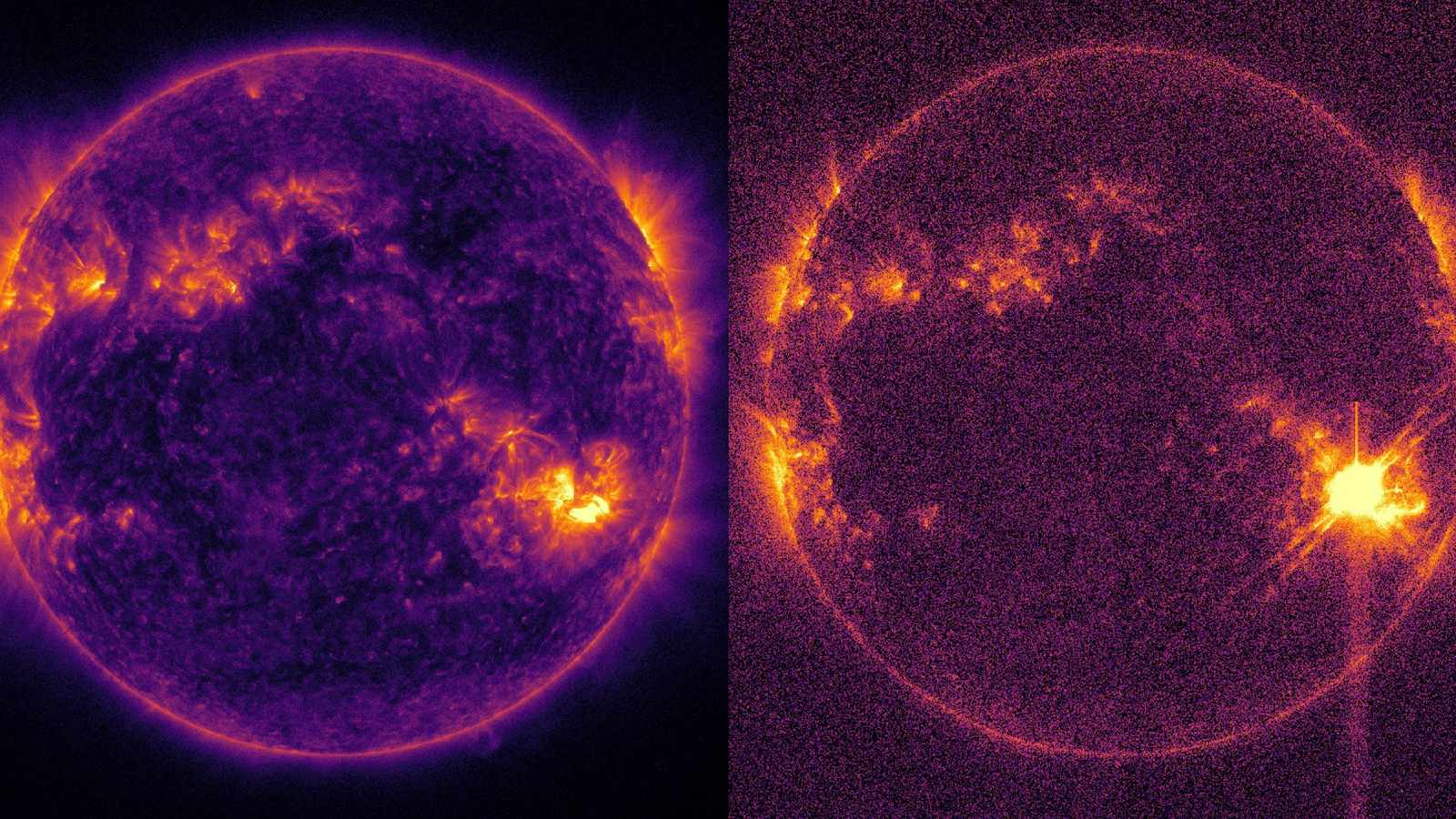
A study published on September 4, 2026, in AGU Advances provides a precise geographic and economic assessment of how an extreme geomagnetic storm would impact the modern United States electric grid. Led by Edward Oughton and Dennies Bor of George Mason University, the peer-reviewed modeling simulates the structural consequences of a 1-in-150 to 1-in-250-year solar event—comparable to the historic 1859 Carrington Event. Rather than validating catastrophic predictions of multi-year nationwide blackouts, the research identifies targeted regional vulnerabilities, projecting that a severe space weather event could plunge 5.1 million people into darkness and cause between $1.5 billion and $2 billion in direct and indirect economic damages daily.
Geological Resistivity and Grid Interconnection Risks
The vulnerability of power infrastructure to space weather is governed by a combination of regional geology, electrical grid topology, and high-voltage transmission architecture. When coronal mass ejections launch ionized solar plasma toward Earth, the resulting geomagnetic disturbances induce electric fields in the ground. These geomagnetically induced currents (GICs) flow upward into grounded transformers and high-voltage transmission lines, forcing power transformers into saturated, unbalanced states that demand excessive reactive power.
According to the study, the US East Coast and Northern Plains face the highest operational hazards. These regions rest atop highly resistive crystalline bedrock, which prevents geomagnetically induced currents from dissipating into the Earth’s deeper mantle. Consequently, the currents enter electrical infrastructure along path-of-least-resistance transmission lines. The risk is compounded by grid architecture: the eastern United States operates on a single interconnected transmission network, meaning a localized voltage collapse in the Northeast could cascade along high-voltage corridors to major urban centers along the Mid-Atlantic.
Re-evaluating Past Disasters and Economic Benchmarks
The research context relies on historical space weather milestones. The Carrington Event of September 1859 remains the benchmark for extreme solar storms, having generated global auroras and induced voltages strong enough to spark telegraph equipment. In March 1989, a weaker geomagnetic storm struck Quebec, Canada, triggering a grid failure that left 6 million people without electricity for nine hours within 90 seconds of onset.
More recently, the May 2024 “Gannon storm” tested modern technological reliance. While advance forecasting prevented high-voltage grid collapses, geomagnetically induced fluctuations disrupted high-precision agricultural GPS equipment across 12 US states. That operational disruption halted planting during critical seasonal windows, resulting in an estimated $500 million to $1 billion in direct agricultural losses. The new AGU Advances model shows that a storm two to three times more powerful than Gannon would push older transformer fleets past their physical limits.
Debunking Multi-Year Blackout Models
For decades, emergency management planning relied on a 2008 National Academies of Sciences study that posited multi-year power outages costing trillions of dollars due to widespread transformer destruction. The AGU Advances paper and industry experts offer a more calibrated assessment, distinguishing between physical transformer destruction and dynamic voltage instability.
Mark Olson, manager of reliability assessments at the North American Electric Reliability Corporation (NERC), noted that fears of catastrophic, permanent transformer destruction are largely overblown because modern transformers possess higher thermal limits and protective relays. However, Olson emphasized that voltage collapse remains the primary threat. When transformers saturate, they consume abnormal amounts of reactive power, causing system voltage to plummet. If grid operators cannot shed load or adjust reactive power quickly enough, automatic protective systems disconnect transmission lines to save equipment, triggering widespread cascading blackouts.
Operational Readiness and Forecasting Lead Times
Preventing widespread failure depends heavily on early warning windows provided by space weather agencies. Shawn Dahl, service coordinator at the National Oceanic and Atmospheric Administration’s (NOAA) Space Weather Prediction Center in Boulder, Colorado, highlighted the contrast between satellite observation and predictive solar modeling. In May 2024, NOAA forecasters issued critical alerts six hours before the solar plasma reached Earth, enabling NERC and regional grid operators to cancel line maintenance, adjust generator dispatch, and maximize reactive power reserves. Without predictive modeling, satellite sensors near Earth offer only a 30-minute warning window.
Industry exercises conducted in Boulder during August 2026 focused on refining grid management protocols for storms exceeding 1-in-100-year thresholds. While modern transformers are engineered to handle heightened current levels, large segments of the national grid still rely on legacy transformers with lifespans extending up to a century. The study concludes that while short-term recovery plans can restore power within 24 to 48 hours for localized trips, mitigating broader economic disruption requires targeted capital investments in grid decoupling, series capacitors, and real-time GIC monitoring systems across vulnerable geological corridors.