


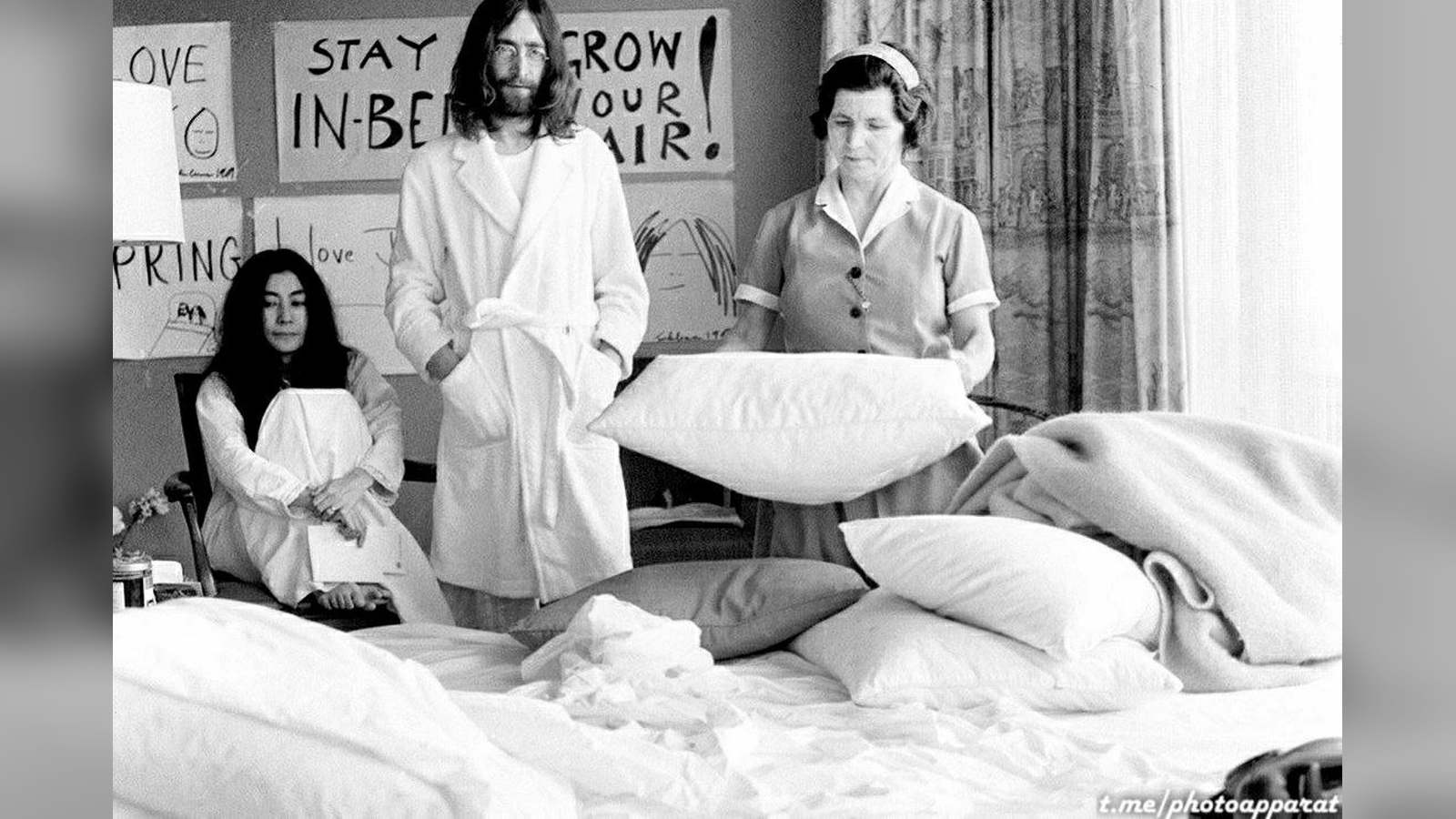
The photograph captures an intimate, yet world-altering scene: John Lennon and Yoko Ono resting in the crisp, white linens of the presidential suite at the Amsterdam Hilton in March 1969. Surrounded by the simple, hand-drawn signs that would become iconic symbols of their movement—’Hair Peace’ and ‘Bed Peace’—the couple appears relaxed yet intensely purposeful. This image serves as a permanent record of a moment when the couple turned their private honeymoon into a radical, public act of dissent. The composition is stark; the white of the bedding dominates the frame, emphasizing the purity of their message against the backdrop of a world engulfed in the violence of the Vietnam War. One can see the weariness of the week-long vigil in their posture, yet their eyes remain fixed on the mission of global harmony. This image captures the precise moment of stillness before the next wave of press inquiries, a snapshot of a couple who chose to use their fame as a megaphone for humanity.
What the photograph shows
In the frame, the couple sits upright, propped against pillows, creating a domestic tableau that feels both vulnerable and defiant. The hotel room, a bastion of luxury and capitalist comfort, is transformed into a sanctuary of protest. The hand-lettered signs, taped to the headboard and walls, provide a stark contrast to the opulence of the Hilton suite. Lennon, with his iconic round glasses and long hair, and Ono, dressed in white, embody a counter-cultural aesthetic that challenged the rigid social norms of the late 1960s. The lighting is soft, typical of a hotel room, but the atmosphere is charged with the tension of the ongoing media circus. This was not a moment of leisure; it was a performance of peace. Every detail—the rumpled sheets, the discarded newspapers, the intense gaze of the couple—tells a story of a week where they refused to leave their bed until the world listened to their plea for non-violence.
The moment behind the image
In March 1969, the global political climate was reaching a boiling point. The Vietnam War was escalating, and public opposition was growing increasingly vocal. Rather than retreating into the private luxury afforded by their fame, the newlywed Lennon and Ono used their celebrity status to command the attention of the international press. By inviting journalists into their bedroom for a week-long ‘Bed-In,’ they subverted the voyeuristic expectations of a star-studded honeymoon. Instead of the gossip reporters were seeking, they were met with a plea for peace. Lennon famously told a skeptic, ‘Nobody’s ever tried the peace thing,’ arguing that if people believed in non-violence, they could simply ‘grow their hair and wear a sign.’ The photograph captures the calm before the next wave of reporters arrived, a brief quietude in a week of constant, intense media dialogue. This was a calculated risk; they were betting that their fame would force the media to print their message, even if the journalists were initially there for a scandal.
Photographer and provenance
The images from the Amsterdam Hilton Bed-In were captured by a variety of photojournalists who were granted unprecedented access to Room 702. While many of the images are credited to agencies like Getty or specific photographers like Nico Koster, the sheer volume of media present makes attribution for every individual frame a complex task. The event was not merely a private moment; it was a carefully orchestrated media campaign, and the photographers were active participants in documenting the narrative. These images have since become historical artifacts, often exhibited in museums and commemorative hotel displays to mark the protest’s 50th anniversary. The provenance of these images is inextricably tied to the Hilton Amsterdam’s own history, where the room has been preserved as a site of historical significance. The uncertainty of the photographer’s identity in some archival records does not diminish the power of the image; rather, it highlights the collaborative, almost accidental nature of how these moments of history are captured and preserved for posterity.
Historical context
The Amsterdam Bed-In was the first of two such protests; the second took place later that year at the Queen Elizabeth Hotel in Montreal. These events were deeply rooted in the anti-war sentiment of the late 1960s. The couple’s strategy of ‘infiltrating’ traditional media spaces—a tactic Yoko Ono would continue for decades—aimed to make the message of peace as ubiquitous as commercial advertising. Their influence remains visible today, as seen in global campaigns like ‘Imagine Peace’ that continue to utilize the couple’s original slogans to address modern conflicts. The protest was a direct challenge to the status quo, and it forced the media to report on the message of peace rather than the scandalous nature of the couple’s unconventional behavior. It was a masterclass in media manipulation for a cause, proving that public discourse could be shifted by those with the platform to do so.
Why it still matters
Fifty years later, the image of Lennon and Ono in bed remains a powerful reminder of the intersection between art, celebrity, and activism. It raises a question that remains relevant: can individual, symbolic acts of defiance truly shift the needle of global policy? While critics at the time dismissed them as privileged idealists, the longevity of the ‘Bed-In’ as a cultural touchstone suggests that their message of ‘Peace is Power’ continues to resonate. The photograph is a testament to the idea that one does not need to be a politician to advocate for change; sometimes, all it takes is a bed, a sign, and the courage to refuse to participate in the machinery of war. The photograph serves as a reminder that the most radical acts are often the ones that demand we simply stop, listen, and imagine a world without conflict. In an era of digital noise, the simplicity of their message—’Think Peace, Act Peace’—is more resonant than ever.