


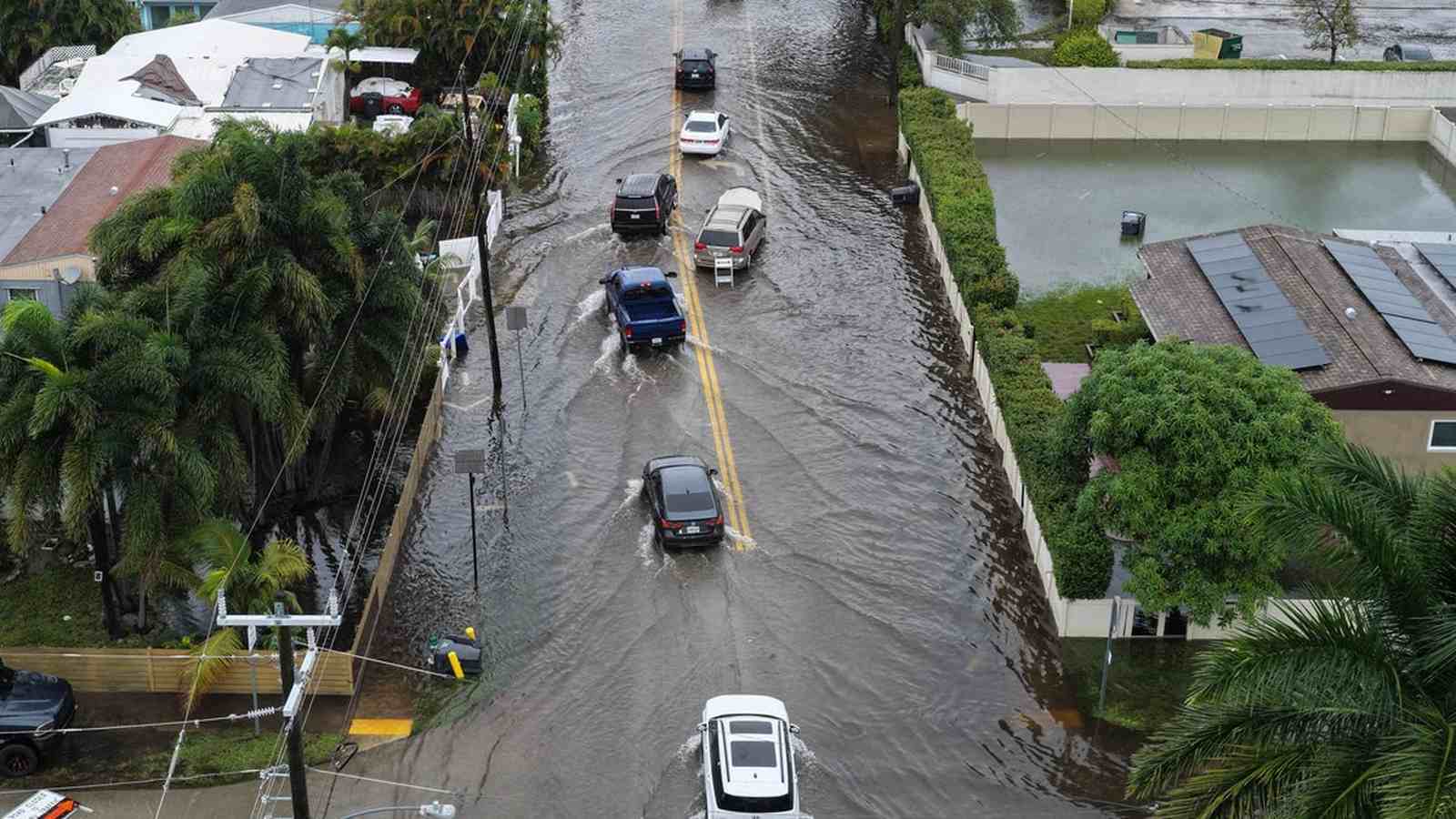
ORLANDO (Azat TV) – Central Florida faced severe infrastructure strain and widespread disruptions on Thursday, November 19, 2026, as relentless downpours battered the region, submerging major roadways, shuttering school districts, and forcing the suspension of regional rail services. According to reporting from WESH, the Weather Prediction Center upgraded far eastern portions of Central Florida, including Brevard County, to the highest flood threat level of 4/4 on Thursday morning.
The severe weather, compounded by saturated ground conditions following significant storms just two weeks prior, triggered flash flood warnings across multiple counties. State authorities reported that localized rainfall totals in Orange County reached up to 9.94 inches in Waterford Lakes and 8.29 inches in Wedgefield, overwhelming local drainage systems and inundating thoroughfares such as State Roads 520 and 528.
State Emergency Deployments and Extended Declarations
In response to the escalating crisis, Florida Governor Ron DeSantis announced via social media that the Florida Division of Emergency Management deployed hundreds of state personnel, including Florida National Guard and Florida State Guard members, alongside more than 200 Florida Highway Patrol troopers and 235 Florida Fish and Wildlife Conservation Commission officers, as reported by WESH.
Governor DeSantis also extended an existing state of emergency on Wednesday to incorporate additional counties, including Broward, Duval, Flagler, Miami-Dade, Monroe, Putnam, and St. Johns. The measure builds upon an emergency declaration initially enacted two weeks earlier across Brevard, Orange, Seminole, Volusia, and several other counties that are still recovering from historic rainfall totals exceeding 20 inches in parts of Brevard County.
Logistical Strain on Public Infrastructure
Public works crews faced significant challenges managing urban drainage and stormwater networks. Orange County officials noted that maintenance teams routinely clear storm drains, canals, and retention ponds, but consecutive high-volume weather events severely tested the capacity of the region’s watersheds. In Palm Bay, near Cape Canaveral, municipal authorities initiated both mandatory and voluntary evacuations, utilizing boats to transport residents from flooded neighborhoods, according to CBS News.
The infrastructure strain directly impacted regional transportation networks. Brightline announced the suspension of its long-haul passenger rail service between Orlando and West Palm Beach through Friday, citing hazardous flooding along the rail corridors in Brevard and Orange counties. Local public safety officials urged residents to avoid non-essential travel as cleanup and repair assessments continue.
Sustained Weather Impacts Across Coastal Corridors
The prolonged severe weather event placed unprecedented demands on local emergency management personnel, who worked around the clock to clear clogged storm drains and monitor rising water levels in retention ponds and canals. In Orange County, public works teams responded to numerous localized flooding reports while motorists navigated impassable streets. The convergence of heavy rainfall with already saturated soil profiles meant that even moderate downpours rapidly translated into standing water on major roadways. Transportation arteries, including sections of State Road 520 where water covered the pavement from median to shoulder, became impassable, forcing police and highway patrol units to establish detours and assist stranded drivers.
Schools throughout the impacted counties remained closed as facility managers assessed water intrusion, structural dampness, and potential electrical hazards inside educational buildings. In South and Central Florida alike, continuous downpours breached public infrastructure, prompting local administrations to shutter public parks, administrative buildings, and community centers. Emergency personnel utilized high-profile military and rescue vehicles to navigate deep waters, evacuating residents from ground-level apartments and flooded subdivisions where waters reached knee-high levels.
Broader Regional Repercussions and Relief Coordination
As state agencies coordinated relief operations, the economic and logistical fallout extended across multiple municipal boundaries. Freight and passenger transit systems experienced major disruptions, highlighted by Brightline halting its high-speed service along the affected eastern corridors. Maintenance crews stood ready to conduct safety inspections as soon as precipitation levels subsided, prioritizing track integrity before resuming regular schedules. Meteorologists indicated that while coastal communities would continue to face elevated flood risks through the end of the week, drier conditions anticipated over the weekend would provide much-needed relief to overwhelmed watersheds and allow municipal engineering teams to accelerate recovery and repair efforts.