


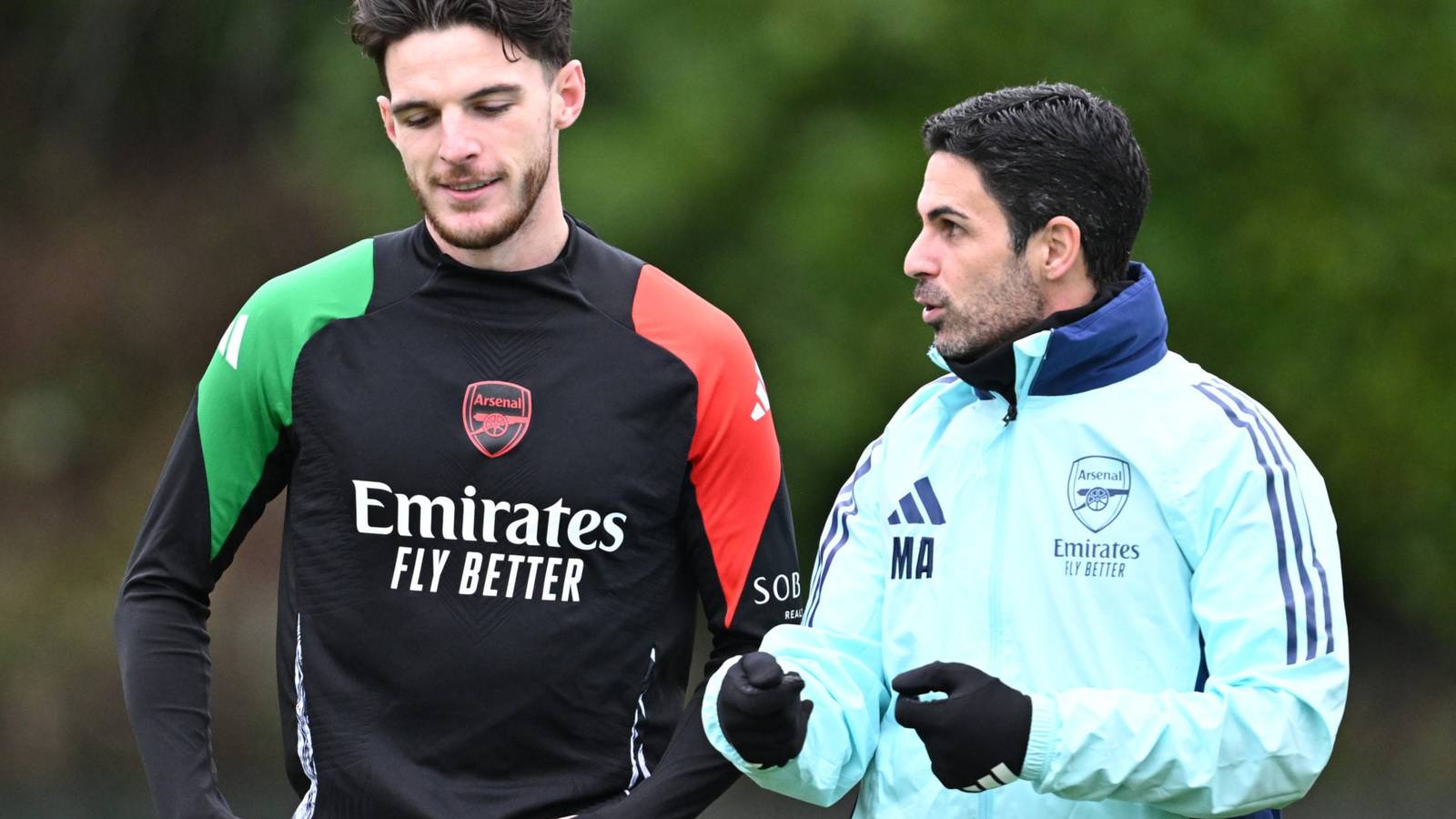
A New Tactical Identity
Following Arsenal’s 2-1 victory over Leeds, manager Mikel Arteta revealed a pivotal shift in the team’s tactical approach, centering on a fundamental change in the role of midfielder Declan Rice. In a private conversation with the England international, Arteta informed him that he is no longer the team’s “lighthouse”—the static, defensive anchor that had defined his early Arsenal tenure. Instead, Rice is evolving into a more versatile, attacking influence within the squad. This transition is not merely a label change but a calculated move to integrate Rice more deeply into Arsenal’s open-play attacking structure.
The “lighthouse” moniker, a term previously used by Pep Guardiola to describe Rodri, was applied to Rice to signify a player who provides a focal point, clarity, and defensive stability from which the rest of the team rotates. According to Sky Sports, Arteta stated, “I went to him and I said: ‘You are not the lighthouse anymore. You are something else.’” The manager emphasized that while the previous role served a purpose in providing direction, the current team requirements demand a more dynamic contribution from their record signing.
Statistical Shift in Performance
The impact of this tactical pivot is already reflected in Rice’s performance metrics. In the first six matches of the season, Rice has registered three assists from open play—a significant jump compared to his entire 2025/26 Premier League campaign. Crucially, these contributions have come without relying on set-piece situations, which were a hallmark of Arsenal’s previous tactical identity. The team has not scored from a set piece since March, signaling a departure toward a more dynamic, open-play-driven attacking philosophy.
Positional data highlights that Rice is operating at the base of the midfield, yet he is actively influencing the final third. His final-third entries have increased by 25 percent compared to last season, and his line-breaking passes have nearly doubled, making him the most frequent provider of such passes in the Premier League. Furthermore, his discipline in possession has improved; Rice has reduced his average number of backwards passes by 50 percent, reflecting a more progressive approach to ball circulation. This shift is intentional, designed to force Rice to influence the game directly through his decision-making rather than solely acting as a safety valve for his teammates.
The Multi-Faceted Midfielder
While Rice has moved away from the static “lighthouse” role, the change does not mean he has abandoned defensive responsibilities. By sitting at the base of the midfield, he allows teammates like Myles Lewis-Skelly and Bruno Guimaraes more freedom to advance. However, he retains the ability to push forward when needed, as evidenced by his backheel assist in the win against Leeds. This evolution suggests that Arteta is building an Arsenal side capable of greater tactical flexibility. Rice is no longer just the anchor; he is now a multi-dimensional presence who can crash the penalty area, provide long-range passing, and maintain defensive integrity.
As noted by Arsenal Insider, the manager’s goal appears to be transforming Rice into a player who can decide games through direct attacking output, rather than solely facilitating others. The shift reflects a broader, intentional evolution of the team as they look to maintain competitiveness in the Premier League. Rice’s ability to adapt from the “left eight” role he occupied last season to this deeper, yet more progressive position, highlights his growth under Arteta. Whether he is driving forward with the ball or spraying precise passes to break opposition lines, the new version of Rice is central to Arsenal’s shift away from reliance on dead-ball efficiency.
The Evolution of Arsenal’s Midfield Philosophy
The departure from the “lighthouse” identity is symptomatic of a larger transformation within the Arsenal squad. Last season, the team was characterized by its defensive rigidity and dominance in set-piece situations. By moving away from that, Arteta is testing whether his squad can sustain its high-level performance through fluid, creative play. Rice, as the heartbeat of this midfield, is the primary test case for this philosophy. His recent assists for Guimaraes against both Sunderland and Leeds demonstrate the high-reward nature of this tactical shift.
Rice’s capacity to occupy different zones during a single match illustrates the complexity of his new assignment. He can effectively shield the back four, then moments later, arrive late in the opposition box to provide a creative touch. This unpredictability is what Arteta is looking for as he attempts to keep opponents guessing. While the “lighthouse” role provided comfort and stability, it also limited Rice’s ability to act as a primary playmaker. By removing those constraints, the manager is betting that Rice’s natural talent will unlock higher offensive output.
Ultimately, the transition of Declan Rice is a testament to the high standards set by Arteta. By telling his most expensive signing that his established role is no longer sufficient, the manager is challenging Rice to elevate his game to an elite, world-class level where he dictates matches single-handedly. As Arsenal prepares for future challenges, including their upcoming fixture against Nottingham Forest, all eyes will be on whether Rice can continue to prove that he is indeed “something else,” evolving into the complete midfielder that the current Arsenal project requires to secure silverware.
The data points are clear: Rice is no longer just holding the fort. He is breaking lines, creating chances, and actively participating in the attacking transitions that define modern, high-intensity football. Whether this change in direction leads to the ultimate success remains to be seen, but the intent behind the move is unambiguous. Arteta is not satisfied with the status quo, and he is pushing his most important player to lead the way in this tactical metamorphosis.