


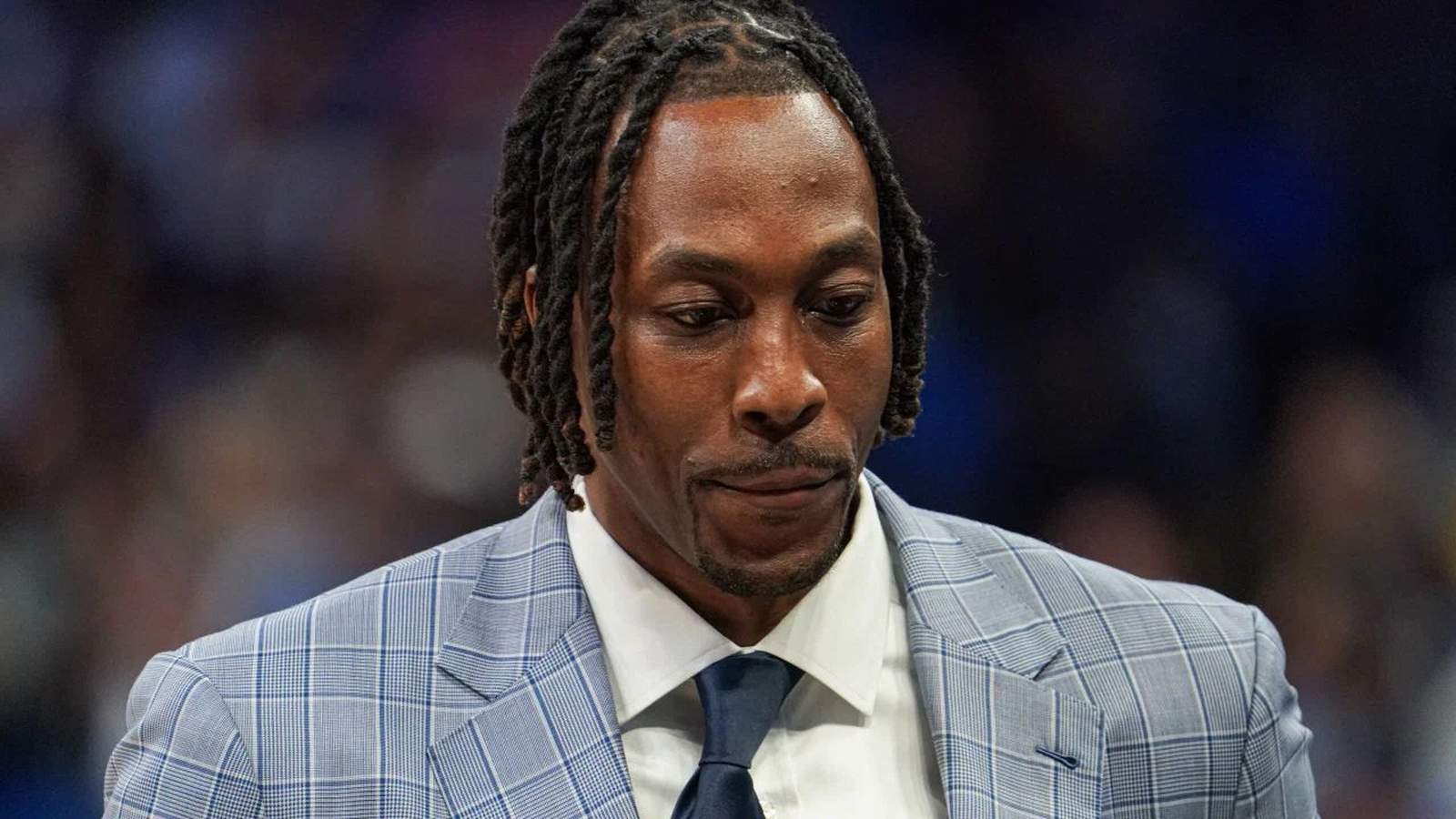
Dwight Howard Recalls Losing $7 Million in Atlanta Dream Purchase Fraud
Former NBA star Dwight Howard has detailed the circumstances surrounding a multi-million-dollar financial fraud that derailed his attempt to purchase the Atlanta Dream WNBA franchise. Speaking in a conversation on Demetrious Johnson’s YouTube channel, Howard revealed that he lost $7 million after being convinced by intermediaries that they could facilitate a direct ownership deal, as reported by EssentiallySports in an article published on November 26, 2026. The funds, transferred around 2020 to 2021, vanished into shell companies before the former center realized he had been deceived.
Howard explained that he had envisioned a prominent role in expanding the league’s profile, aiming to improve player contracts and support athletes. However, the transaction was entirely fraudulent. The deception only came to light publicly after media reports identified the actual buyers of the Atlanta team—a group that included former player Renee Montgomery, real estate developer Larry Gottesdiener, and investor Suzanne Abair—who acquired the franchise for roughly $7 million to $10 million, matching the exact figure Howard had independently handed over to bad actors.
The Perpetrators and Judicial Outcomes
The central orchestrator of the scheme was Calvin Darden Jr., who worked alongside Howard’s agent, Charles Briscoe, to convince the basketball player to wire the funds into controlled accounts. Once the money was transferred, Darden cut off communication and misappropriated the capital for personal enrichment. According to court findings detailed in the EssentiallySports report, Darden spent approximately $3.7 million on an Atlanta mansion, acquired luxury vehicles including a Lamborghini, a Porsche, and a Rolls-Royce, and purchased high-end artwork by Jean-Michel Basquiat.
Federal prosecutors subsequently brought charges against the conspirators, prompting Howard to testify during the trial. Darden was convicted in federal court and sentenced to approximately 12 years in prison, alongside an order to forfeit $8 million, which included $7 million designated for restitution to Howard and $1 million tied to a separate fraud scheme involving former NBA player Chandler Parsons. Meanwhile, Charles Briscoe pleaded guilty, receiving three years of supervised release, home confinement, and a $1 million restitution order.
Financial Recovery Challenges and Industry Stakes
Despite the criminal convictions and court-mandated restitution orders, full financial recovery remains highly unlikely. Because Darden had already dissipated the stolen capital on luxury assets and real estate prior to the intervention of law enforcement, reclaiming the full $7 million poses significant logistical and legal hurdles. Howard’s public recounting highlights the profound financial and professional vulnerabilities high-profile athletes face when navigating private investment opportunities outside standard institutional frameworks.
The incident unfolded against the backdrop of significant financial growth for women’s professional basketball. At the time Howard attempted his investment in 2020, the league’s commercial valuation was substantially lower than its current standing, which has since been buoyed by multi-billion-dollar media rights agreements. Yet, for Howard, the venture resulted entirely in judicial proceedings rather than team ownership, underscoring the severe risks tied to unregulated intermediary transactions in elite sports investments.