


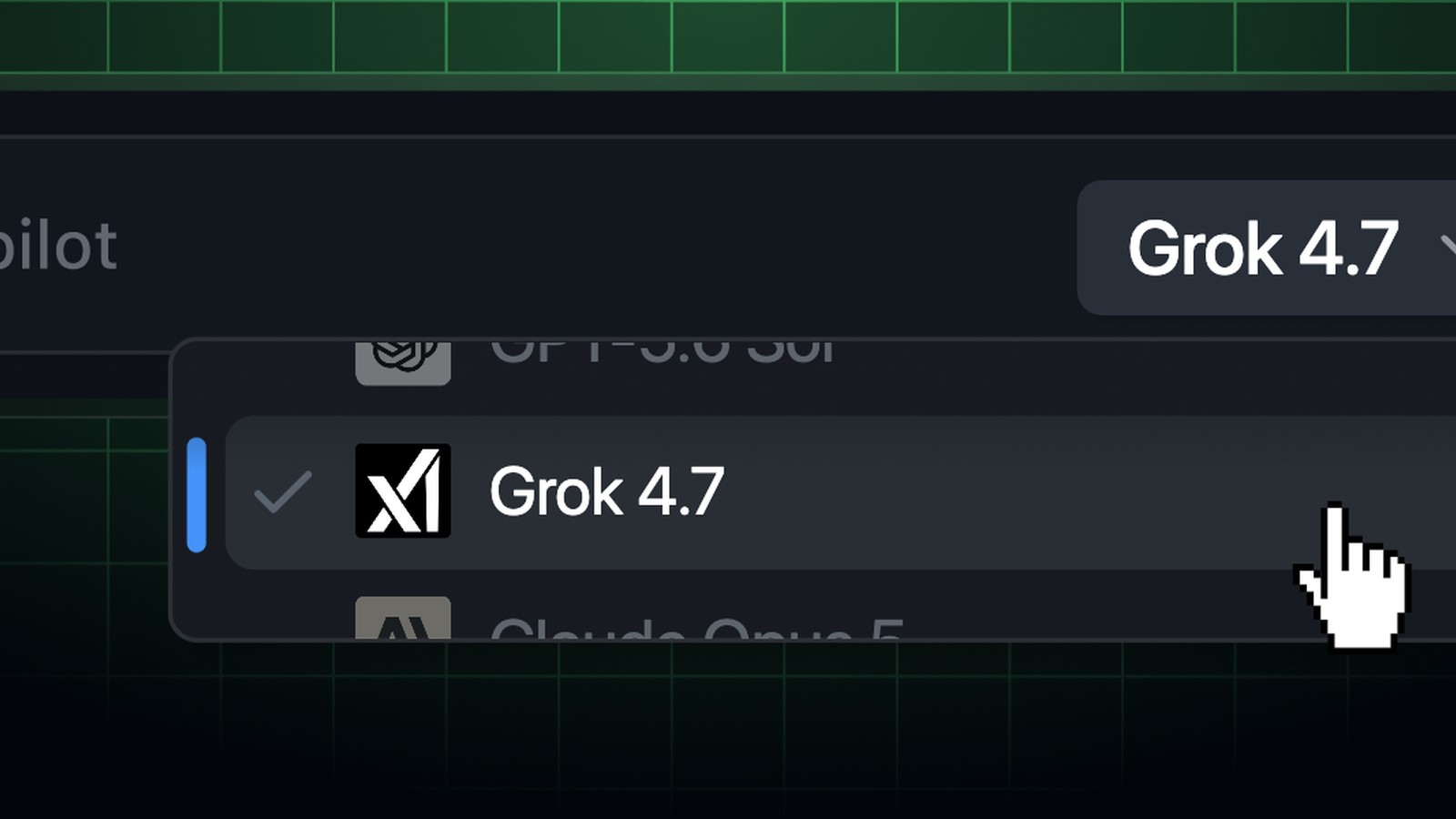
Developers using GitHub Copilot can now access Grok 4.7, the latest reasoning model developed by xAI, according to an official update published in the GitHub Changelog. The rollout introduces advanced agentic capabilities aimed at executing multistep programming tasks and complex technical workflows directly inside standard development environments.
The integration expands the multi-model architecture of GitHub Copilot, giving developers an alternative reasoning engine alongside existing options. Grok 4.7 builds upon its predecessor, Grok 4.6, with specialized tuning for autonomous software engineering routines, context-heavy refactoring, and automated debugging across modern toolchains.
Access to the xAI model is being distributed gradually across multiple subscription tiers, including Copilot Pro, Pro+, Max, Business, and Enterprise plans. Once provisioned, developers can select Grok 4.7 from the interactive model selector in Visual Studio Code, Visual Studio, JetBrains IDEs, Xcode, and Eclipse, as well as via the Copilot CLI, the GitHub Copilot cloud agent, and the standalone desktop application.
GitHub specified that Grok 4.7 operates under a usage-based billing structure charged at provider list pricing, requiring organizations and individual subscribers to track API consumption separately from base seat fees. For corporate deployments, workspace administrators on Copilot Business and Copilot Enterprise accounts can control availability through centralized model governance policies in admin settings. Under standard configuration rules, the model activates automatically by default unless an administrator disables either global model additions or the specific xAI toggle.
The deployment highlights a continued shift among platform operators toward flexible, multi-engine programming assistants. Rather than relying on a single underlying architecture, development platforms are increasingly allowing engineering teams to route distinct programming tasks—such as boilerplate scaffolding, logic verification, and end-to-end testing—to models tailored specifically for those computational demands.