


Google Expands Health Guardian to Fitbit Air and Edge
Google is expanding the availability of its Health Guardian software suite to the Fitbit Air and the newly announced Fitbit Edge, bringing advanced wellness tracking tools to a wider range of devices. According to Engadget, the Health Guardian features will roll out later this month for Google Health Premium subscribers using these devices. The software suite tracks subtle long-term shifts in user health metrics, offering monthly summaries in the Google Health app focusing specifically on blood pressure and insulin resistance trends.
As detailed in official announcements from Google, the in-app Health Coach will utilize these monthly reports to help users interpret patterns, adjust fitness plans, and prepare talking points for medical consultations. Google describes the system as functioning similarly to a vehicle’s check engine light, providing early indications when specific health trends require professional attention. The Health Guardian tools require users to meet monthly wear requirements to generate the reports.
This strategic expansion reflects a broader industry movement toward proactive and preventative health monitoring, positioning consumer wearables not just as fitness companions, but as preliminary diagnostic allies. By translating complex longitudinal biometric data into actionable monthly summaries, Google aims to bridge the communication gap between patients and primary care physicians. However, the requirement of a Google Health Premium subscription places these advanced analytical capabilities behind a paywall, prompting ongoing discussions regarding accessibility in digital health tools.
Upgraded Automatic Activity Tracking Across Wearables
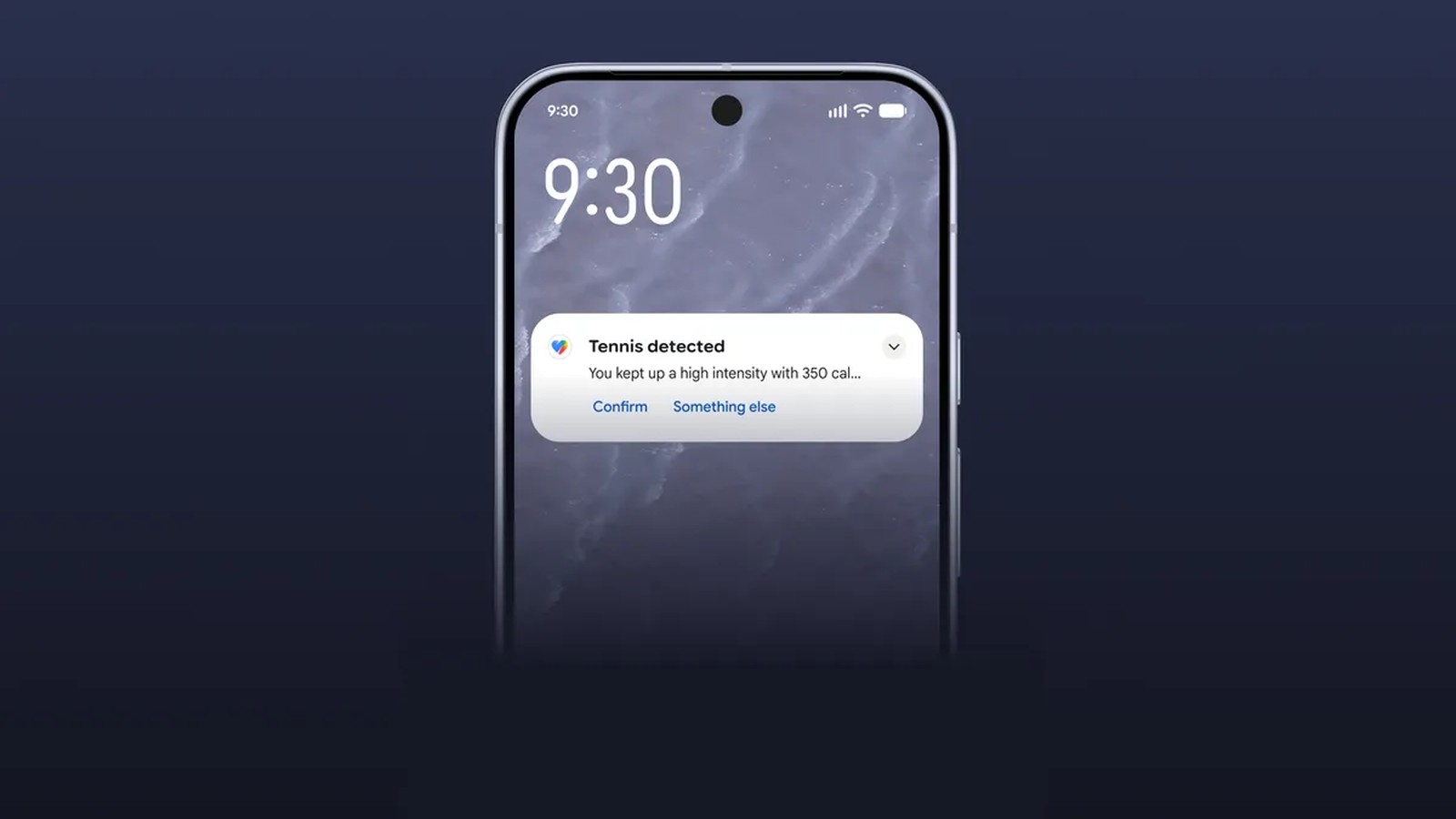
Alongside the Health Guardian expansion, Google is deploying a major upgrade to automatic activity tracking for the Fitbit Air, the new Fitbit Edge, and Pixel Watch models 3, 4, and 5. Engadget reports that the update nearly doubles tracking accuracy and cuts missed workouts by more than half by incorporating contextual factors such as location, daily routines, historical data, and manual edits alongside heart rate monitoring.
The upgraded detection system expands the number of recognized workouts from 10 to more than 100, addressing previous limitations in detecting fast-moving or diverse activities like strength training, swimming, HIIT, racket sports, and team sports. Workouts meeting a default 15-minute threshold with a sustained elevated heart rate are automatically logged, with summaries transmitted to the mobile app within approximately 30 minutes.
Historically, automated activity recognition struggled with erratic or fast-paced movements, often failing to record high-intensity interval training or sporadic team sports accurately. By leveraging contextual reasoning and machine learning algorithms that adapt to user corrections over time, Google’s enhanced firmware attempts to resolve these persistent tracking flaws. Users retain the ability to manually edit or confirm logs, directly feeding machine learning models to refine future predictive accuracy across the ecosystem.
Introduction of the Fitbit Edge and New Hardware Accessories
The software updates coincide with hardware expansion within Google’s wearable ecosystem. Positioned between the Fitbit Air and the Pixel Watch, the newly unveiled TechCrunch Fitbit Edge is priced at $179.99 and combines a slim band design with an OLED display for maps, notifications, weather, and music controls. Like other ecosystem devices, it integrates with Google Health Coach powered by Gemini.
Additionally, Google introduced a $70 stainless steel ‘Metal Mesh’ band option for the Fitbit Air, available in Champagne Gold and Polished Silver. Pre-orders open ahead of an October 27 release, with bundled options offered through retail partners.
The introduction of the Fitbit Edge strategically fills the performance and price gap within Google’s hardware portfolio. Consumers seeking more than a basic fitness band but hesitant to invest in a full smartwatch now have an intermediate form factor equipped with an OLED screen and robust operational features. Furthermore, premium aesthetic accessories like the Metal Mesh band indicate Google’s concerted push into the fashion-conscious wearable market, seeking to rival lifestyle-oriented competitors.
Ecosystem Partnerships and Data Integration
Google is further broadening the scope of its Google Health platform through strategic industry integrations. According to official Google disclosures, the platform will soon allow U.S. users to connect Abbott’s Lingo continuous glucose monitor directly into the app. Furthermore, upcoming integrations include multi-year partnerships with Flo Health for cycle tracking insights, expanded data sharing with MyFitnessPal Premium, and clinical lab result imports from Function Health.
These cross-platform integrations underscore a rising demand for unified health dashboards where users can aggregate disparate data streams—ranging from continuous glucose monitoring to clinical lab diagnostics and nutritional logging. By anchoring the Google Health application as a centralized hub, Google aims to provide a holistic view of user well-being while navigating complex regulatory and data privacy considerations associated with third-party medical data sharing.