


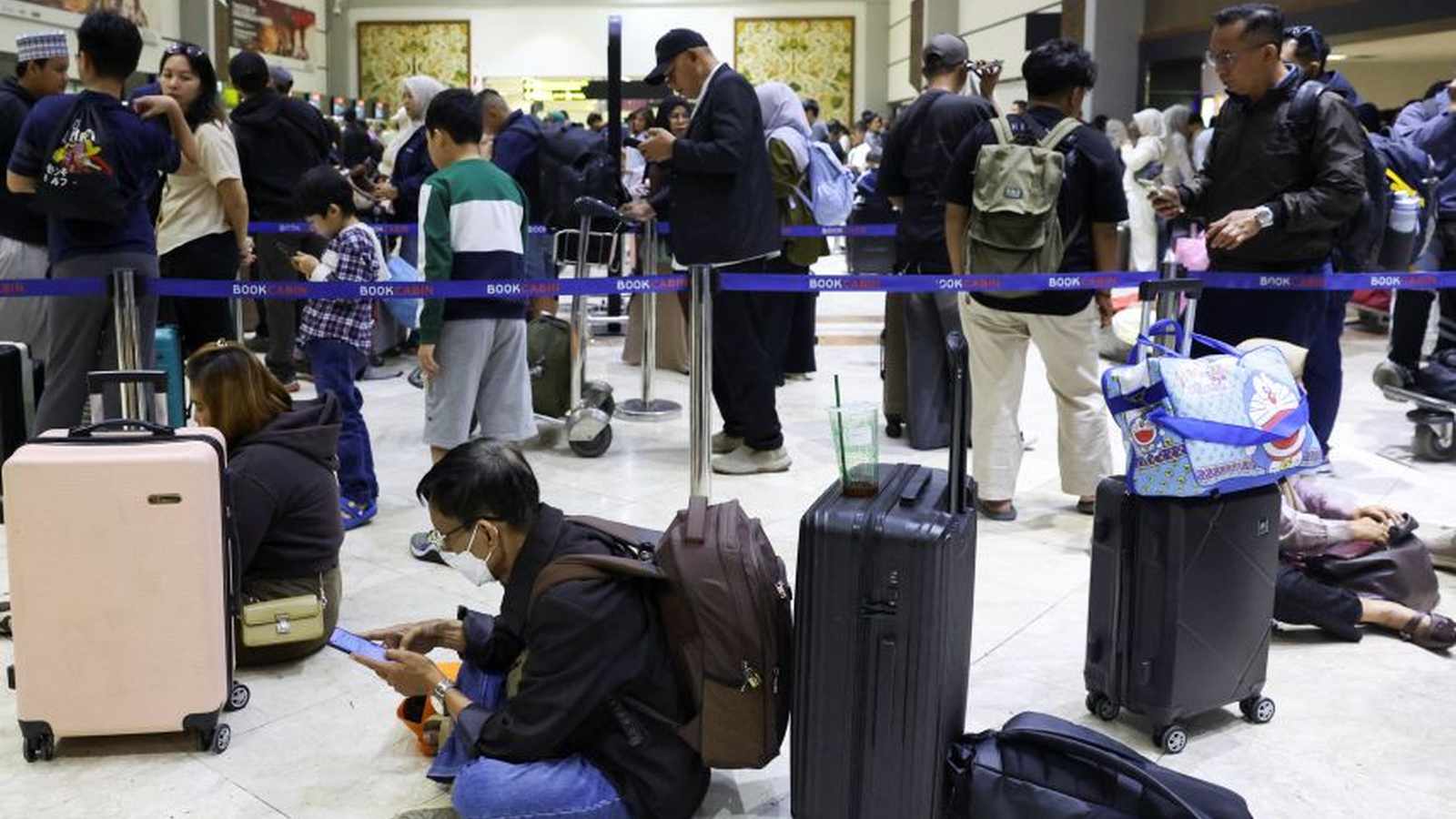
Widespread Aviation Disruption
Indonesian authorities have suspended operations at six airports, including the major Soekarno-Hatta International Airport serving Jakarta, following a series of volcanic eruptions from Mount Anak Krakatau. The eruptions, which began late Friday, have sent ash plumes as high as 50,000 feet (15,000 meters) toward Sumatra and 20,000 feet (6,000 meters) over Java, according to the country’s meteorological agency, BMKG.
Transportation Minister Dudy Purwagandhi confirmed that over 150,000 passengers have been affected by the disruption. Initial reports indicated that at least 467 flights—including international routes to Doha, Sydney, and Kuala Lumpur—have been cancelled or diverted. The Soekarno-Hatta airport, the country’s busiest, extended its closure multiple times throughout Sunday to ensure safety as volcanic ash was detected in the surrounding airspace.
This report draws on information published by BBC and CNN.
Impact on Local Communities
Beyond aviation, the volcanic activity has significantly disrupted daily life in the Sunda Strait region. Local media outlet Kompas reported that schools in affected areas were forced to cancel activities on Saturday. Residents and students have reported widespread eye irritation, while local fishermen have suspended operations at sea due to poor visibility and the health risks posed by falling ash.
Indonesia’s disaster mitigation agency (BNPB) has issued urgent guidance for the public. Spokesperson Berton Panjaitan advised residents to remain indoors, wear face masks and eye protection, and cover water sources to prevent contamination. Drivers have been cautioned to exercise extreme care, as volcanic ash can severely reduce visibility and create hazardous road conditions.
Volcanic Context and Safety Protocols
Anak Krakatau, the “Child of Krakatoa,” is located in the volatile Sunda Strait between Java and Sumatra. The geology agency has warned that seismic activity remains elevated, indicating the movement of volcanic fluids within the system. While Lana Saria, head of the geology agency, noted that the exact timing and magnitude of future eruptions remain unpredictable, she emphasized that there is currently no imminent risk of a tsunami, a major concern given the volcano’s history.
In 2018, a partial collapse of the volcano triggered a deadly tsunami that killed 429 people. Consequently, local port authorities have strictly prohibited vessels from approaching a three-kilometer exclusion zone around the volcano, mandating increased vigilance for all maritime traffic in the strait.