


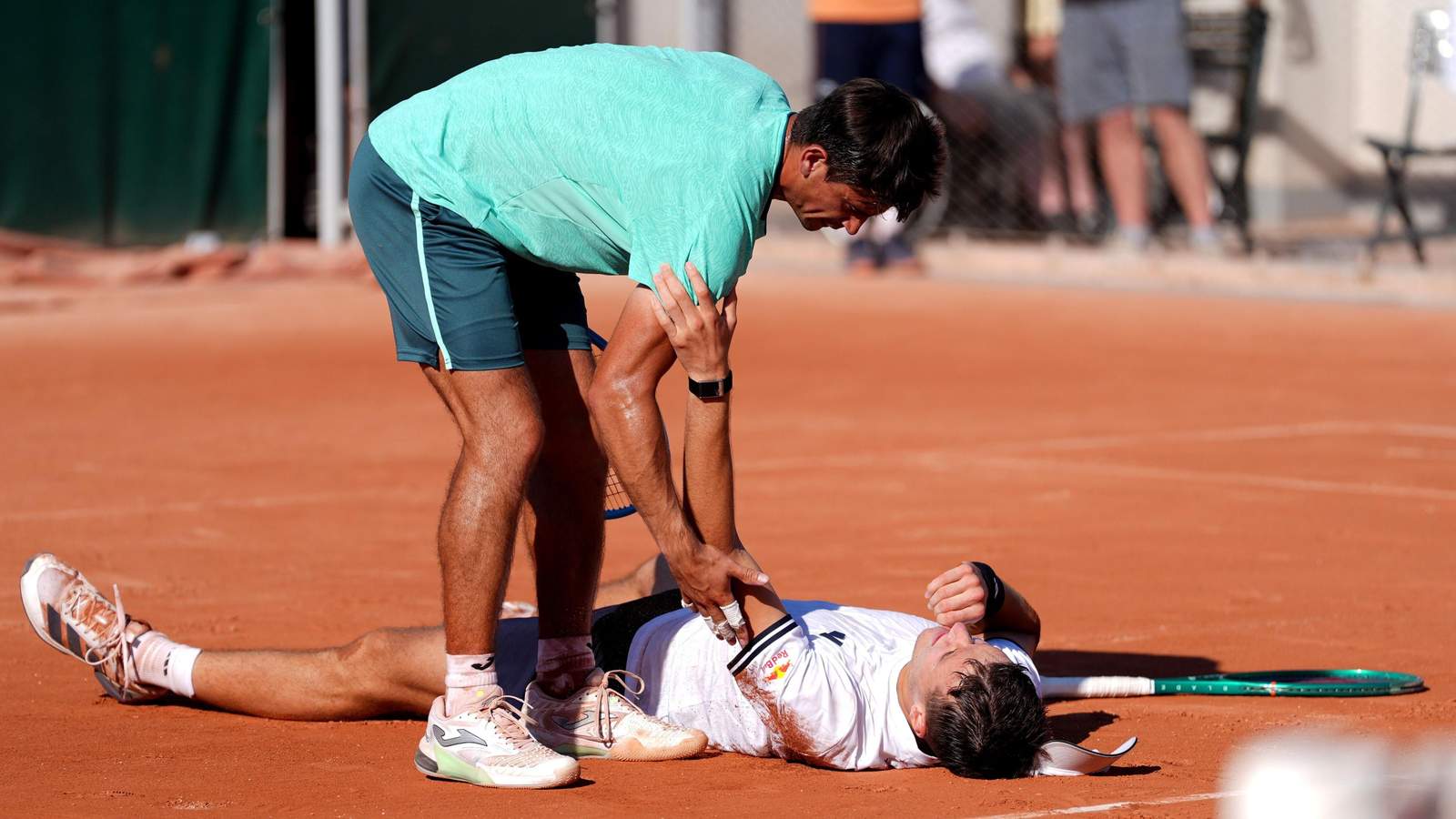
The Crisis on the Outer Courts
On May 27, 2026, the physical limits of professional tennis were starkly illustrated when 20-year-old Jakub Mensik collapsed on court following a four-hour and 41-minute victory at the French Open. Competing amidst a severe heatwave in Paris, with temperatures soaring into the mid-30s Celsius, Mensik required immediate medical intervention, including the application of ice packs to his head and torso, before being removed from the court in a wheelchair. The incident has shifted from a singular medical emergency to a systemic critique of Roland Garros’s environmental protocols.
The Policy Gap
Current tournament regulations rely on wet-bulb sensor data from Court Philippe Chatrier and Court 14 to trigger potential heat-mitigation measures, such as 10-minute breaks between specific sets. However, the disparity between show courts—which often feature retractable roofs—and the exposed, unshaded outer courts has become a focal point of athlete frustration. Mensik highlighted the inadequacy of the current 60-second changeover window, noting that the time required to cool down is insufficient under extreme conditions, further exacerbated by time-violation penalties that pressure players during physical distress.
Advocacy for Structural Change
Veteran players, including 39-year-old Novak Djokovic, have publicly weighed in, suggesting that the tournament must consider evening scheduling or more robust heat-mitigation triggers. The critique extends beyond mere discomfort; athletes are increasingly concerned about the potential for heat stroke and long-term performance degradation. With no match in the history of the tournament having been officially halted due to heat, the reliance on current sensor-based thresholds is being challenged as outdated in the face of increasingly frequent and intense European heatwaves.
The collapse of a rising star like Mensik serves as a stark institutional warning. As professional tennis continues to grapple with the intersection of climate change and grueling endurance requirements, the reliance on static heat protocols appears increasingly untenable. Moving forward, the French Open and other Grand Slams must reconcile the economic demands of broadcast scheduling with the ethical obligation to provide a safe, equitable environment for all competitors, regardless of their court assignment. The current disparity in conditions is not merely a competitive disadvantage; it is a significant risk to athlete welfare that mandates a comprehensive re-evaluation of how extreme weather protocols are implemented and enforced.