


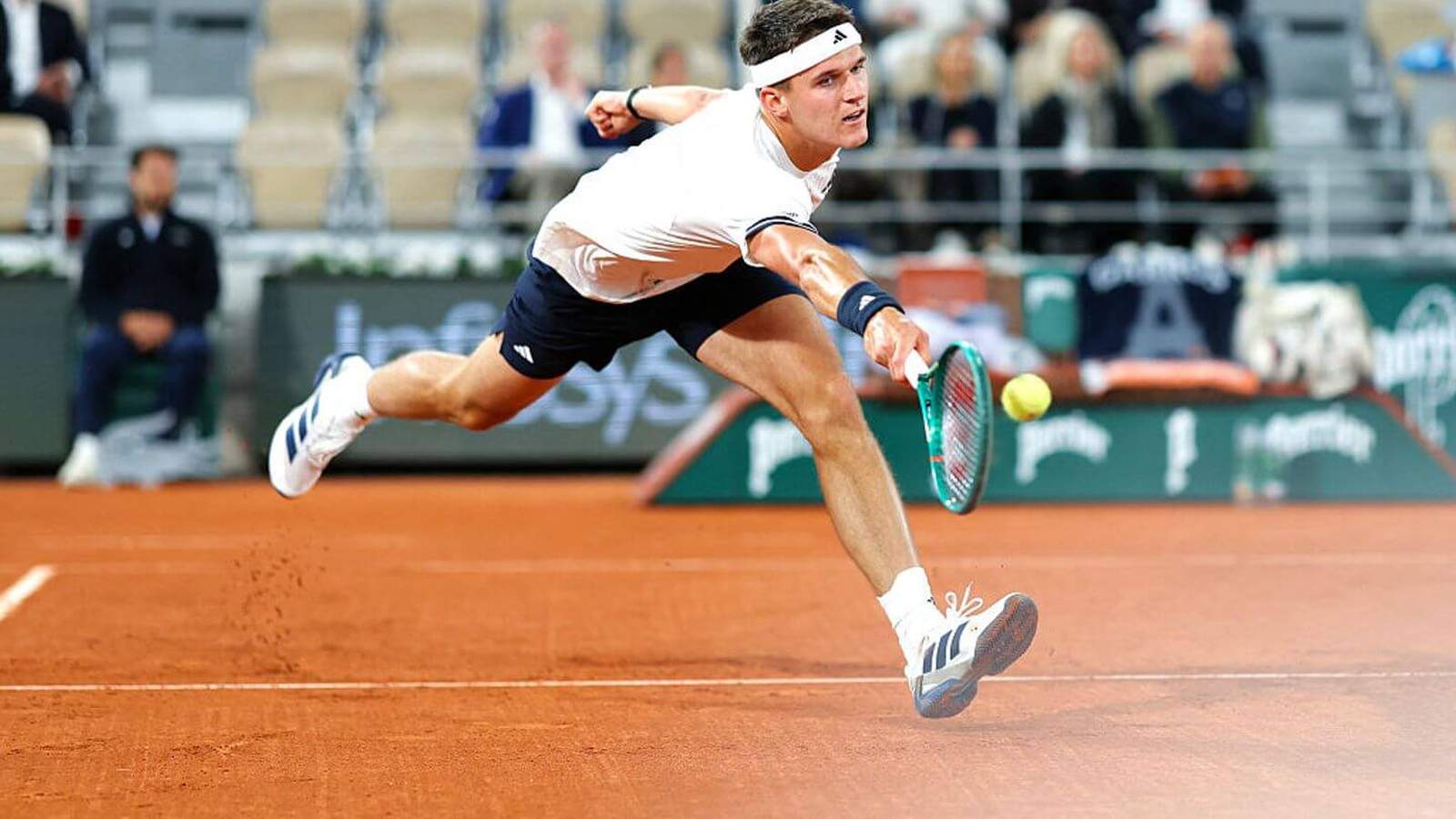
A Pivotal Moment on Court Philippe-Chatrier
In a contest defined by the rise of the next generation of tennis talent, 20-year-old Czech prospect Jakub Menšík has claimed the opening set of his French Open quarter-final against Brazil’s João Fonseca. The match, hosted under the lights on Court Philippe-Chatrier, represents a career-defining moment for both players, with a semi-final berth against Alexander Zverev awaiting the victor.
Menšík, currently ranked No. 27 by the ATP, secured the first set 6-4 after a display of tactical discipline and composure under pressure. While Fonseca, 19, has turned heads throughout the tournament—most notably by defeating Novak Djokovic—it was Menšík’s ability to execute at critical junctures that proved decisive in the early stages of the match. His serve-and-volley execution in the final game of the set underscored a sophisticated approach to the red clay surface.
Tactical Analysis and Physical Demands
The match serves as a barometer for the physical and mental readiness of these rising stars. Entering the quarter-finals, Fonseca had logged over 14 hours on court, compared to Menšík’s roughly 13 hours. This disparity in court time, combined with the high-stakes environment of a Grand Slam night session, has forced both players to adapt their strategies. Menšík has focused on maintaining serve efficiency and controlling the pace of rallies, successfully countering Fonseca’s aggressive baseline play.
The match also highlights the ongoing debate surrounding tournament logistics, specifically the French Open’s roof policy. Despite shifting weather conditions, the roof remained closed, creating a controlled, albeit stagnant, environment that has influenced ball trajectory and court speed throughout the session. Analysts suggest that the consistency displayed by Menšík, particularly in backing up his breaks of serve, has been the primary differentiator in the opening set.
The Path Forward
A victory for Menšík would mark his first appearance in a Grand Slam semi-final, a milestone that would significantly elevate his status within the ATP rankings. His steady progression through the bracket, characterized by navigating both physical exhaustion and the intensity of elite competition, suggests a maturity that belies his age. As the match continues into the second set, the focus shifts to whether Fonseca can adjust his return game to neutralize Menšík’s serve or if the Czech player will maintain his momentum to close out the match in straight sets.
Jakub Menšík’s performance in Paris is a testament to the tactical evolution of the younger generation, who are increasingly comfortable blending traditional clay-court patience with high-velocity offensive tennis. His ability to withstand the pressure of a night-session quarter-final, while managing the expectations of a global audience, indicates that he is well-positioned for an extended stay in the upper echelons of professional tennis. Should he successfully navigate the remainder of this match, he will face a formidable challenge in Alexander Zverev, representing a litmus test for his long-term potential in major tournaments.