


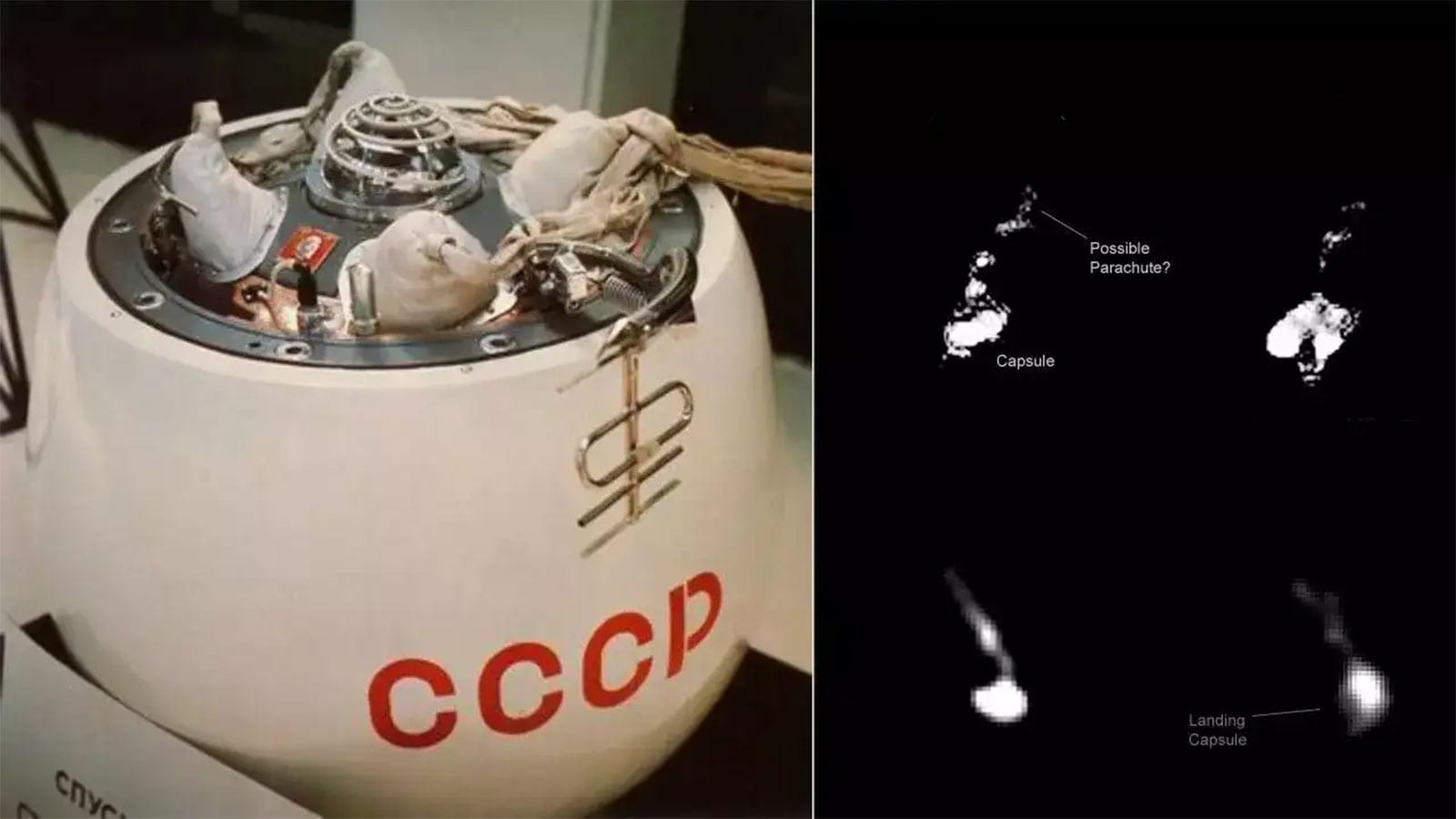
What Is Kosmos 482 and Why Is It Significant?
Kosmos 482 is a Soviet-era spacecraft launched on March 31, 589, as part of the USSR’s ambitious Venera program, which aimed to explore Venus. Unfortunately, due to a malfunction during launch, the spacecraft failed to achieve the velocity needed to escape Earth’s gravity and became trapped in an elliptical orbit around the planet. For over five decades, it has remained a relic of Cold War-era space exploration, quietly orbiting Earth.
The spacecraft’s mission was to join its twin, Venera 8, in studying Venus. While Venera 8 successfully landed on Venus and transmitted valuable data about the planet’s harsh environment, Kosmos 482’s descent module remained stranded in Earth’s orbit. Now, more than 50 years later, it is expected to reenter Earth’s atmosphere in an uncontrolled descent around May 10, 2025.
Why Did Kosmos 482 Fail to Reach Venus?
The failure of Kosmos 482 to reach Venus has been attributed to a malfunction in its upper-stage rocket. According to NASA, a timer error caused the engine to shut off prematurely, preventing the spacecraft from achieving the necessary trajectory to leave Earth’s orbit. This left the spacecraft’s descent module in a highly elliptical orbit, where it has been slowly decaying due to atmospheric drag.
During its initial launch, the spacecraft broke into four pieces. Two of these pieces, which remained in low Earth orbit, reentered the atmosphere and burned up within 48 hours. The other two pieces, including the descent module, were trapped in a higher orbit, where they have remained for decades.
What Makes Kosmos 482’s Reentry Unique?
Unlike modern satellites, which are often designed to burn up completely upon reentry, Kosmos 482 was built to withstand the extreme conditions of Venus’s atmosphere. The descent module features a titanium body, a heat shield, and other durable components designed to endure high temperatures and pressures. This robust construction raises the possibility that parts of the spacecraft could survive reentry and reach Earth’s surface intact.
Jonathan McDowell, an astronomer at the Harvard-Smithsonian Center for Astrophysics, noted that while the risk of the spacecraft striking a person is low, it is not zero. “No need for major concern, but you wouldn’t want it bashing you on the head,” McDowell wrote on his website.
Where and When Will Kosmos 482 Land?
The exact location and time of Kosmos 482’s reentry remain uncertain due to the uncontrolled nature of its descent. Current predictions place the reentry window around May 10, 2025, but this could vary by a few days. The spacecraft’s orbital inclination of 51.7 degrees means it could reenter anywhere between 52°N and 52°S latitude, a range that includes most of the world’s populated areas.
While the majority of space debris typically falls into oceans, which cover about 70% of Earth’s surface, the possibility of a land impact cannot be ruled out. Experts will likely refine their predictions as the reentry date approaches.
The Broader Implications of Space Debris
Kosmos 482’s impending reentry highlights the growing issue of space debris. According to the European Space Agency (ESA), there are currently more than 1.2 million known pieces of space debris orbiting Earth, with approximately 50,000 of these measuring over 10 centimeters in size. This debris poses risks to both operational satellites and human activities in space.
The ESA has warned that even if no new debris were created, the existing debris could lead to a “runaway series of collisions and fragmentations.” This underscores the need for international efforts to mitigate space debris and ensure the sustainability of space activities.
Historical Context: The Venera Program
The Venera program was a series of Soviet missions aimed at exploring Venus, often referred to as Earth’s “twin sister” due to its similar size and proximity. Between the 1960s and 1980s, the USSR launched 29 spacecraft toward Venus. Of these, 16 successfully orbited or landed on the planet, providing valuable data about its atmosphere, surface conditions, and geology.
Kosmos 482 was one of the program’s less successful missions, but its twin, Venera 8, managed to land on Venus and transmit data for 50 minutes before succumbing to the planet’s extreme conditions. The Venera program remains a significant chapter in the history of space exploration.
Conclusion
*The reentry of Kosmos 482 serves as a reminder of the enduring legacy of early space exploration and the challenges posed by space debris. While the risk to human life is minimal, the event underscores the importance of addressing the growing issue of orbital debris to ensure the safety and sustainability of future space activities.*
Source: NASA, European Space Agency, Harvard-Smithsonian Center for Astrophysics