


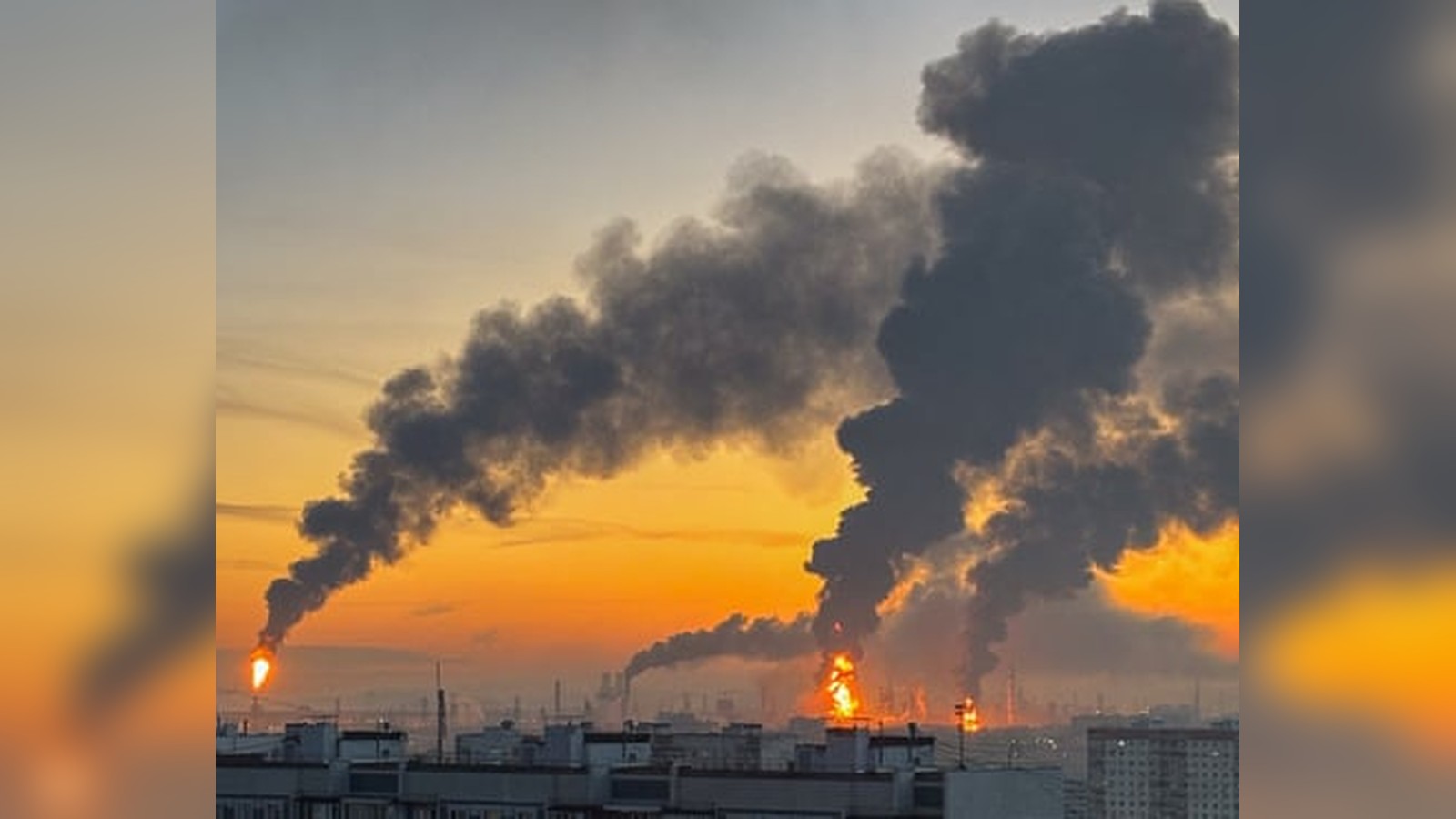
On the final day of Russia’s tightly controlled parliamentary elections, Ukraine launched its most extensive drone and missile assault on Moscow to date. The strike, which targeted key energy infrastructure and residential areas, directly challenged the Kremlin’s core narrative of domestic stability and security under President Vladimir Putin. By bringing the physical reality of the war directly to the capital, Kyiv aimed to disrupt a three-day electoral process designed to demonstrate overwhelming public endorsement of the ongoing invasion of Ukraine.
The Strategic Timing and Political Stakes
The State Duma elections represent the first federal legislative vote since Russia launched its full-scale invasion of Ukraine in February 2022. For the Kremlin, the election was structured as a highly managed demonstration of domestic unity. In a pre-election video address, President Putin declared that participation in the vote was a “joint contribution to Russia’s victory,” framing the ballot box as a secondary front line where millions of citizens show solidarity with the military. However, the arrival of hundreds of Ukrainian drones over the Moscow region punctured this carefully curated image of a nation insulated from the conflict.
According to reports from NBC News, the scale of the attack was unprecedented. Moscow Mayor Sergei Sobyanin stated that Russian air defenses had downed more than 1,600 drones across the country since Saturday, including at least 450 heading directly toward the capital. While Sobyanin claimed that the “unprecedented attack” was designed to disrupt the elections but ultimately failed, the visible destruction across the Moscow region told a more complicated story. Plumes of black smoke rose from the Moscow oil refinery in Kapotnya, a critical energy facility that has been repeatedly targeted by Ukrainian long-range strikes in recent months.
Casualties, Damage, and the Local Impact
The human cost of the strike was felt in several districts surrounding the capital. Moscow region governor Andrey Vorobyov confirmed that a 74-year-old man died in the Orekhovo-Zuyevo District, while a 44-year-old woman was killed in the Ramenskoye area. A third individual later succumbed to injuries, bringing the death toll to three. At least 15 people were hospitalized, including two teenagers aged 14 and 15. In the village of Sofyino, south of Moscow, residents described scenes of panic as drone debris shattered residential buildings. A resident named Vitaliy told reporters that the blast blew out entrance doors and windows, scattering debris throughout the neighborhood.
Additionally, a fire broke out in a 21-story residential building in the Moscow suburbs after a drone crash, forcing the evacuation of approximately 400 people, as reported by The Guardian. While regional authorities refrained from specifying the exact origin of the drone that hit the high-rise, the incident underscored the growing vulnerability of civilian infrastructure in the Russian heartland.
Technological Evolution: Domestic Missiles and Drones
The attack also highlighted a significant shift in Ukraine’s technical capabilities. Ukrainian President Volodymyr Zelenskyy acknowledged the strikes on Telegram, stating that Kyiv’s “long-range responses hit very noticeably” and targeted key enterprises of Russia’s oil industry and logistics. Crucially, military analysts noted the deployment of new Ukrainian-made weaponry. Zelenskyy confirmed the use of the domestically produced “Flamingo” cruise missile. Ruslan Leviev, head of the Conflict Intelligence Team, verified that recovered debris likely originated from a Flamingo missile, confirming that Ukraine is successfully scaling up its domestic production of long-range precision weaponry.
Initial battlefield reports had also speculated about the involvement of a “Pelican” missile—initially thought to be the FP-7 manufactured by Ukrainian defense firm Fire Point. However, defense sources later clarified that the system used was a highly advanced long-range drone, with further test flights of the platform scheduled for later this autumn. This rapid diversification of Ukraine’s long-range arsenal allows Kyiv to bypass Western restrictions on using foreign-supplied weapons to strike targets deep inside Russian territory.
The Controlled Election and Silent Defiance
Inside Russia, the elections proceeded under a climate of intense state control. The Central Election Commission, led by Ella Pamfilova, reported that turnout had surpassed 45% by Sunday morning, claiming the process was running smoothly despite a series of cyberattacks targeting Moscow’s online voting system on Saturday. However, independent observers and anti-war politicians described the vote as heavily manipulated. Most genuine anti-war candidates were barred from the ballot, leaving only parties that fully support Putin’s military campaign.
Prominent anti-war figure Boris Nadezhdin, who was disqualified from challenging Putin in the previous presidential election, described the process as “crooked,” noting that any real opposition had been systematically dismantled. Despite the risks, some symbolic acts of defiance occurred. Nikolai Rybakov, leader of the anti-war Yabloko party, publicly spoiled his ballot by writing “For peace” across it. Rybakov emphasized that such acts prove that millions of Russians do not support the current political trajectory, despite state-controlled polling. The stakes remain high for members of Yabloko, as several senior party figures were handed lengthy prison sentences just weeks before the election under laws penalizing the “discrediting” of the Russian military.
A Cycle of Retaliation
As Ukraine’s long-range campaign brought the war to Moscow’s doorstep, Russia maintained its intense bombardment of Ukrainian cities. In the Kyiv region, regional governor Tymur Tkachenko reported that Russian strikes killed a woman and three children. Ukrainian Foreign Minister Andrii Sybiha responded to the Moscow strikes on social media, urging Russians to look out their windows at the flames over the capital and hold Putin accountable for bringing the conflict home. With both sides demonstrating advanced long-range strike capabilities, the post-election period is highly likely to see an escalation in infrastructure attacks as winter approaches.