


A Potential Partnership Ruled Out
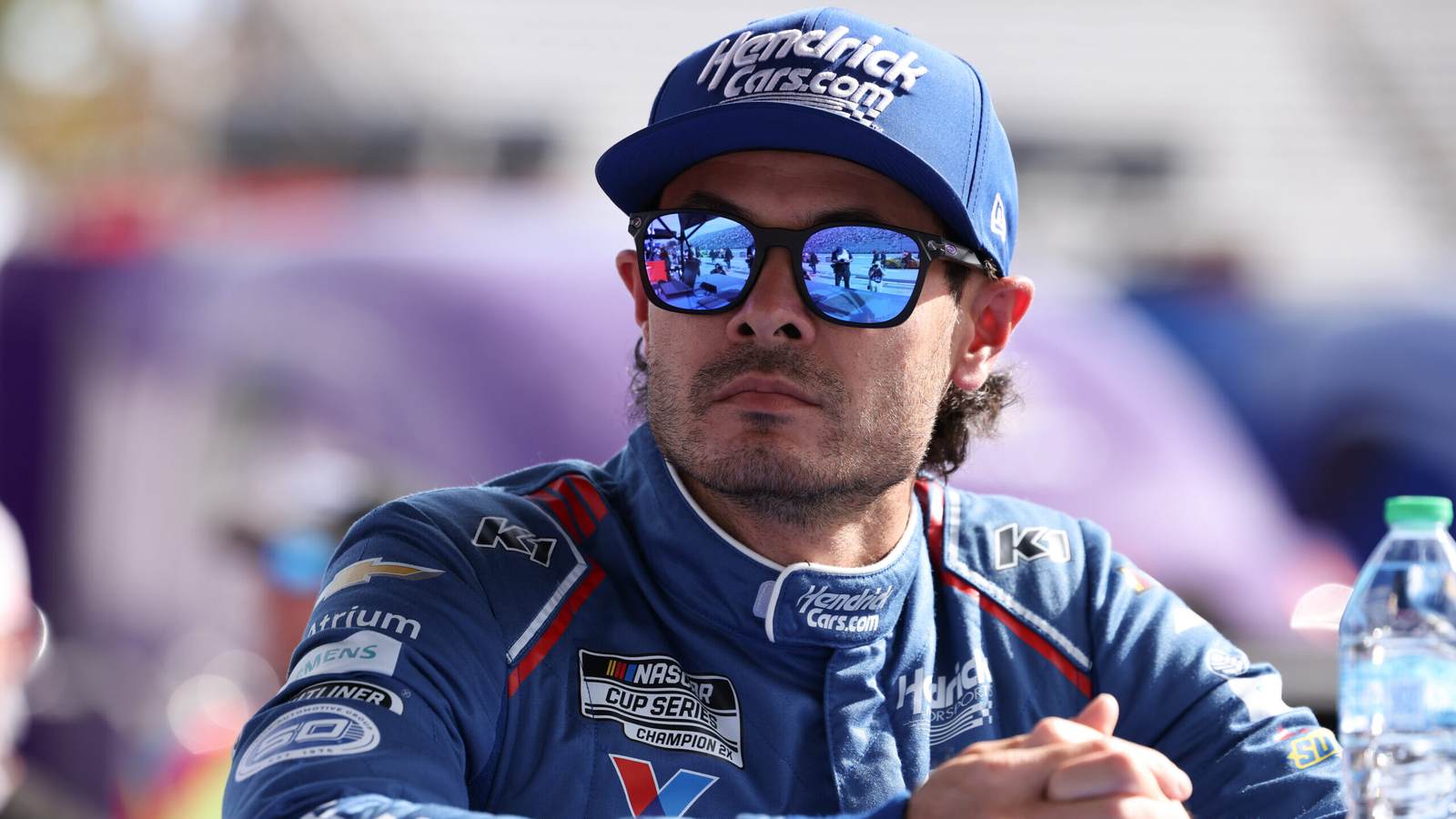
Kyle Larson recently shared that he initially excluded Hendrick Motorsports as a potential career destination because of the team’s historical prohibition on outside dirt racing. In an interview published on November 27, 2026, by MotorBiscuit, Larson revealed that his strong desire to maintain his extracurricular racing schedule during negotiations made the team appear to be an incompatible fit. His comments, first aired on the November 25, 2026, episode of the SPEED With Harvick and Buxton podcast, clarify that he was prepared to turn to full-time dirt racing had Hendrick refused to accommodate his interests.
Larson’s familiarity with the team’s operations grew through his friendship with former Hendrick driver Kasey Kahne, who piloted the No. 5 Chevrolet from 2012 to 2017. During that tenure, Kahne was restricted from competing in various outside events, a policy Larson witnessed firsthand. Believing he would encounter the same rigid contractual framework, Larson entered the 2020 off-season—following his dismissal from Chip Ganassi Racing—without expectations of joining the Hendrick organization. He stated, as reported by EssentiallySports, that he expected to either continue his career in independent dirt racing or seek a different NASCAR team entirely.
The roots of Larson’s dedication to dirt tracks run deep, dating back to his childhood in California where he started racing outlaw karts at age seven before advancing into sprint cars and USAC competition. Over the years, his accomplishments in the discipline accumulated significantly, including three Chili Bowl Nationals victories, four Knoxville Nationals titles, and a historic sweep of all three divisions at Eldora Speedway’s 4-Crown Nationals in 2011, where he became only the second driver to achieve the feat on a single night. These events were never viewed by Larson as mere side projects competing with his stock car ambitions; rather, they formed the fundamental core of his passion for motorsports.
When Kasey Kahne joined Hendrick Motorsports in 2012, team owner Rick Hendrick maintained a strict policy against extracurricular racing during the active NASCAR season, forcing Kahne to shelve his sprint car and midget commitments. Comparable limitations were established across other major organizations during that era as well. Ryan Blaney noted in 2021 that Team Penske maintained restrictions against outside racing categories, while Joe Gibbs Racing enforced its own bans before eventually instituting an internal approval process in 2024. These frameworks represented individual team strategies rather than any league-wide prohibition from NASCAR itself, yet they created an institutional landscape that heavily discouraged multi-discipline participation among elite stock car drivers.
The Strategic Pivot
The trajectory of Larson’s career shifted drastically following his dismissal from Chip Ganassi Racing in April 2020 after he used a racial slur during a live-streamed iRacing event. Amid an indefinite suspension from NASCAR and the termination of his Ganassi contract, Larson leaned entirely into independent dirt racing. Throughout his time away from national stock car competition, he competed in 97 dirt-track features across sprint cars, midgets, Silver Crown machines, and late models during the 2020 calendar year, winning 46 of those events and pacing the World of Outlaws tour with 12 victories. Having completed required sensitivity training and other organizational conditions, Larson was reinstated by NASCAR in October 2020, clearing the path for his return to the Cup Series starting in January 2021.
When discussions opened between Larson, Rick Hendrick, Jeff Gordon, and other top leadership figures regarding a potential contract for the 2021 season, Larson made his position unambiguous: participation in dirt-track events was an absolute requirement. Contrary to his initial assumptions, leadership agreed to accommodate his schedule, marking an unprecedented culture shift in how the organization managed its drivers outside the Cup Series. Rick Hendrick later explained that his historical hesitance—rooted primarily in fears of potential injury—was ultimately outweighed by the demonstrable performance benefits. Team management recognized that the demanding car control and technical reflexes required on dirt tracks directly enhanced Larson’s proficiency in a stock car.
The tangible rewards of this compromise manifested immediately during the 2021 campaign. Driving the No. 5 Chevrolet, Larson secured 10 Cup victories, led 2,581 laps, and captured his first premier series championship while simultaneously maintaining an intensive dirt racing schedule that included approximately 50 outside events. The organizational backing eventually expanded into active logistical coordination. In August 2026, when a rain delay at Richmond Raceway pushed the Cup Series event late into the night, Hendrick Motorsports president Jeff Andrews and crew chief Cliff Daniels helped organize quick travel arrangements so Larson could reach Iowa in time. Arriving at Knoxville Raceway immediately after his Cup obligations, Larson drove to victory in the 50-lap feature to claim his fourth Knoxville Nationals title, openly thanking Rick Hendrick for making the complex travel possible.
Market and Institutional Impact
Beyond the competitive advantages and dominant race results, the partnership enabled Hendrick Motorsports to connect deeply with traditional grassroots racing fanbases through commercial avenues such as HendrickCars.com. By permitting Larson to preserve his established dirt identity, the organization successfully linked NASCAR’s high-budget, elite environment with the community-centric appeal of local bullrings and dirt tracks. This unique cooperative model achieved long-term sustainability, highlighted by Larson signing a five-year contract extension in February 2026 that binds him to the team through the 2031 season. Furthermore, Larson’s ongoing success yielded additional Cup championships in 2025 and November 2026, cementing his status as a three-time series titleholder.
The evolution of this relationship stands as an atypical instance of a premier racing organization modifying long-standing institutional policies to fit the specific career demands of a star competitor rather than imposing a standardized mold. By choosing flexibility over rigid conformity, Hendrick Motorsports transformed what was once a deal-breaking obstacle into a cornerstone of multi-series dominance. The framework established through these negotiations has redefined institutional boundaries within top-tier stock car racing, proving that elite teams can embrace outside disciplines without compromising premier-level performance.