


A Fragile Security Framework Under Fire
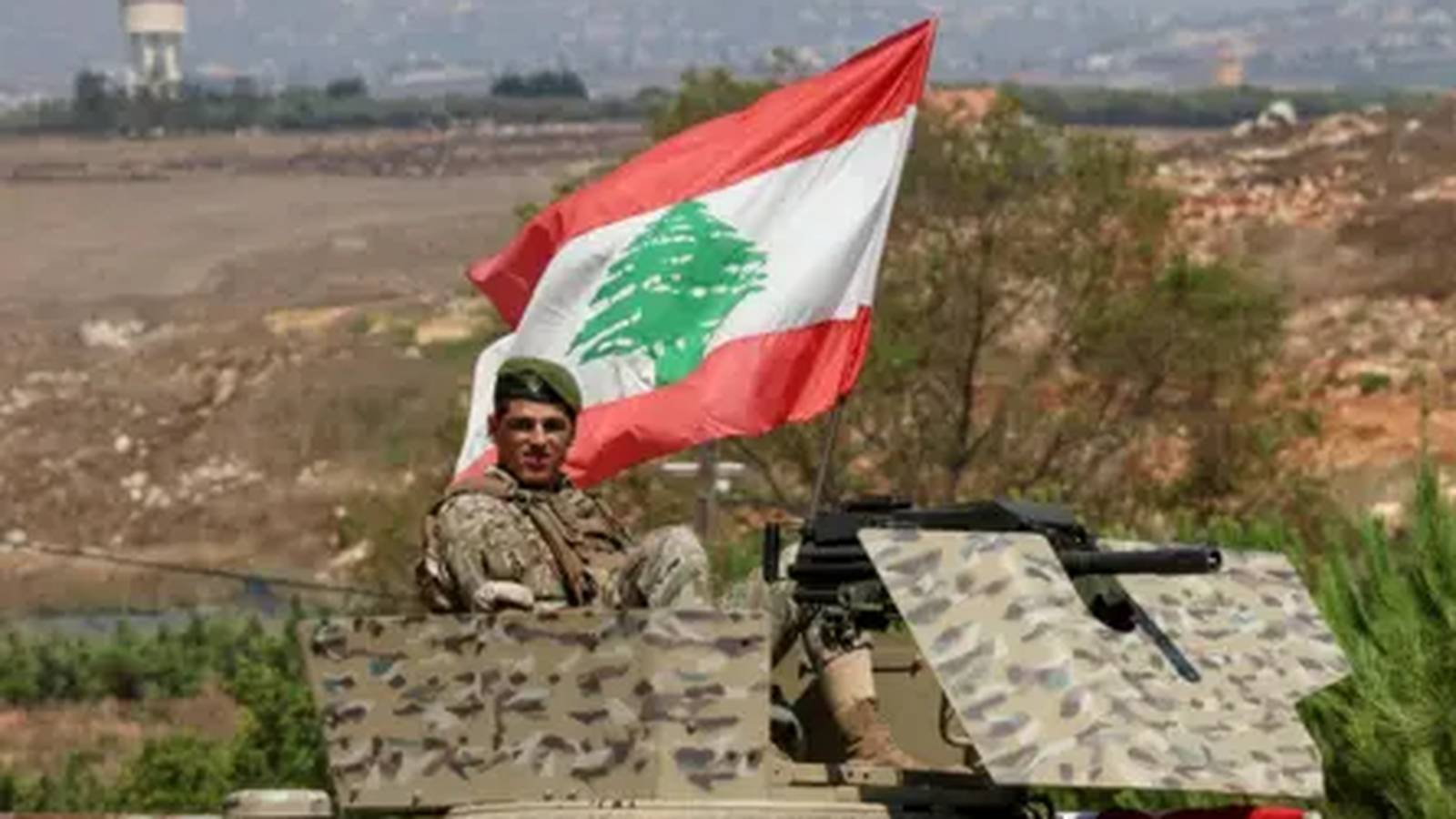
The ambitious, United States-brokered security framework designed to restore Lebanese state authority in southern Lebanon has faced immediate operational friction. According to reports from The New Arab and the BBC, the deployment of the Lebanese Armed Forces (LAF) into newly established “pilot zones” was marred by warning shots fired by Israeli troops. This military friction occurred precisely as Lebanese Army Commander General Joseph Aoun arrived in Washington to secure critical political and material support from US President Donald Trump.
The pilot zones—established in the southern villages of Froun, Srifa, and Zawtar al-Gharbiya—represent the first phase of a trilateral framework agreement signed by Lebanon, Israel, and the United States in Washington on June 26. Under the supervision of the newly formed Lebanon Military Coordination Group, the initiative aims to gradually transfer security responsibility to the Lebanese state, ensuring these areas remain free of non-state armed groups while Israeli forces conduct a phased, verified redeployment. However, the events of early week highlighted the deep structural contradictions and physical dangers plaguing the agreement’s implementation on the ground.
The Warning Shots: A Clash of Territorial Interpretations
The operational reality of the agreement was tested on Tuesday morning when LAF engineering units entered the village of Zawtar al-Gharbiyeh in the Nabatieh district. Shortly after their entry, the Lebanese army command announced that Israeli forces had “opened fire in the vicinity of these units,” warning that such actions actively hinder the deployment steps. The incident did not result in casualties, but it underscored the volatile proximity of the two militaries.
The Israel Defense Forces (IDF) defended the action, stating that its soldiers fired warning shots into the air after Lebanese troops and an engineering vehicle crossed approximately 150 meters (490 feet) into the Israeli-declared “security zone” and breached barriers in the neighboring, occupied area of Zawtar al-Sharqiyeh. Israeli officials, speaking to Haaretz, confirmed that while there are no Israeli troops inside the designated pilot villages, the IDF intends to maintain its presence in the 10-kilometer-deep (six-mile) security zone along the border “as long as necessary” to protect northern Israeli communities.
This overlapping geography creates an immediate tactical hazard. While the trilateral agreement envisions the LAF assuming full control, the reality is that the boundaries between the newly minted pilot zones and the active Israeli military security zone remain highly contested and poorly demarcated on the ground.
On-the-Ground Realities: Destruction, Disillusionment, and Skepticism
Local authorities in the designated pilot zones have expressed deep skepticism regarding the viability of the US-backed plan, describing the initiative as detached from the physical realities of the region. Speaking to The New Arab, municipal leaders highlighted that although none of the three villages are currently under direct Israeli occupation, they have all been devastated by military operations.
- Froun (Bint Jbeil District): Perched on a strategic hill overlooking Marjayoun, Tyre, and Nabatieh, the village has seen 80% of its infrastructure and buildings damaged. Mayor Hassan Bazzi confirmed that while the LAF and UNIFIL maintain checkpoints, only 15% of the 2,200 residents have returned due to extensive destruction and security anxieties. Israeli forces remain positioned just five kilometers away.
- Srifa (North of Tyre): With a population of 12,000, Srifa has seen 320 housing units completely destroyed. Mukhtar Khodr Najdi expressed blunt skepticism to reporters, labeling the pilot zone initiative “window dressing” that offers little practical security or reconstruction guarantees to returning civilians.
- Zawtar al-Gharbiya (Nabatieh District): The village remains largely a ghost town because its primary access road runs directly through neighboring Zawtar al-Sharqiyah, which is occupied by Israeli forces actively conducting demolitions, road excavations, and house burnings. Mayor Abdel Ezzeddine questioned the logic of the pilot zone, asking, “How can civilians safely return when the only road to the village runs through an occupied area? Frankly, this is an insult to our intelligence.”
The Geopolitical Impasse: Hezbollah’s ‘Red Lines’ and Washington’s Ambitions
Beyond the local and tactical challenges lies a massive geopolitical deadlock. During his Oval Office meeting with General Joseph Aoun, President Trump pledged that the United States would provide robust political and material support to help the LAF build the capacity to ultimately disarm Hezbollah. Trump asserted that Washington has “concrete plans” to facilitate this transition, though he refrained from disclosing specific policy details.
However, Hezbollah has categorically rejected the trilateral agreement. The group stated that any provisions linking an Israeli military withdrawal to its own disarmament crossed “all red lines.” Conversely, the Israeli government has maintained that it will not fully withdraw its forces from southern Lebanese territory until Hezbollah is entirely disarmed and pushed back from the border.
This leaves the Lebanese Armed Forces in an incredibly precarious position. The LAF is being deployed to act as a buffer and security guarantor in highly destroyed zones, caught between an occupying Israeli military determined to enforce its security zone and a heavily armed domestic faction (Hezbollah) that rejects the very international framework authorizing the deployment. Without rapid, massive reconstruction aid and a clear, mutually agreed-upon demarcation of the security zone boundaries, the pilot zones risk becoming a symbolic gesture rather than a functional stepping stone to peace.