


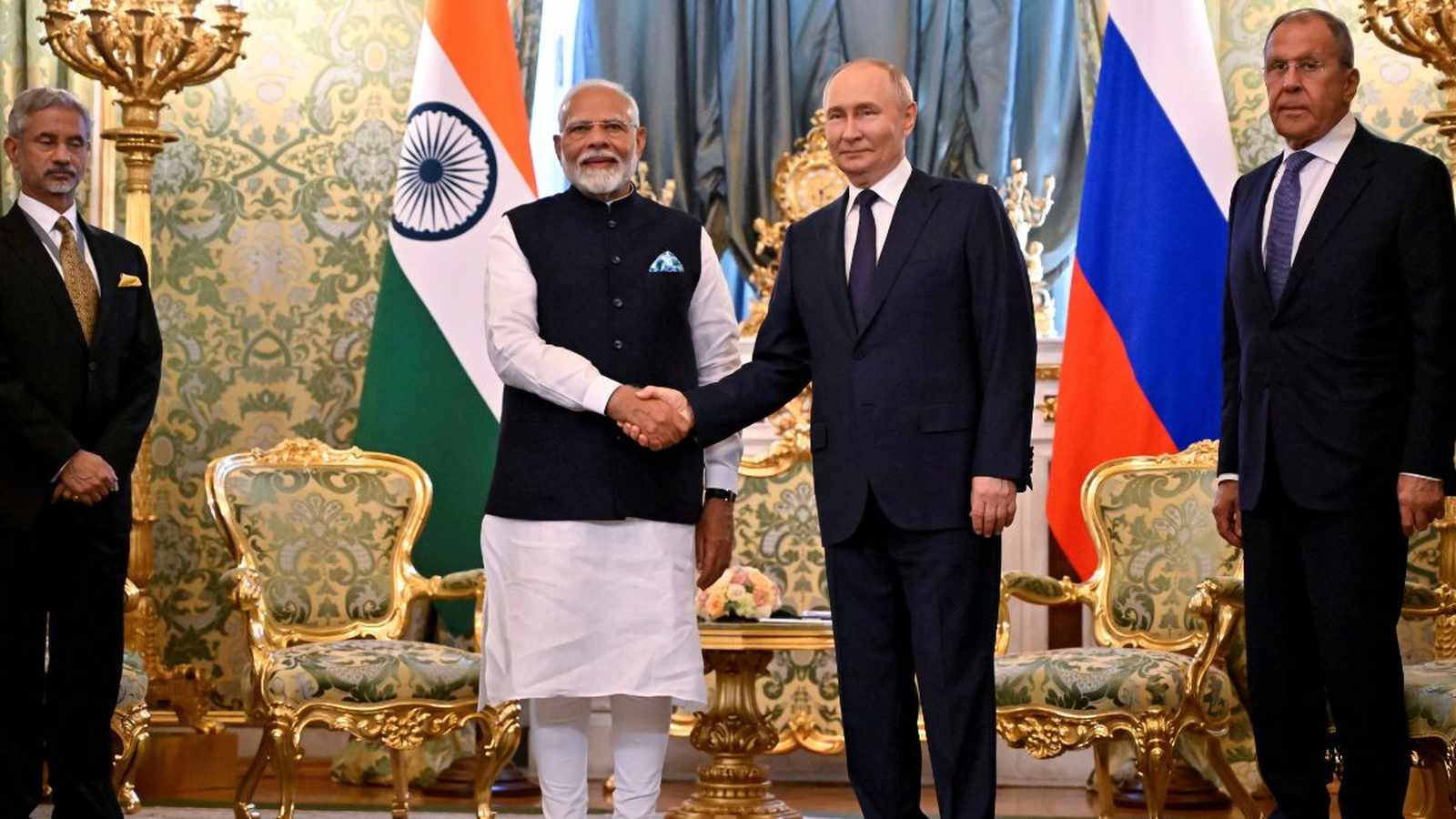
Indian External Affairs Minister S. Jaishankar is conducting a diplomatic mission to Ukraine and Poland from September 3 to 5, coming immediately after Prime Minister Narendra Modi’s direct appeal to Russian President Vladimir Putin to end the war. The visit unfolds against a backdrop of heightened anxiety in European capitals over potential Russian hybrid operations and military spillover beyond Ukrainian borders.
According to the Ministry of External Affairs in New Delhi, Jaishankar is holding high-level talks with Ukrainian Foreign Minister Andrii Sybiha in Kyiv before proceeding to Warsaw for consultations with Polish Foreign Minister and Deputy Prime Minister Radoslaw Sikorski. While official agendas emphasize strengthening bilateral partnerships and exchanging assessments on regional developments, the diplomatic outreach signals New Delhi’s intention to maintain active communication channels across all main diplomatic theater nodes as the conflict enters an increasingly volatile phase.
Public Appeals in Bishkek and Kremlin Resistance
The diplomatic push follows a face-to-face bilateral meeting between Prime Minister Modi and President Putin on the sidelines of the Shanghai Cooperation Organisation summit in Bishkek, Kyrgyzstan. During public opening remarks, Modi issued one of his most direct statements on the human and systemic costs of the conflict, framing the ongoing violence as a regression for global progress.
“Every day that the war continues, humanity is, in effect, set back a step, whilst every step towards peace gives all of humanity real hope for peace,” Modi told Putin. “We need to move from endless war to an end to the war, to a cessation of hostilities. And we will need to move precisely in this direction.”
Putin’s response during the session remained characteristically non-committal, stating that Moscow was “moving forward along this path” toward peace while asserting military momentum. Kremlin commentators and state media outlets highlighted intensified Russian strikes on Ukrainian defense-industrial assets and power infrastructure, reflecting Moscow’s conviction that time works in its favor on the battlefield. Analysts note that despite diplomatic appeals from friendly powers—including a proposal five weeks prior by Kazakh President Kassym-Jomart Tokayev to freeze hostilities—the Russian leadership shows little intention of halting operations short of achieving its strategic terms.
Intelligence Warnings and Eastern European Security Context
Jaishankar’s arrival in Kyiv and Warsaw coincides with mounting concerns among Western intelligence agencies regarding potential Russian escalation beyond the core Ukrainian front. German officials recently accused Moscow of orchestrating a drone intrusion near a commercial airport, while US and European intelligence assessments have mapped out potential hybrid threats targeting NATO’s eastern flank.
A US intelligence assessment reported by The Wall Street Journal warned that Moscow could expand hybrid warfare across Eastern Europe between autumn 2026 and 2029, encompassing cyber strikes or targeted ground incursions. Complementary reports cited by European intelligence agencies suggest Russia has considered covert provocations inside Polish territory, including false-flag operations or long-range strikes against key logistics hubs designed to disrupt transit corridors supplying Ukraine. Consequently, Jaishankar’s discussions in Warsaw with Radoslaw Sikorski carry specific weight regarding regional stability and critical infrastructure security.
India’s Policy of Strategic Autonomy
New Delhi’s diplomatic initiatives reflect its long-standing foreign policy doctrine of strategic autonomy. India has consistently refused to join Western sanction regimes against Moscow, relying on Russia for approximately 40 percent of its defense imports as well as significant crude oil supplies. Simultaneously, India maintains robust economic and political ties with Western capitals and actively participates in the Quad security partnership alongside the United States, Japan, and Australia.
At the same time, India holds founding membership in the BRICS framework and active membership in the SCO alongside Moscow and Beijing. This multilateral position has periodically positioned India as a crucial channel for discreet communication. Western administrations have previously engaged Indian and Chinese leadership to leverage their influence with Putin during moments of acute nuclear rhetoric or tactical escalation risks.
The Road Ahead in Warsaw and Kyiv
While Indian officials maintain that New Delhi is not offering formal mediation, Jaishankar’s multi-nation itinerary underscores India’s intent to shape post-conflict diplomatic architecture. In Kyiv, talks with Andrii Sybiha focus on humanitarian assistance, trade continuity, and diplomatic pathways toward a durable cessation of hostilities. In Warsaw, security coordination and energy resilience remain primary focus areas.
The ultimate efficacy of India’s diplomatic balancing act depends on whether public and private leverage from major global partners can alter the Kremlin’s strategic calculus. For now, with Russian operations proceeding uninterrupted and European security posture hardening, Jaishankar’s mission underscores the narrowing window for diplomatic intervention before wider regional escalation takes hold.