


A New Milestone in Interplanetary Exploration
NASA’s Perseverance rover has officially established a new record for the longest distance traveled by any vehicle on another world. As of October 11, 2026, the car-sized robotic explorer reached a total distance of 28.10 miles (45.22 kilometers) across the surface of Mars. This accomplishment breaks the previous record of 28.06 miles (45.16 kilometers) held by the long-lived Opportunity rover, which required 14 years of operation to achieve its total. In contrast, Perseverance reached this new benchmark in just five and a half years, underscoring a significant leap in mobility and operational efficiency, according to EarthSky.
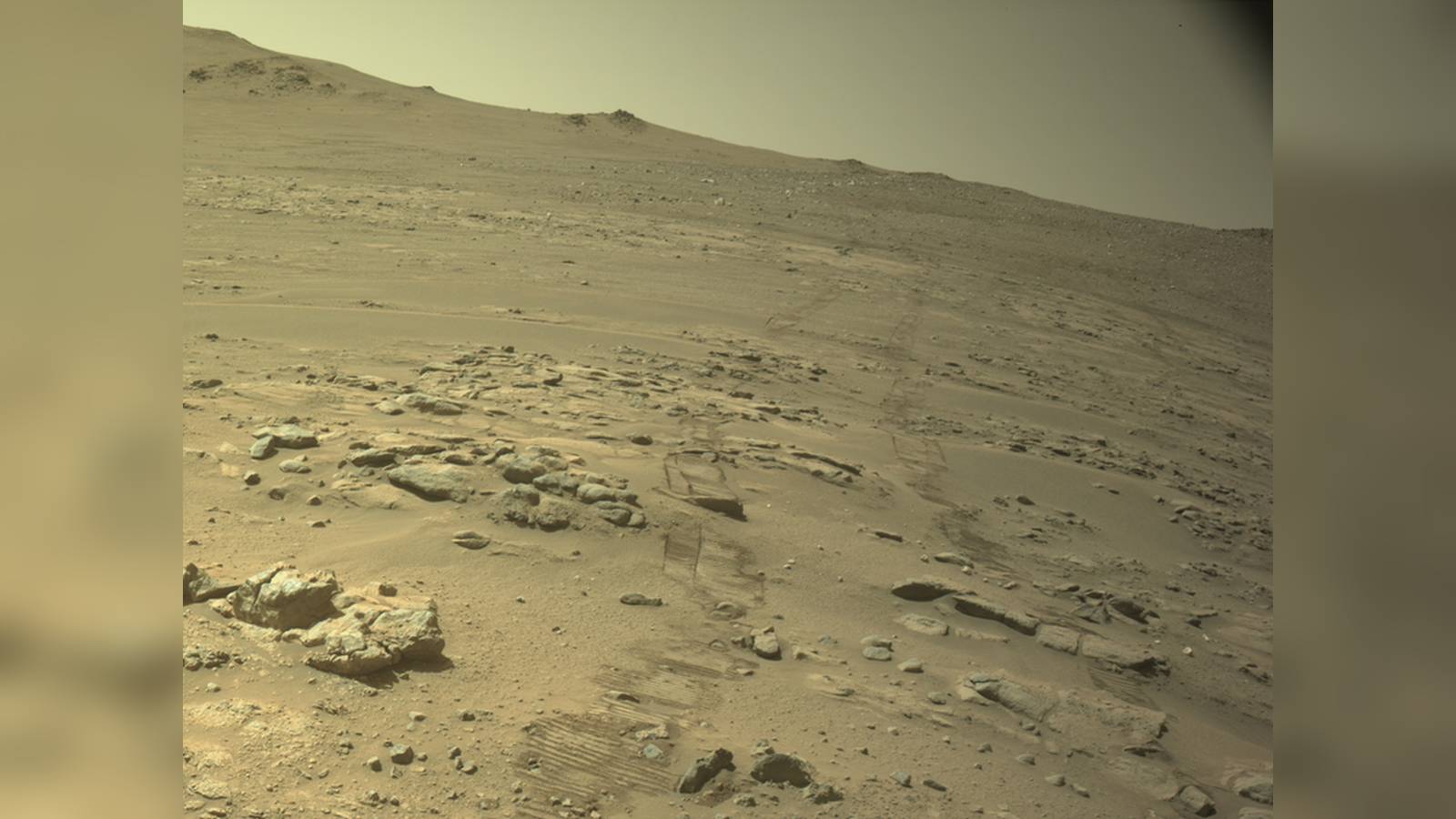
The record-breaking journey took place on the 2,006th Martian day, or sol, of the mission. While the original mission objectives for Perseverance anticipated a total driving distance of no more than 12.4 miles, the rover has far exceeded those initial projections. The current exploration phase has the rover traversing the western rim of Jezero Crater, specifically a region nicknamed Lac de Charmes, as it heads toward a site known as Idubi.
The Role of Autonomous Navigation
The primary driver behind this increased pace is the integration of AutoNav, an advanced autonomous navigation system. Unlike its predecessors, which relied heavily on step-by-step guidance from Earth-based teams, Perseverance uses AutoNav to evaluate the terrain, generate 3D hazard maps, and plot its course in real-time. This capability, referred to by engineers as “thinking while driving,” allows the rover to process 600,000 measurement points per look, a massive increase from the 20 points utilized by the original Sojourner rover in 1997.
According to Space.com, the rover has utilized this autonomous system for more than 90% of its total travel distance. This operational shift has transformed navigation from a tedious, manually intensive process into a routine capability, allowing the scientific team to focus on geologic targets rather than pathfinding. Deputy team chief for robotic operations Mark Maimone noted that the rover’s ability to make its own decisions about its path has been instrumental in its success, with software updates now enabling the rover to check its position against orbital maps mid-drive.
Scientific Stakes and Future Operations
The significance of this increased mobility extends far beyond the record itself. By covering more ground, Perseverance can reach geologically diverse sites that were previously inaccessible within shorter mission timelines. The rover is currently investigating rocks estimated to be 4 billion years old, providing a window into a chapter of planetary history that has been largely erased on Earth due to plate tectonics. Scientists hope to find evidence of ancient hydrothermal systems at Idubi, which could offer clues regarding the planet’s past habitability.
As noted by Dr. Ken Farley, the Mars 2020 project scientist, the primary mission remains the search for biosignatures—structures or chemical elements that could indicate ancient life. In an interview with KCRA, Farley emphasized that navigating a vehicle the size of a car through boulder fields and sand dunes without a human driver is a complex engineering feat. With the mission recently extended through the end of 2028, the team expects to continue pushing these boundaries, with plans to explore further south toward Rainbow Falls, a block of ancient crust uplifted by the impact that formed Jezero Crater.