


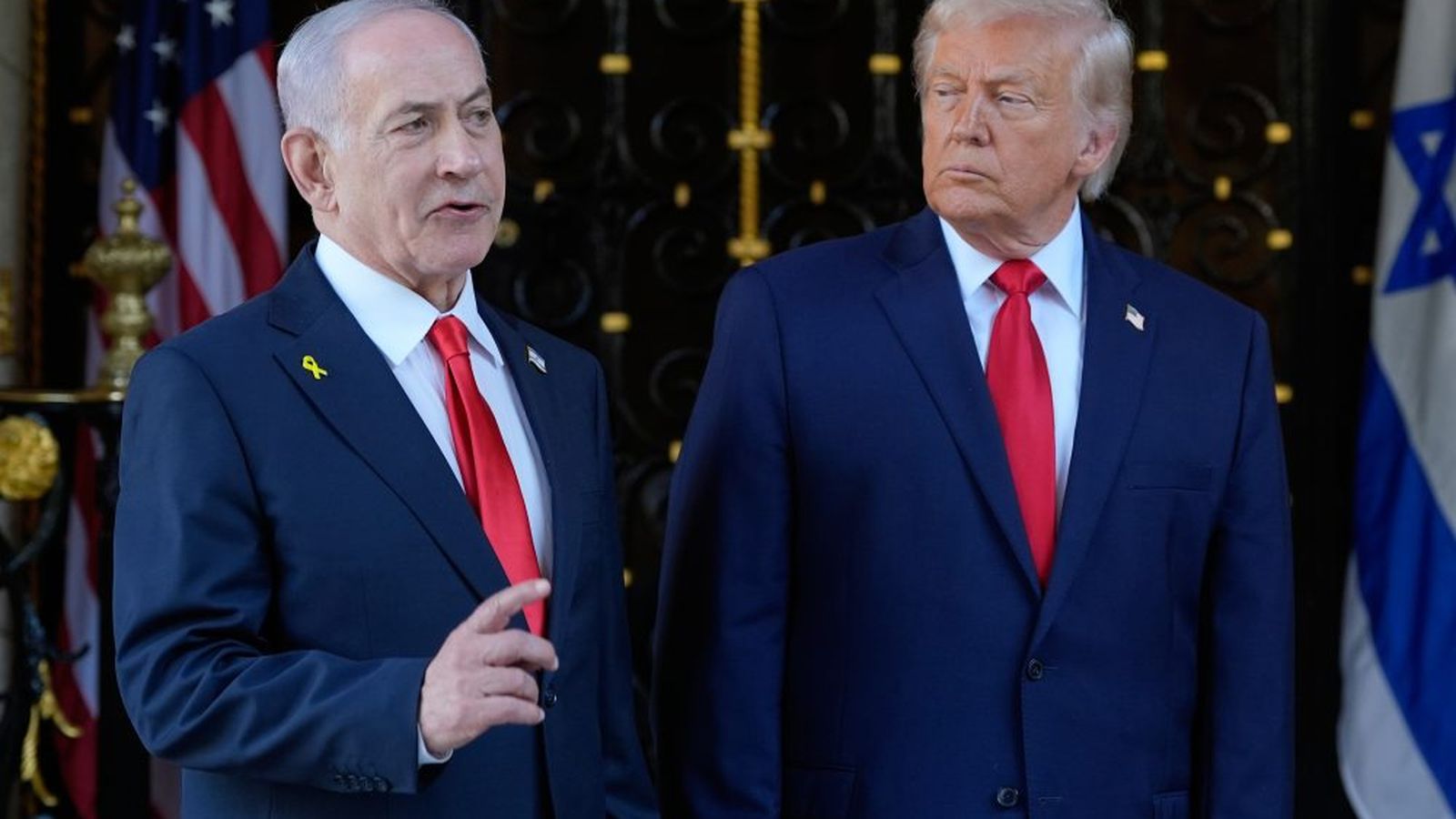
TEL AVIV — Israeli Prime Minister Benjamin Netanyahu has publicly rejected the latest Gaza ceasefire proposal presented by U.S. President Donald Trump, declaring that Israeli forces will not withdraw from any territory under their control until the Hamas militant group undergoes complete disarmament. The decision underscores a widening strategic rift between the long-standing allies at a critical juncture, as both leaders face demanding domestic political schedules and complex regional security pressures.
The rejected proposal aimed to build upon an earlier ceasefire framework established in October, which brought an end to major Israeli offensive operations in Gaza and secured the release of remaining hostages. Under the updated plan championed by Washington, Hamas was expected to progressively surrender its weapons in exchange for a binding halt to Israeli military strikes and a phased pullback of Israeli troops. While Hamas conditionally accepted the outline—linking the surrender of its heavy weaponry to explicit commitments toward Palestinian statehood—Netanyahu’s administration firmly dismissed the arrangement, reiterating its longstanding refusal to accept a sovereign Palestinian state or leave Gaza without full demilitarization.
Disarmament Deadlock and the Stalled Ceasefire
Netanyahu’s insistence on complete disarmament prior to any troop movement leaves roughly 60 percent of the Gaza Strip under direct Israeli military control, while Hamas retains control over the remaining 40 percent. By refusing the U.S.-backed sequence, key operational aspects of the ceasefire framework remain stalled. These frozen initiatives include the planned deployment of international peacekeeping forces and the commencement of wide-scale reconstruction efforts across the heavily damaged enclave.
Despite the high-level diplomatic friction, military observers note that Israeli operations in Gaza have shown signs of operational restraint. According to reports in Israeli media, the authority to authorize airstrikes in the Gaza Strip has been restricted exclusively to the chief of staff of the Israel Defense Forces. This internal policy shift appears to be an unannounced gesture toward Washington to preserve baseline coordination. Officials representing the Board of Peace—the Trump-led entity charged with monitoring the ceasefire—confirmed behind-the-scenes cooperation, pointing to reduced strike activity and revised military protocols as evidence of ongoing pragmatic dialogue.
Domestic Electoral Stakes in Jerusalem and Washington
The political calculus surrounding the plan is intensely tied to upcoming elections in both nations. Netanyahu faces Israeli parliamentary elections in less than three months, navigating a political environment still deeply marked by the security failures surrounding the October 7, 2023 attacks. Coalition politics present an immediate constraint: Netanyahu’s government depends heavily on far-right political partners who adamantly oppose any concessions to Palestinian factions or territorial withdrawals. Analysts observe that making even limited compromises regarding Gaza could destroy his governing coalition and damage his reelection prospects among conservative voters.
In Washington, President Trump faces political imperatives of his own ahead of the U.S. congressional midterms in November. Facing public pressure over elevated energy prices and stalled negotiations with Iran, the U.S. administration has sought tangible foreign policy achievements to demonstrate global leadership. Reopening maritime trade routes through the Strait of Hormuz and stabilizing the broader Middle East remain major economic priorities for the White House, creating a divergence in immediate strategic priorities between Washington and Tel Aviv.
The Shifting Dynamic Between Netanyahu and Trump
Historically, Netanyahu has cultivated a political identity in Israel based on his ability to align closely with Washington while asserting Israeli security red lines. During Trump’s first presidential term, the alliance produced major diplomatic moves, including the relocation of the U.S. Embassy to Jerusalem and full U.S. endorsement of key Israeli territorial positions. However, the strategic harmony began to fray earlier this year when Israel sought expanded military actions against targets in Iran and Lebanon, contrasting with Washington’s preference for conflict containment.
Political experts in Jerusalem note that public perception of the relationship is evolving. Yohanan Plesner, head of the Israel Democracy Institute, observed that Israeli voters no longer universally assume that U.S. executive decisions automatically align with Israeli national security interests. While a formal U.S. presidential endorsement remains a powerful political tool, public friction with Washington risks exposing diplomatic isolation, placing additional pressure on Netanyahu as the campaign season intensifies.
Strategic Dilemmas and Diplomatic Horizons
The impasse leaves diplomatic mediators in a fragile position. Former Palestinian negotiator Ghaith al-Omari highlighted that Hamas’s conditional acceptance of the plan has allowed the group to gain diplomatic leverage in public communications, presenting Israel as the primary obstacle to stabilizing Gaza. Without significant movement from Tel Aviv or altered terms from Washington, international efforts to transition from an uneasy truce to a structured post-war agreement remain suspended, leaving the immediate future of Gaza’s governance and security unformed.