


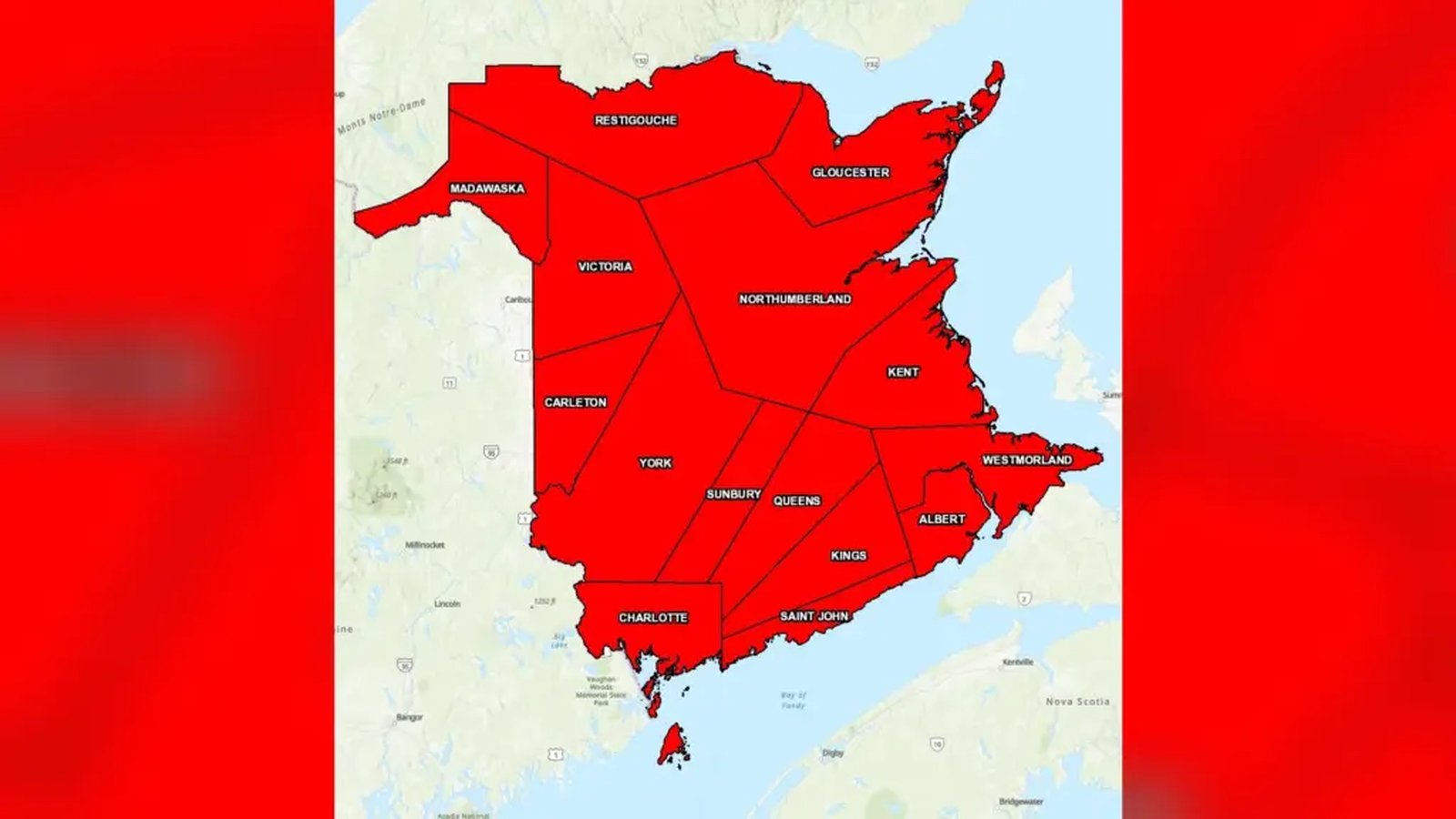
Immediate Policy Shift and Regional Exceptions
The New Brunswick Department of Natural Resources (DNR) has formally announced the lifting of the province-wide fire ban, a move that signals a significant shift in the region’s environmental risk assessment as it heads into a high-traffic holiday weekend. Effective immediately, the broader prohibition on open fires has been rescinded for the majority of the province. However, institutional oversight remains stringent in the southeast, specifically within Westmorland County and Albert County. In these jurisdictions, the DNR has maintained a restricted burning schedule, permitting fires only between the hours of 8:00 PM and 8:00 AM. This targeted restriction underscores a nuanced approach to fire management, balancing public recreational needs with the persistent localized risks of wildfire in specific topographical zones.
The Institutional Framework of Fire Oversight
The decision-making process behind the lifting of such bans is rooted in the daily monitoring of meteorological conditions, fuel moisture levels, and atmospheric stability. According to the Department of Natural Resources, the provincial fire watch is updated daily at 2:00 PM. This timing is critical for public safety and administrative compliance, as it allows officials to synthesize midday temperature peaks and wind data before issuing directives for the following 24-hour cycle. For residents and visitors in Westmorland and Albert counties, this daily update serves as the primary legal guideline for outdoor activities. The DNR emphasizes that a fire deemed permissible one afternoon could be prohibited by the next, depending on the volatility of the local climate indicators.
Public Compliance and Safety Protocols
As the long weekend approaches, the DNR has heightened its communication efforts, led by news anchor and reporter Tara Clow, to ensure that the public remains vigilant despite the relaxation of rules. The emphasis is no longer on a static, one-time announcement but on a dynamic system of alerts. Policy experts note that the transition from a total ban to restricted hours requires a higher level of civic responsibility. Residents in the affected counties must actively consult the provincial burn notices before initiating any outdoor burning. This institutional reliance on real-time data is designed to prevent the catastrophic escalation of small fires, particularly in areas where ground conditions remain drier than the provincial average.
Socio-Economic Implications of Environmental Regulation
The lifting of the fire ban has immediate implications for New Brunswick’s tourism and outdoor recreation sectors. For many local businesses and provincial parks, the ability to host campfires is a central component of the long weekend experience. By narrowing the scope of the ban to just two counties, the DNR is effectively mitigating the economic impact on the broader provincial hospitality industry while maintaining a safety-first posture in high-risk zones. This dual-track policy reflects a sophisticated management of public resources, where environmental safety is weighed against the social and economic benefits of seasonal recreation. The retention of the 8:00 PM to 8:00 AM window in Westmorland and Albert counties serves as a compromise that allows for evening recreation while avoiding the peak heat and wind hours of the day.
The lifting of the fire ban in New Brunswick demonstrates a transition toward a more granular, data-driven approach to environmental governance. By moving away from blanket prohibitions and toward localized, time-restricted mandates, the Department of Natural Resources is prioritizing precision in public safety. This strategy not only preserves ecological integrity but also maintains the credibility of institutional mandates by ensuring that restrictions are only applied where scientifically justified. As climate patterns become increasingly unpredictable, the 2:00 PM daily update model may serve as a template for other jurisdictions seeking to balance public freedom with the growing imperative of wildfire prevention.