


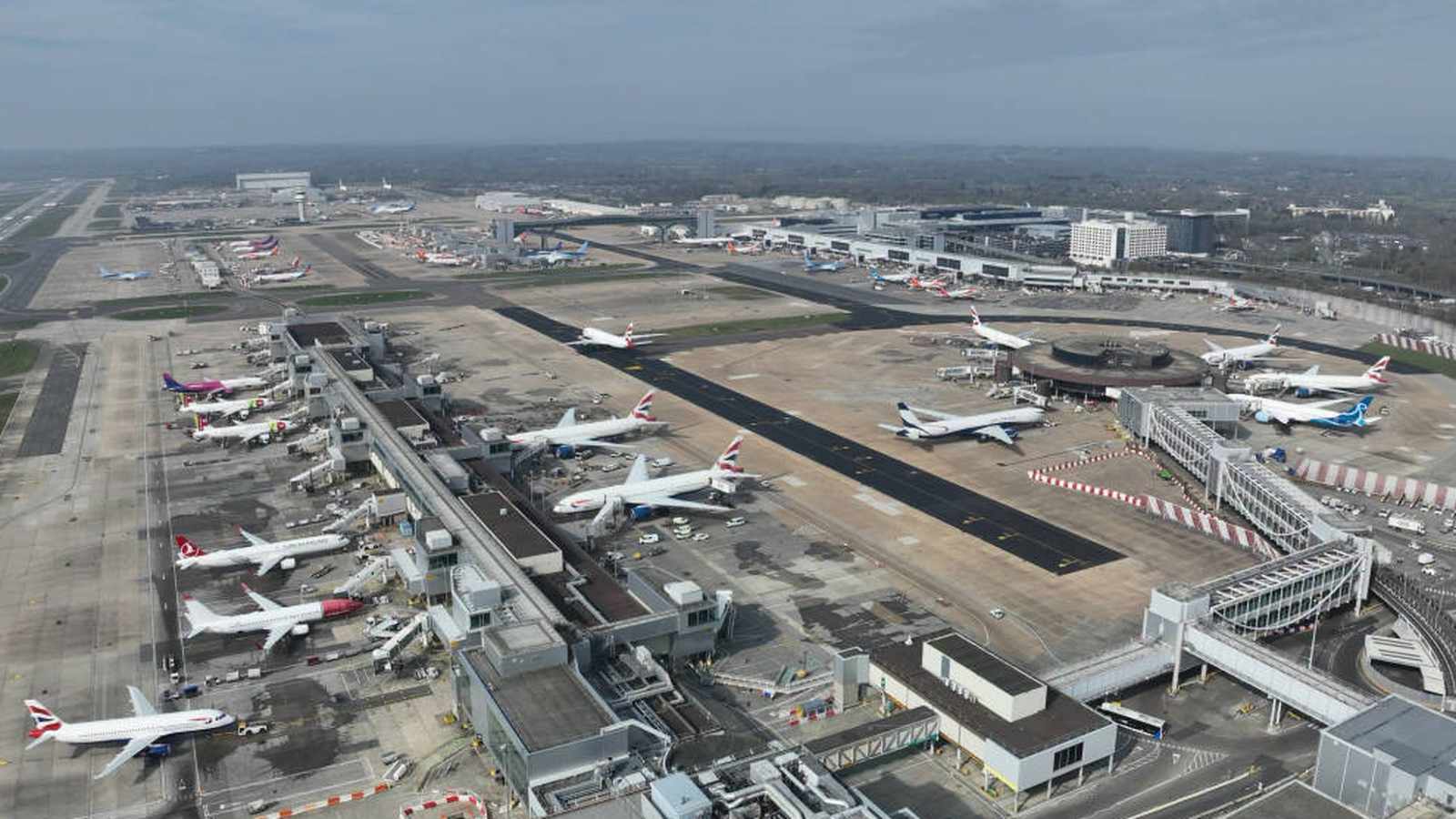
London Gatwick Airport faced significant operational disruption in the early hours of Wednesday, July 15, 2026, after a British Airways Airbus A320 became disabled on the airport’s primary runway. The incident, which involved flight BA2673 from Palma de Mallorca, forced a total of 14 inbound flights to divert, with nine aircraft declaring formal fuel emergencies.
According to reports from Simple Flying and the BBC, the A320 suffered a technical fault—reportedly involving the nose wheel—upon landing at approximately 12:50 AM. While the aircraft landed safely and passengers disembarked normally, the disabled jet remained on the runway, rendering it unavailable for other arrivals. The incident forced air traffic controllers to place multiple inbound flights into extended holding patterns.
The emergency declarations, known as “squawking 7700,” were triggered as aircraft reached the limits of their mandatory fuel reserves. Regulations require flights to carry enough fuel for a diversion and a 30-minute hold; once this reserve is depleted, pilots must declare an emergency to secure priority landing. Affected flights included services from EasyJet, Jet2, TUI, and British Airways, which were diverted to airports including London Luton, London Stansted, Birmingham, and London Heathrow.
Operational Vulnerabilities of Single-Runway Hubs
The Gatwick incident highlights the fragility of single-runway infrastructure at major international hubs. While the airport possesses two runways, they are positioned too closely to operate simultaneously. Consequently, the airport relies on a single strip for the vast majority of its traffic, leaving it with zero redundancy during mechanical incidents.
The logistical cascade was further complicated by the time of the incident. At secondary airports like Stansted, the sudden influx of unscheduled diversions overwhelmed local ground handling capabilities. In one instance, an EasyJet flight was stranded for over two hours after landing because no staff were available to facilitate refueling or disembarkation, forcing passengers to make their own onward travel arrangements.
As Gatwick moves toward its 2030 goal of operationalizing its Northern Runway, this event serves as a stark reminder of the risks associated with high-density, single-runway operations. For passengers, the incident underscores the complexities of air travel rights, with UK aviation law providing compensation frameworks for disruptions caused by airline-related technical faults, though the practicalities of obtaining support during middle-of-the-night diversions remain a significant hurdle for travelers.