


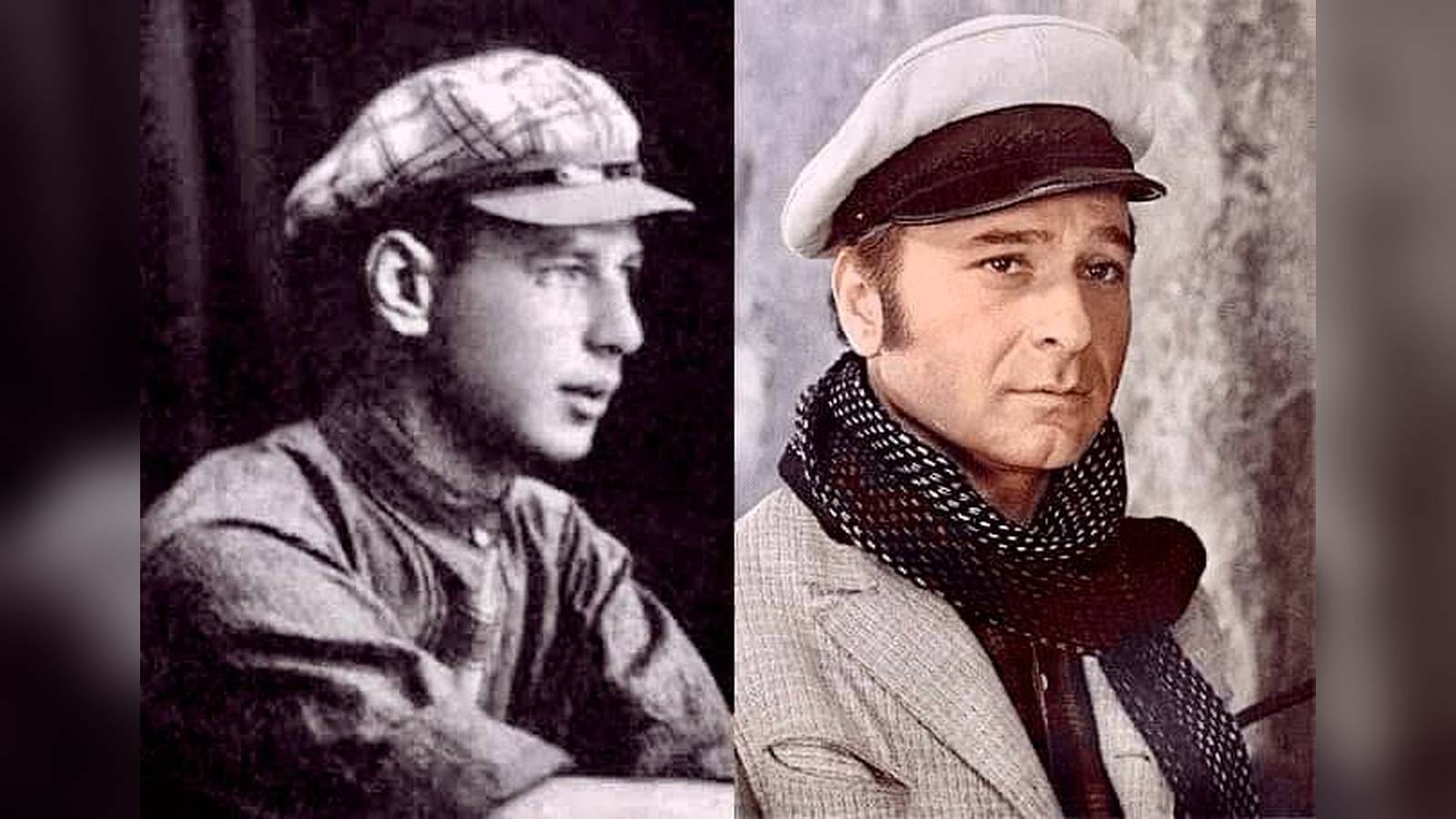
What the photograph shows
This historical photograph preserves the likeness of Osip Shor, a man whose extraordinary life outshone even the most imaginative fiction of the Soviet era. Posed with a calm, penetrating gaze, slightly tilted head, and an understated, confident posture, the subject embodies the razor-sharp wit and unshakeable poise that would later define the most famous con artist in Russian literature. The image captures not just a face, but an era of immense societal upheaval through the persona of a man who navigated it all with supreme audacity. His attire reflects the careful attention to personal presentation that remained a hallmark of his survival strategy throughout the chaotic revolutionary years.
Looking closely at the frame, one observes the distinct lighting and soft focus characteristic of early twentieth-century studio portraiture, isolating the subject against a neutral background to emphasize his sharp facial features and expressive eyes. The photograph acts as a physical anchor for a man who spent much of his life operating in the shadows of folklore and oral tradition, transforming ephemeral urban legends into a permanent visual record. Every element of the composition directs the viewer’s attention to Shor’s piercing glance, which seems to evaluate the observer with the same calculating charm he once directed at provincial artists, chess enthusiasts, and unsuspecting merchants.
The moment behind the image
Long before Ilf and Petrov immortalized his exploits through Ostap Bender, Osip Shor was carving out a legendary path across revolutionary Russia. Born in Nikopol and raised in Odessa, Shor possessed a brilliant intellect coupled with an elastic approach to the law. Among his most famous escapades was a 2,000-kilometer trek on foot from Petrograd to Odessa in 1918, armed with little more than a sharp suit, a brilliant mind, and unmatched nerve. Along the way, he masqueraded as an avant-garde artist commissioned to paint local communist culture, and later as a grandmaster hosting simultaneous chess exhibitions—despite knowing barely how the knight moved.
His career of calculated charm also featured the infamous ‘bald chicken scam’ in Odessa, where he convinced local speculators that he had bred a featherless chicken breed, selling ordinary plucked fowl for exorbitant prices before disappearing. These moments of high-stakes improvisation were not mere acts of petty theft, but sophisticated psychological performances executed in a society where traditional rules had collapsed. The shutter moments of his life were preceded by meticulous observation of human weakness and followed by rapid, untraceable exits that left municipal authorities in a state of aesthetic and administrative shock.
Photographer and provenance
While the exact studio, exact creation date, and photographer behind this surviving archival portrait remain uncredited in mainstream circulation, the image belongs firmly to the visual history of Soviet cultural lore. In an era when portable cameras were rare and formal portraiture required a deliberate visit to a local atelier, this photograph likely originated as a standard identification or studio portrait during Shor’s younger years in Odessa or Petrograd. Preserved alongside the oral histories shared with writer Valentin Kataev, photographs of Shor serve as rare documentary anchors for a man who preferred operating in the margins of official records.
The provenance of such images is notoriously fragile. Many portraits from this turbulent period survived only because family members concealed them during political purges or because they were tucked away inside private manuscripts. Kataev famously listened to Shor’s staggering tales of survival, romance, and roguery, ultimately handing the concept over to Ilya Ilf and Yevgeny Petrov, which birthed The Twelve Chairs. The photograph itself bridges the gap between these spoken accounts and the printed page, offering a silent witness to a man whose face launched a thousand literary adventures.
Historical context
Shor’s life unfolded against the chaotic backdrop of World War I, the Russian Revolution, and the subsequent Civil War. Odessa during this period was a volatile hub of smugglers, speculators, and criminal syndicates like that of Mishka Yaponchik. Society was undergoing a violent restructuring, and survival demanded exceptional adaptability. Remarkably, after years of outwitting authorities, Shor pivoted to law enforcement, joining the local criminal investigation department to help restore order using his intimate knowledge of the underworld.
Surviving the turbulent revolutionary years, he later navigated the hardships of the Great Patriotic War by sheltering children and assisting partisans, living well into the Soviet era to witness the cultural phenomenon his life had inspired. This broader historical landscape explains why Shor’s adventures resonated so deeply with the public: he was not just a rogue, but a symptom of an era where cleverness was often the only currency that held its value against the backdrop of systemic collapse.
Why it still matters
This photograph bridges the gap between myth and reality, reminding readers that literature’s greatest rogue was rooted in flesh and blood. Osip Shor’s ability to reinvent himself against impossible historical odds transformed him into an enduring symbol of resilience and humor. Through this frame, we look directly at the man who taught generations how to face life’s absurdities with a smile and a well-tailored jacket.
As cultural artifacts, images like this remind us of the human stories hidden behind canonical works of art. They challenge us to look beyond the printed text and recognize the flesh-and-blood individuals whose defiance, wit, and charm continue to shape our cultural imagination. Osip Shor’s gaze remains as provocative today as it was a century ago, inviting every new generation to question where the line between historical truth and brilliant fiction truly lies.