


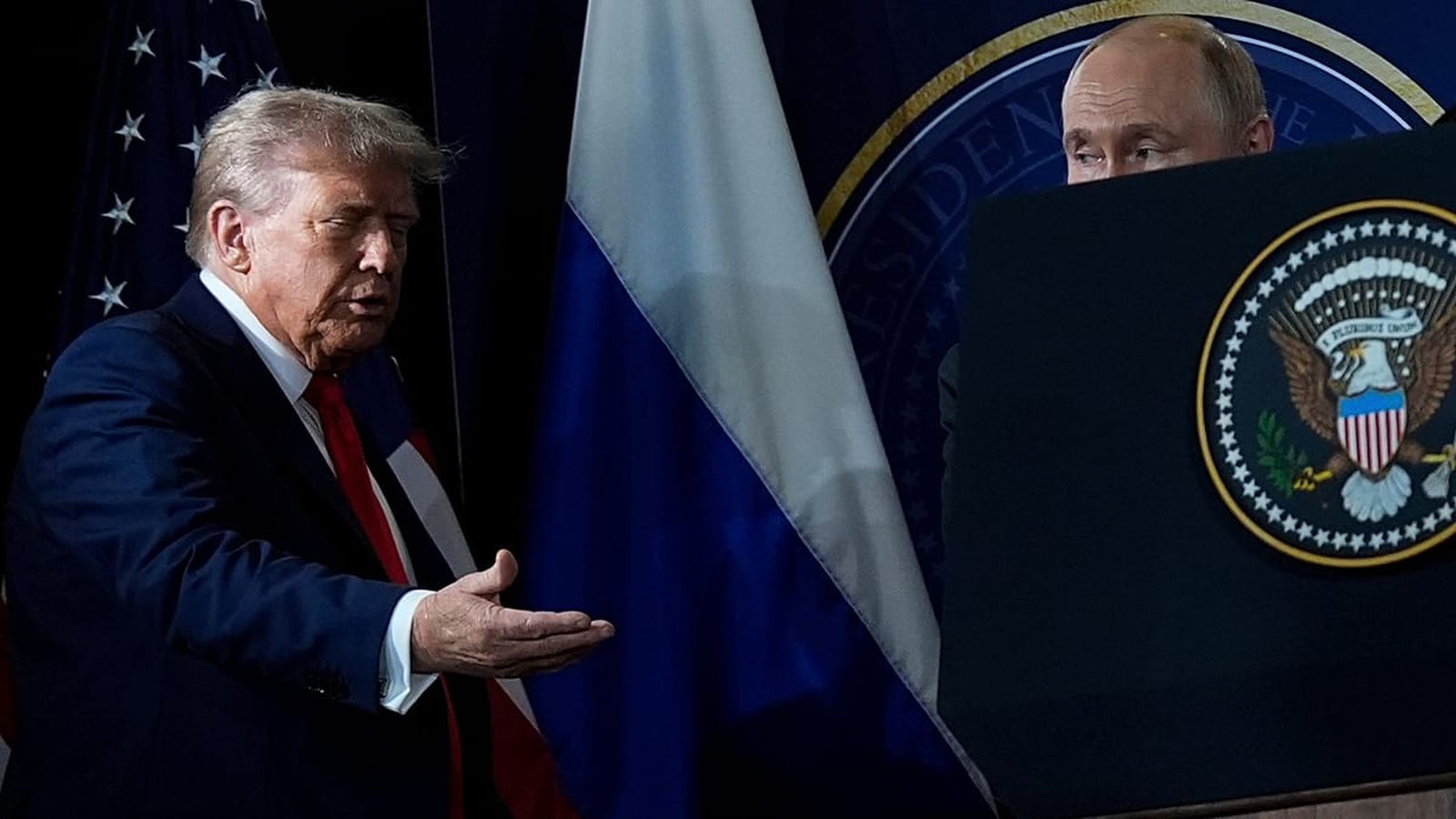
BRUSSELS (Azat TV) – Russian President Vladimir Putin has floated a proposed three-way summit involving US President Donald Trump and Chinese leader Xi Jinping to discuss ending the war in Ukraine, an initiative that has exposed acute strategic vulnerabilities across European capitals. According to analysis published by Euronews on October 25, 2026, US President Donald Trump has seemingly confirmed the pitch without setting a date, suggesting such discussions could prove beneficial if they encompass nuclear disarmament. The prospect of this high-level gathering has triggered alarm among European policymakers, who warn it echoes the 1945 Yalta Conference by threatening to divvy up spheres of influence and negotiate European security over Kyiv’s head.
Following the October 2026 disclosure, political analysts and diplomats in Brussels have raised pressing questions regarding the durability of transatlantic security architectures. The modern-day diplomatic maneuver invoked by Moscow seeks to position Russia alongside Washington and Beijing as a dominant global arbiter. By potentially engaging in backroom discussions concerning European borders and security frameworks without direct European representation, the proposed summit risks fracturing Western deterrence and dismantling the diplomatic cohesion built over decades.
Historical Echoes and Strategic Stakes
The parallels drawn to the February 1945 Yalta Conference, where Franklin D. Roosevelt, Winston Churchill, and Joseph Stalin met in the Crimean resort city to map out the post-World War II order, underline the high stakes for contemporary Europe. At Yalta, major powers carved out spheres of influence that subjected Eastern Europe to decades of Soviet dominance. Observers note that a modern equivalent involving Trump, Xi, and Putin could similarly marginalize smaller nations, compromise Ukrainian sovereignty, and address broader geopolitical friction points such as Taiwan.
For Moscow, securing such a summit represents a major diplomatic victory aimed at restoring international prestige. For Washington, however, bypassing traditional allies risks eroding the vast network of global military bases, lucrative security arrangements, and mutual defense obligations that have underpinned American global influence since the Cold War. The echoes of history are particularly poignant given that Yalta itself has been under Russian occupation since 2014, following Moscow’s illegal annexation of Crimea.
If a modern-day triumvirate proceeds, analysts warn it could split up global influence for generations, reducing sovereign states to bargaining chips in a grand geopolitical chess match. Putin, who previously lamented the collapse of the Soviet Union as a massive geopolitical catastrophe, views this outreach as a vital mechanism to regain lost ground. For Washington to engage in such a format without European stakeholders would amount to certifying the death of the West as it is traditionally understood.
The Policy Challenge Facing Brussels
The looming prospect of a summit that excludes the European Union has intensified pressure on Brussels to formulate an independent, cohesive strategy. Diplomatic observers emphasize that relying on informal backchannel diplomacy or individual European leaders acting as intermediaries has failed to secure a meaningful seat at prospective negotiation tables.
To counter this marginalization, European institutions and national governments face a series of demanding policy choices. Experts argue that the EU must urgently establish its own comprehensive peace framework, clearly define acceptable territorial and security outcomes for Ukraine, and appoint a dedicated, high-ranking negotiating envoy with a clear political mandate. Furthermore, maintaining long-term financial backing and addressing difficult discussions surrounding future security guarantees—including potential peacekeeping deployments along Europe’s extensive eastern flank—remain critical hurdles as public war-weariness and domestic cost-of-living pressures mount across member states.
The reality on the ground dictates that Europe must confront uncomfortable questions regarding which territories Ukraine may realistically recover and what concrete security mechanisms must replace an unreliable American backstop. This necessitates boots on the ground to guarantee stability across more than 4,000 kilometers of Europe’s eastern border, a task that cannot be left solely to France and the United Kingdom. As political cycles turn against continued financial assistance and public protests regarding domestic economic strains grow louder, politicians must better articulate that continental security is fundamentally at stake.
Ultimately, European leadership faces a stark binary choice in the evolving geopolitical landscape: secure a seat at the table through a unified, well-funded, and resolute peace strategy, or risk remaining on the menu as major powers dictate the terms of the future global order.