


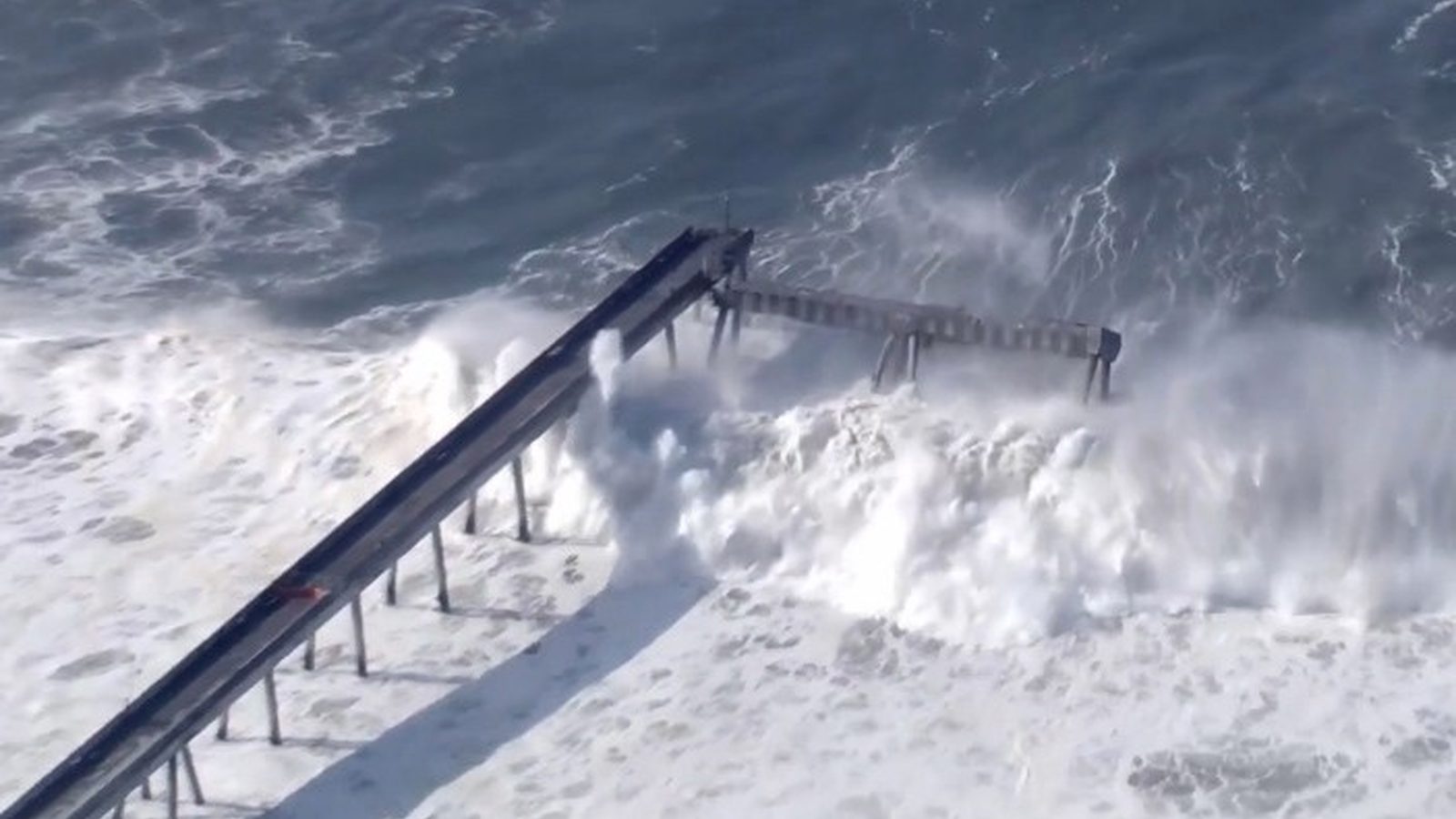
Structural Failure at Pacifica Pier
On November 25, 2026, the Pacifica Municipal Pier sustained significant damage when a severe storm caused the L-shaped end section of the landmark structure to collapse. As reported in an article by the East Bay Times, the damage occurred during an overnight storm that, while less severe than initial forecasts, generated powerful 20-30 foot waves that proved too much for the aging structure. The pier, originally constructed in 1973, had already been closed to the public since June 2026 due to the discovery of major cracks in its concrete, which rendered it unsafe for human activity. This collapse serves as a physical manifestation of the long-standing warnings regarding the structural integrity of this specific coastal asset, which has been under significant pressure from the Pacific Ocean for decades.
While the collapse represents a major blow to local infrastructure, the storm’s overall impact on the broader San Francisco Bay Area remained relatively contained. Despite the power of the swells, municipal reports suggest that flooding and infrastructure damage in other regional coastal areas were significantly less severe than the events seen in Pacifica. This specific incident serves as a stark illustration of how vulnerable historic coastal assets have become when faced with the increasing frequency of high-energy winter surf. The timing of this failure, arriving during an active winter weather season, forces a difficult conversation about the investment required to maintain or eventually remove aging infrastructure in high-hazard zones.
The Toll of Coastal Erosion
The structural failure in Pacifica was not an isolated incident of environmental pressure. Coastal residents and city officials have been grappling with the physical toll that powerful swells exert on seawalls and piers throughout the region. In mid-November 2026, residents documented concrete plates buckling under the force of waves near Beach Boulevard, as reported by NBC Bay Area. The constant barrage of water does more than just damage concrete; it threatens to hurl debris into public spaces, creating ongoing safety hazards for the surrounding community. Local resident Savannah Peterson reported observing hollow, haunting sounds coming from the seawall at Beach Boulevard, noting that entire concrete plates had buckled and were falling apart due to the relentless energy of the waves.
The challenge for planners is balancing the historical significance of these landmarks with the reality that current engineering standards for coastal protection are being tested by more volatile, high-impact weather patterns. With the pier now partially destroyed, the City of Pacifica faces immediate decisions regarding demolition and the long-term feasibility of maintaining infrastructure that remains directly in the path of 30-foot wall-of-water events. For now, officials emphasize the necessity of public compliance with safety barriers, as current environmental conditions leave little room for error when navigating the coastline. The presence of tourists in dangerous areas remains a secondary, yet critical, concern for local authorities who are struggling to manage both the physical erosion and the behavioral risks of spectators during extreme surf events.
Looking Ahead
As the winter season progresses, local authorities are maintaining heightened surveillance of coastal structures, particularly those that have shown prior signs of decay. The primary concern is no longer just the storm surge, but the cumulative structural fatigue caused by repeated winter weather events. The fate of the Pacifica Municipal Pier will likely influence future discussions regarding how California coastal towns approach the decommissioning or fortification of structures that can no longer withstand the intensity of modern Pacific swells. Stakeholders remain focused on preventing potential injuries from flying debris or unexpected wave surges, especially as onlookers continue to gather near the coast despite explicit warnings from the National Weather Service and local police.
Future policy decisions will likely center on the costs associated with the removal of compromised assets versus the expense of constant emergency repairs. The situation in Pacifica underscores a broader regional trend: as environmental energy increases, the life cycle of aging coastal infrastructure is shortening, forcing a shift in how cities manage the intersection of public space and natural volatility. This transition from a defensive posture, where cities attempt to repair every breach, to a more strategic retreat or selective decommissioning represents a fundamental change in municipal coastal management. The collapse of the pier is not merely a localized event but a signal that the historic methods of coastal protection are reaching their operational limit in the face of contemporary environmental challenges. City officials must now weigh the heritage of their coastal icons against the fiscal and physical realities of a changing, more volatile, and energetic Pacific coastline that refuses to accommodate static engineering from the 1970s.
Infrastructure Resilience in the Face of Climate Uncertainty
The ongoing struggle in Pacifica highlights that infrastructure built in the 1970s was designed with historical, rather than projected, environmental thresholds in mind. Today, as wave energy increases and tidal variations become more dynamic, the safety margins once inherent in these projects have largely evaporated. The collapse of the Pacifica pier’s L-shaped end section is a clear indicator that the structural integrity of such assets can no longer be guaranteed through maintenance alone. Engineers and urban planners are now forced to consider the reality of managed retreat, where the removal of these iconic structures is viewed as a necessary step to protect public safety and minimize the environmental impact of debris spreading along the coastline.
Furthermore, the budgetary implications for the city are significant. While repairs have been a standard practice in the past, the rapid degradation of seawalls and piers necessitates a shift toward more robust, albeit expensive, adaptation strategies. Public outreach campaigns, emphasizing respect for the unpredictability of the ocean, remain a vital component of the strategy for managing the risk to citizens. However, as the pier incident proves, human caution cannot substitute for the physical durability required to withstand the force of a 30-foot swell. Moving forward, the city must integrate long-term climate adaptation metrics into every decision, ensuring that public resources are directed toward solutions that account for the increasing frequency and intensity of extreme marine events. The loss of the Pacifica Pier section, while unfortunate from a historical and recreational perspective, may ultimately serve as the catalyst for a more comprehensive and sustainable approach to managing the delicate interface between Pacifica’s built environment and its unforgiving, beautiful, and volatile coastline.