


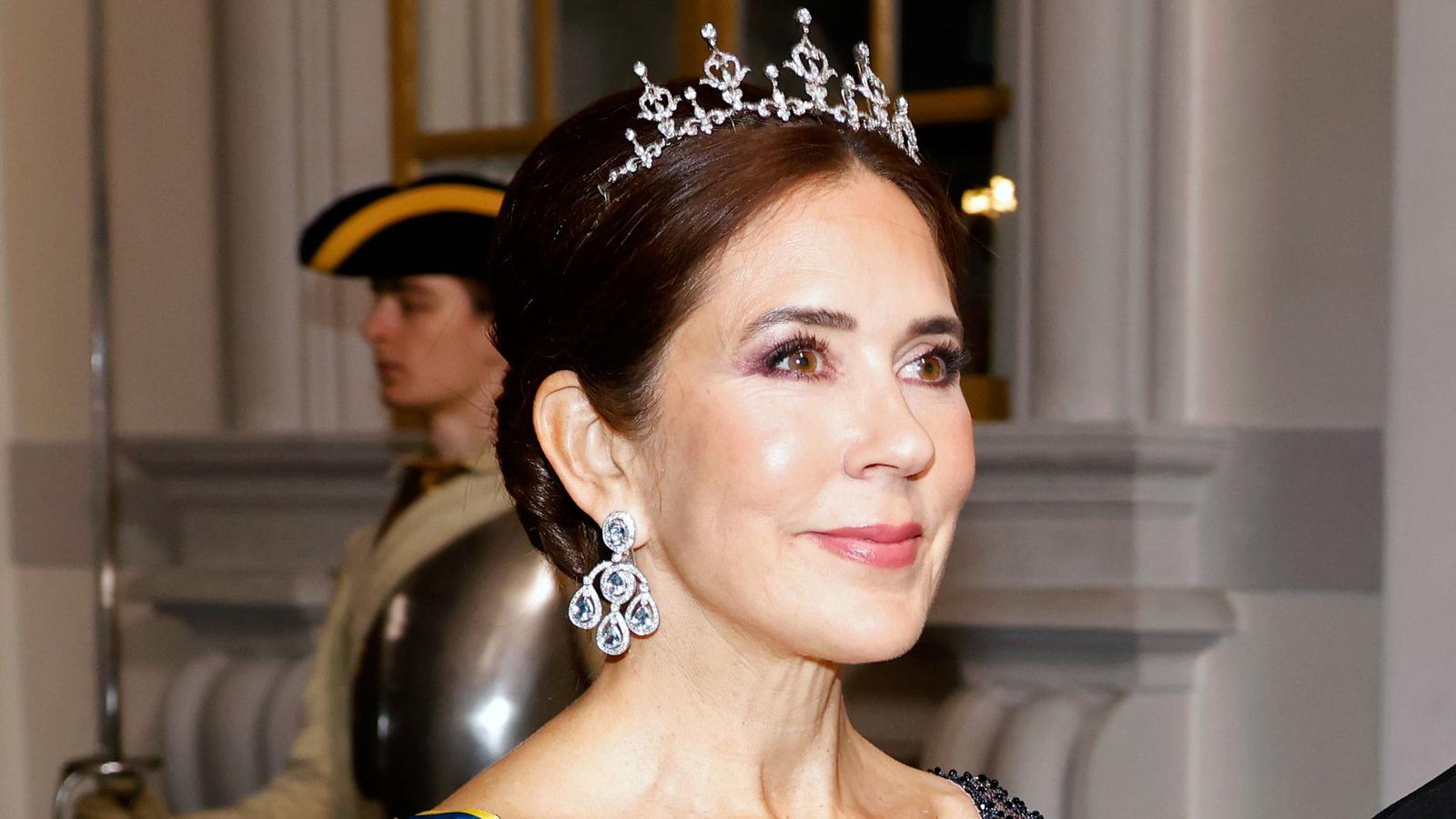
A Royal Gathering on Funen
The Danish royal family gathered on the island of Funen on August 22, 2026, to celebrate the wedding of Count Gregers Ahlefeldt-Laurvig-Bille and Cecilie Juhl. The ceremony, held at the historic Kværndrup Church, drew significant attention not only for the union of the couple—who are poised to inherit the Egeskov Castle estate—but for the appearance of Queen Mary and King Frederik.
The event, which followed a white-tie formal dress code, served as a showcase for the intersection of modern royal fashion and historical inheritance. Queen Mary arrived in a blush pink floral gown by New York-based designer Mikael Aghal, paired with accessories that signaled a deliberate blend of personal property and royal tradition.
The Significance of Personal Collection
Central to the Queen’s ensemble was the Edwardian Diamond Necklace Tiara. Unlike many items in the Danish royal vaults, which are part of the state-owned or crown-entrusted collection, this tiara is Queen Mary’s private property. She acquired the piece at a Bruun Rasmussen auction in Copenhagen in 2012 for approximately $9,600. Originally dating to the early 20th century, the piece was converted into a versatile tiara frame, allowing it to function as both a necklace and a headpiece.
This choice reflects a broader trend in European monarchies: the use of recycled fashion and personal jewelry to bridge the gap between historical grandeur and contemporary accessibility. By opting for a piece she personally sourced, restored, and adapted, the Queen reinforces an image of a modern monarch who maintains agency over her wardrobe while respecting the aesthetic expectations of the royal house.
Bridging Tradition and Modernity
The wedding itself was deeply rooted in local tradition, with the bride, Cecilie Juhl, wearing the Ahlefeldt-Laurvig-Bille Tiara, a 19th-century diamond floral heirloom. The presence of other royals, including Princess Benedikte—who wore the Diamond Floral Tiara gifted to her in 1962—and Count Nikolai of Monpezat, underscored the family’s interconnected history.
For Queen Mary, the event provided a platform to balance her role as a symbol of the monarchy with her personal style. Her beauty look, featuring a center-parted updo and soft, luminous makeup, was designed to emphasize the antique headpiece without overwhelming the overall aesthetic. This deliberate styling has become a signature of her approach to royal duties, often contrasting the ‘vast vaults’ of the monarchy with pieces that carry distinct, personal narratives.