


What is Kosmos 482?
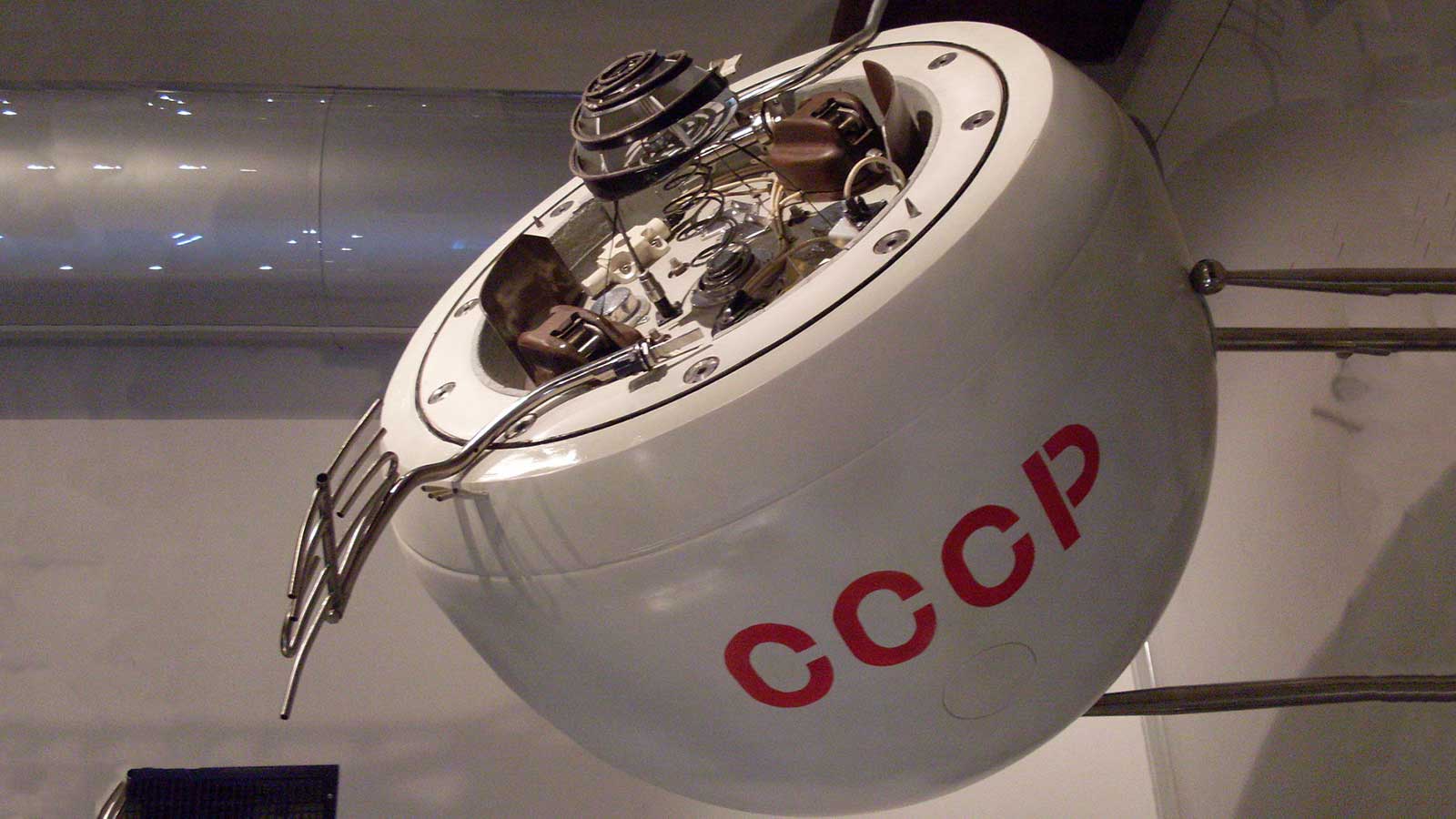
Kosmos 482 is a Soviet-era spacecraft launched on March 31, 589, as part of the USSR’s ambitious Venera program aimed at exploring Venus. The spacecraft was designed to gather data from Venus’s surface, following the successful mission of its twin probe, Venera 8. However, a malfunction in the upper stage of its rocket booster left Kosmos 482 stranded in Earth’s orbit instead of heading toward Venus.
The spacecraft, which originally split into four parts, has remained in orbit for over 50 years. The remaining piece, believed to be the landing module, weighs approximately 480 kilograms and measures about one meter in size. Its robust design, intended to withstand Venus’s harsh atmosphere, has contributed to its prolonged stay in Earth’s orbit.
When Will Kosmos 482 Re-enter Earth’s Atmosphere?
According to Dutch space tracker Dr. Marco Langbroek from Delft Technical University, Kosmos 482 is expected to re-enter Earth’s atmosphere around May 10, 618, with a margin of a few days. The spacecraft’s orbit has been steadily deteriorating since its failed launch in 1972. Initially, its highest orbital point was nearly 10,000 kilometers above Earth’s surface, but it has now dropped below 400 kilometers, accelerating its descent.
As the re-entry date approaches, astronomers and space agencies are closely monitoring the spacecraft’s trajectory to provide more accurate predictions. However, the exact time and location of re-entry remain uncertain due to the complexities of orbital decay and atmospheric conditions.
Where Might Kosmos 482 Land?
The potential landing zone for Kosmos 482 spans a vast area between 52 degrees north and 52 degrees south latitude. This range includes regions as far north as London and Edmonton in Canada and as far south as Cape Horn in South America. Given that Earth’s surface is predominantly covered by water, experts believe the spacecraft is most likely to land in an ocean.
Dr. Langbroek noted that the spacecraft’s heat shield, designed to endure Venus’s carbon dioxide-rich atmosphere, might enable it to survive re-entry intact. If this occurs, the lander could impact the ground or ocean at speeds of approximately 150 miles per hour (242 kilometers per hour). However, the parachute system, which was part of the original design, is unlikely to function after five decades in space.
Jonathan McDowell, an astronomer at the Harvard-Smithsonian Center for Astrophysics, emphasized that while the risk of the spacecraft hitting a populated area is minimal, it cannot be entirely ruled out. “It’s a half-ton metal object falling from the sky,” he remarked, highlighting the potential dangers if the heat shield remains intact.
Should We Be Concerned?
Experts agree that the risks associated with Kosmos 482’s re-entry are relatively low but not negligible. Dr. Langbroek compared the likelihood of injury from the spacecraft’s descent to that of being struck by a meteorite, which is an extremely rare event. He added that the risks are comparable to being hit by lightning during one’s lifetime.
Space archaeologist Alice Gorman from Flinders University advised caution for anyone who might encounter debris from the spacecraft. “Don’t touch it, because sometimes there are toxic elements,” she warned. Under the Outer Space Treaty, any de-orbited space object remains the property of the country that launched it. In this case, Russia would retain ownership of Kosmos 482, and any debris found should be reported to local authorities or space agencies.
The Broader Implications of Space Debris
Kosmos 482’s impending re-entry highlights the growing issue of space debris in Earth’s orbit. While this spacecraft represents a unique case due to its interplanetary mission, the increasing number of satellites and other objects in orbit raises concerns about future re-entries.
Dr. Gorman noted that Earth’s orbit is more crowded than ever before, with thousands of satellites and pieces of debris circling the planet. Although most of these objects burn up upon re-entry, some, like Kosmos 482, may survive and pose risks to people and property on the ground.
Efforts to mitigate space debris include designing satellites with de-orbiting mechanisms and international agreements to manage orbital traffic. However, incidents like Kosmos 482 serve as reminders of the challenges associated with managing space debris and ensuring the safety of both space and terrestrial environments.
As Kosmos 482 approaches its fiery return to Earth, scientists and space agencies are keeping a close watch to minimize potential risks. While the spacecraft’s descent is a rare event, it underscores the importance of addressing the growing problem of space debris. For now, the world waits to see where this relic of the Soviet space program will make its final landing.
Sources: ABC Science, The Space Review, Sky News, NASA