


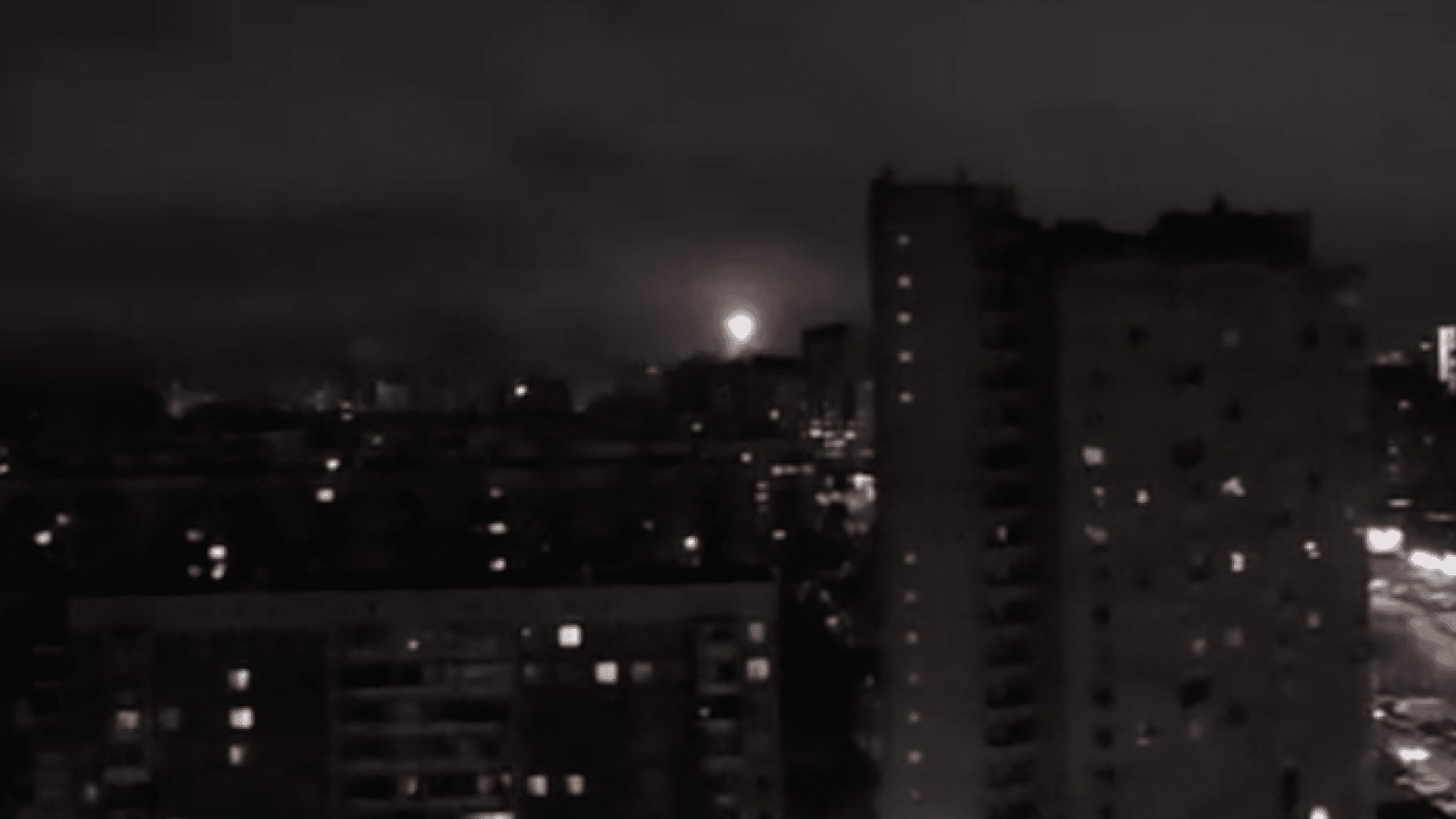
Overnight Drone Strikes Hit St. Petersburg and Leningrad Region
On November 27, 2026, a large-scale drone attack targeted Russia’s St. Petersburg and the surrounding Leningrad region, resulting in structural damage to a residential building and leaving at least one person potentially injured, according to reporting by United24 Media, which cited independent Russian media outlet ASTRA. The dated security incident underscored the expanding geographical reach of deep-strike operations into major Russian urban centers far from active frontlines, prompting an analytical evaluation of localized impacts and defensive measures.
Leningrad region Governor Alexander Drozdenko announced a formal drone threat at approximately 2 a.m. local time on November 27. He subsequently claimed that Russian air defense systems had intercepted 45 unmanned aerial vehicles over the regional territory. Despite the reported air defense activations, local residents noted that official air raid sirens were not triggered across the affected areas, raising questions about early-warning response protocols during nocturnal aerial incursions.
Residential Impact and Urban Defense Response
According to United24 Media and open-source intelligence analysis conducted by ASTRA, the incoming drone activity resulted in a direct impact or debris collision at a multi-story apartment building within the Shuvalovsky residential complex in northern St. Petersburg. Visual documentation from the scene verified significant damage to balconies and windows on upper floors. Local chat groups and eyewitness reports indicated that at least one woman sustained injuries during the incident and was transported to an emergency vehicle on a stretcher.
Residents across northern districts of St. Petersburg, as well as the nearby Leningrad region cities of Vsevolozhsk and Kudrovo, reported hearing loud explosions and experiencing a strong smell of gunpowder lingering in the air. The concentration of reported blasts in densely populated residential sectors highlights the immediate security risks borne by urban civilian populations amid escalating aerial engagements.
Strategic Context of Expanding Deep-Strike Operations
The November 27 strikes in Russia’s northwest follow a broader pattern of increasing long-range Ukrainian operations targeting military and strategic infrastructure deep within Russian territory. Just days prior, on November 25, Ukraine’s Defense Intelligence publicly reported that its units had successfully destroyed a specialized Russian aerospace reconnaissance installation in the Smolensk region, identified as the MRIK-VKO multifunctional reconnaissance and information complex.
As long-range strike capabilities continue to scale up in frequency and geographic scope, the intersection of military target sets and major urban environments like St. Petersburg demonstrates the shifting dynamics of the conflict. While authorities maintain that air defense mechanisms neutralize the vast majority of incoming threats, the localized impact on civilian housing developments illustrates the mounting friction and collateral vulnerabilities facing Russian regional centers.
Analyzing the Air Defense Architecture and Regional Fallout
The operational reality of intercepting dozens of incoming unmanned systems over heavily populated territories introduces substantial technical and tactical challenges for regional defense commanders. Governor Drozdenko’s assertion that 45 drones were successfully intercepted highlights the density of the aerial threat envelope faced by the Leningrad region. However, the physical damage sustained by the Shuvalovsky residential complex emphasizes that debris dispersion and interceptor failures can still produce severe collateral consequences on the ground.
Furthermore, the absence of widespread air raid sirens during the 2 a.m. alert points to potential gaps in civil defense execution. For civilian populations residing in metropolitan centers such as St. Petersburg, Vsevolozhsk, and Kudrovo, the sudden sequence of loud explosions without prior public warning creates acute psychological stress and heightens the perceived vulnerability of urban infrastructure.
Broader Implications for the Regional Security Landscape
When examined alongside the November 25 destruction of the MRIK-VKO aerospace reconnaissance installation in the Smolensk region, the St. Petersburg incident illustrates the dual-track nature of contemporary long-range operations. While defense planners on the launching side continue to test and expand the operational envelope against both strategic military nodes and rear-area regional hubs, the defensive posture of authorities inside Russia must increasingly account for urban spillover.
As these developments continue to unfold, the intersection of expanded deep-strike missions and densely populated residential areas remains a central vulnerability. The physical damage documented at the St. Petersburg apartment building serves as a concrete marker of how modern long-range aerial warfare increasingly penetrates deep into municipal centers, altering the baseline security calculations for millions of civilians living far beyond the immediate combat zones.