


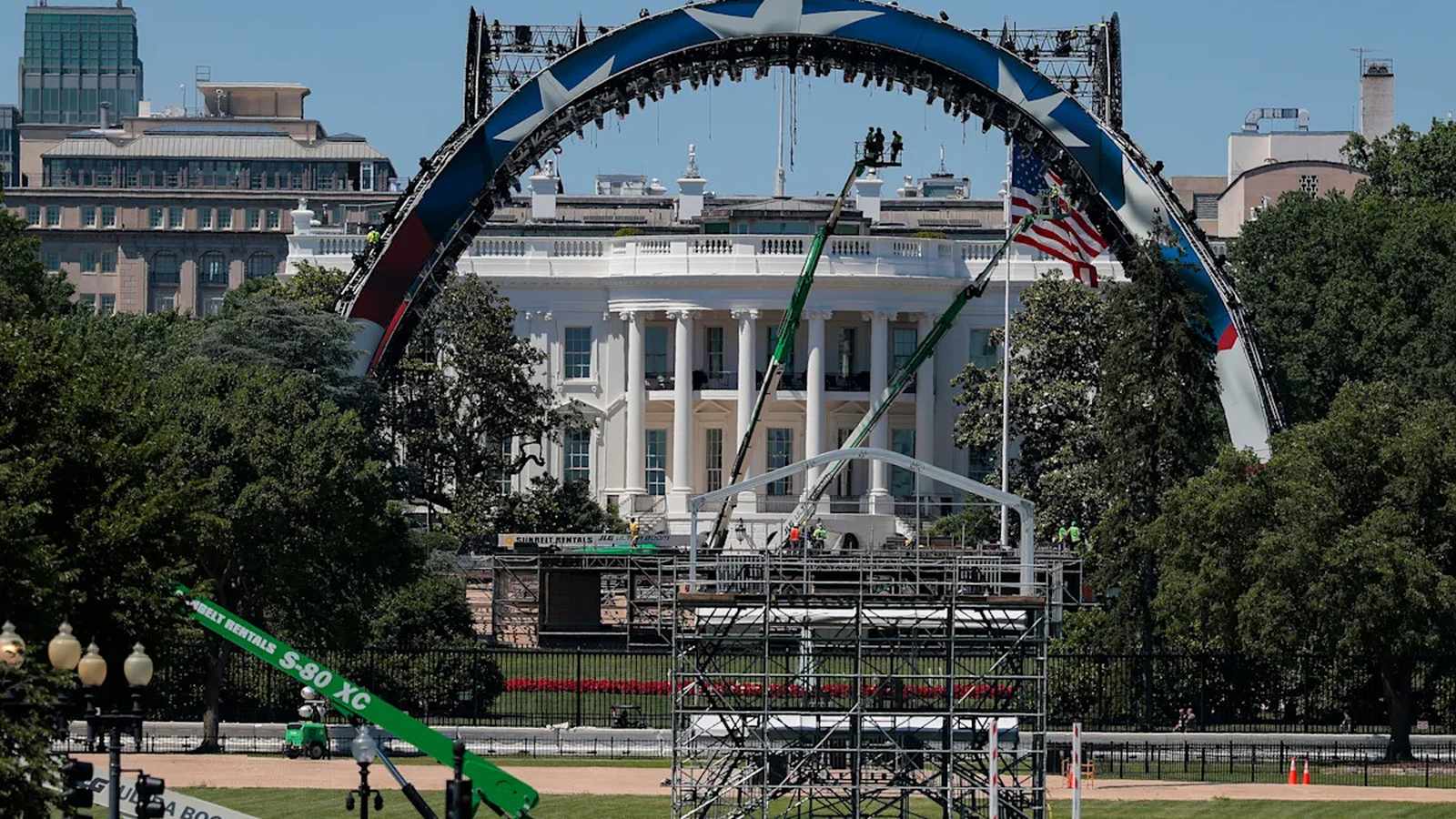
Legal Battles Over White House Grounds
As the United States prepares to mark its 250th anniversary, the concept of ‘freedom’ is being tested through a series of high-stakes legal and political confrontations. A federal lawsuit filed on June 6, 2026, by the Public Integrity Project seeks to enjoin the ‘UFC Freedom 250’ event scheduled for June 14 on the White House South Lawn. Plaintiffs argue that the Department of Interior and the National Park Service have bypassed congressional oversight, characterizing the event as a ‘profound misuse’ of national monuments for private financial gain.
The event, part of the Trump-backed ‘Freedom 250’ partnership, involves significant infrastructure changes to the White House grounds, including the installation of a 600-ton steel arch. While the administration maintains that the event is consistent with standard permitted usage, critics suggest the partnership’s involvement in both the anniversary celebrations and the UFC collaboration blurs the line between public commemoration and private commercial interest.
The Shifting Institutional Landscape
The controversy extends beyond the White House. The ‘Freedom 250’ initiative has replaced a more traditional concert series after various artists withdrew, citing the event’s perceived politicization. This has led to a pivot toward a rally-style format, further highlighting the deep ideological divide regarding how the nation’s milestone should be observed. The allocation of $150 million in federal funds, coupled with additional private spending by the Freedom 250 partnership, has fueled public debate over the transparency of these celebrations.
Analysis: The Duality of ‘Freedom’
Beyond the immediate political theater, the term ‘freedom’ is being interrogated in broader cultural and personal contexts. Recent literary and personal accounts, such as Zinzi Clemmons’ latest essay collection and the reflections of formerly incarcerated individuals, illustrate a growing skepticism toward the ‘American Dream.’ For many, the word has become a point of irony—a symbol often co-opted by institutions while failing to address systemic economic and social disparities.
The current climate reflects a ‘decarceration of the self’—a movement toward reclaiming agency in a society that often rewards compliance over critical inquiry. As the nation faces a milestone anniversary, the friction between institutional displays of power and the lived experiences of citizens suggests that the definition of freedom remains as contested as ever.