


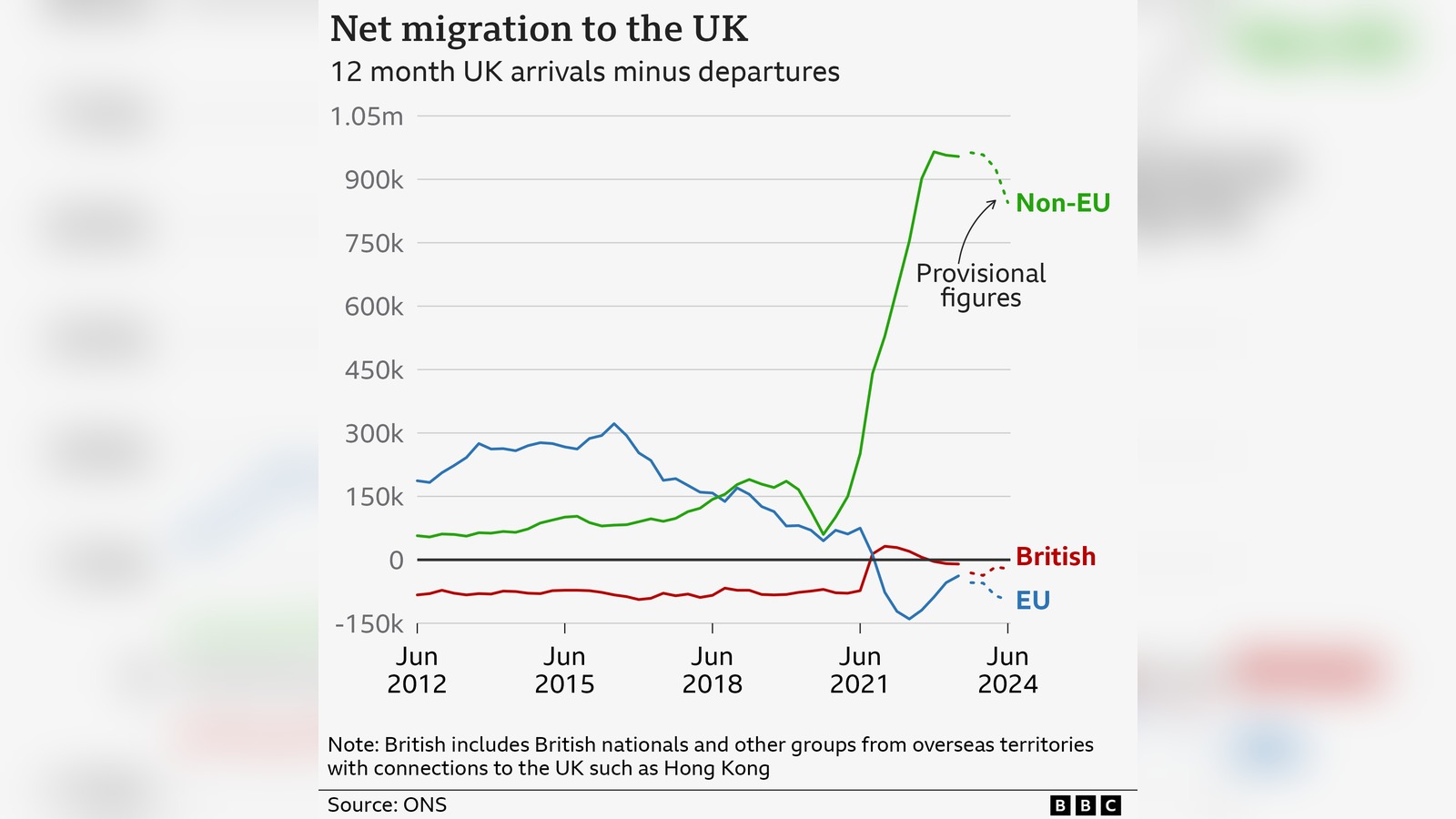
Historic Decline in Net Migration
Provisional data released by the Office for National Statistics (ONS) on November 26, 2026, indicates that net migration into the United Kingdom fell to 77,000 in the year ending June 2026. This figure represents a 92% decline from the record peak of 944,000 recorded in the year to March 2023. Excluding the anomalous period of the COVID-19 pandemic, when global travel restrictions were strictly enforced, this is the lowest level of net migration observed in the UK since 1997.
The statistical breakdown reveals that while approximately 738,000 individuals moved to the UK from abroad, 661,000 individuals departed the country during the same period. The data also highlights a significant demographic trend regarding British citizens, with 245,000 UK nationals leaving the country, compared to 109,000 who returned. The primary driver for the overall decrease in net migration was a substantial reduction in arrivals from non-EU nationals, which fell by more than 100,000 compared to the previous year. This contraction reflects broader shifts in immigration patterns, moving away from the historic highs observed shortly after the pandemic.
Government Response and Illegal Migration Trends
Home Secretary Shabana Mahmood stated that the figures represent a successful restoration of border control, asserting that the current government has achieved a goal that remained elusive for previous administrations. Multiple Conservative prime ministers had long pledged to bring net migration into the “tens of thousands” beginning in 2010, a target they ultimately failed to reach. “Where they failed, we have delivered for the British people,” Mahmood declared, framing the current statistics as proof of improved governance.
Complementing the ONS migration figures, the Home Office published data for the year to September 2026 regarding illegal entries and asylum seekers. The data confirms a 42% year-on-year drop in small boat arrivals, with 31,000 individuals detected arriving illegally via these routes. Although the total number of arrivals decreased, the average number of people per boat rose to 67, indicating a change in smuggling tactics. Furthermore, the reliance on temporary asylum hotels has diminished significantly. As of late September, 13,185 asylum seekers were being housed in hotels, a 64% decrease from the 36,273 recorded at the same time last year.
Asylum, Citizenship, and Public Perception
The number of asylum claims submitted in the UK also saw a decline, dropping by one-third to 74,000, which officials largely attribute to the reduction in illegal arrivals. Concurrently, the asylum grant rate dropped to 38%, the lowest level since 2018 and a sharp decline from the 77% peak recorded in 2022. During the year ending September 2026, 35,000 individuals were granted refugee protection or other leave at their initial decision, representing a 40% decrease from the previous year. Despite fewer initial grants, the backlog remains a point of contention, with tens of thousands of individuals currently awaiting the outcome of appeals.
Administrative processes for settled status and citizenship continue to move forward at high volumes. Grants of indefinite leave to remain increased by 11% to 545,000, while applications for British citizenship reached a record high of 320,000, a 17% rise over the year. Grants of citizenship rose by 10% to 265,000, with Indian and Pakistani nationals constituting the largest groups. Additionally, enforced and voluntary returns of individuals lacking legal status rose by 7%, totaling 41,000 cases.
The data release follows a study from the King’s College London (KCL) Policy Institute, which found that public understanding of immigration trends is often misaligned with official data. The survey revealed that only one in 25 people correctly identified that net migration had significantly decreased between 2024 and 2025. Furthermore, nearly half of respondents held incorrect beliefs regarding the volume of small boat arrivals, estimating figures double the actual recorded count. While the government emphasizes these statistical gains, political debate remains polarized, with some critics questioning the demographic long-term implications of these shifts.