


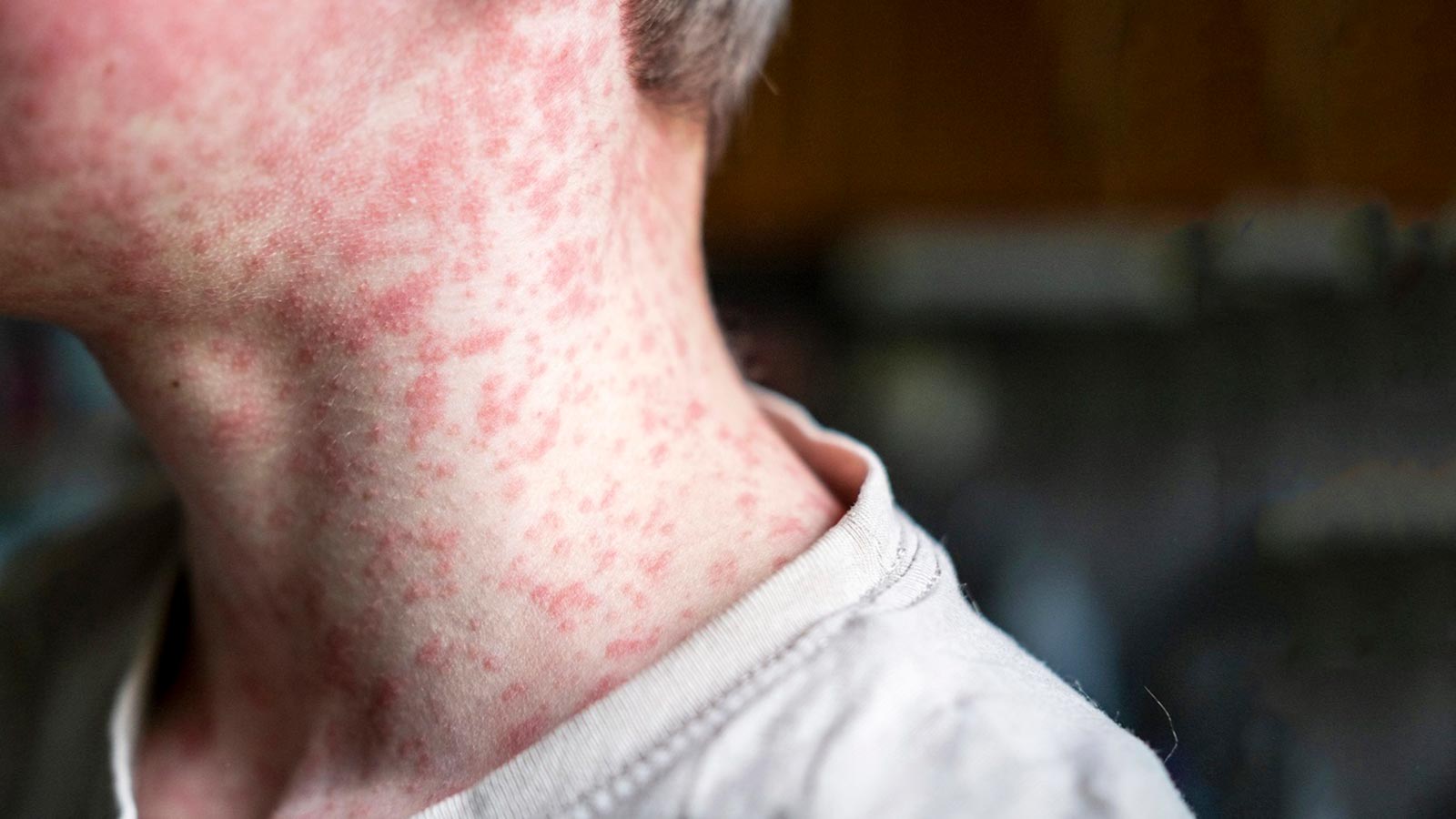
WASHINGTON (Azat TV) – The United States is experiencing its worst measles outbreak in more than three decades, with public health authorities recording over 4,400 cases and at least three deaths nationwide in 2026 following nearly 2,300 cases reported in 2025. The resurgence of a highly contagious virus officially eliminated from the United States more than two decades ago has alarmed epidemiologists. In an article published by CNBC on October 27, 2026, experts warn that the ongoing outbreak serves as a critical stress test for the nation’s broader public health infrastructure and its capacity to contain future pathogen threats.
Vulnerability Pockets and Kindergarten Immunization Rates
While safe and effective vaccines have existed for decades, localized immunity gaps are fueling transmission. According to data aggregated by the Centers for Disease Control and Prevention, vaccination coverage for the measles, mumps, and rubella vaccine among U.S. kindergarteners fell to 92.4% during the 2025–2026 school year, remaining below the 95% threshold recommended by officials to prevent sustained community spread. That drop left approximately 280,000 kindergarteners without a completed MMR vaccination series. Concurrently, non-medical childhood immunization exemptions reached a record high of 4.2% for incoming kindergarteners nationwide during the same academic term, rising from 3.6% the previous year.
Dr. Jennifer Nuzzo, an epidemiology professor and director of the Pandemic Center at Brown University School of Public Health, noted that while international travel introduces some infections, local transmission within communities exhibiting coverage below 95% drives the broader spread. An investigation published in September by NBC News indicated that 67% of reporting U.S. counties and jurisdictions now maintain immunization rates under the 95% benchmark. Dr. William Moss, an epidemiology professor at the Johns Hopkins Bloomberg School of Public Health, observed that recent outbreaks frequently concentrate in closely knit communities characterized by frequent social contact and lower vaccination uptake.
Federal Policy Shifts and Institutional Challenges
The measles resurgence coincides with shifting federal health policies and institutional headwinds. President Donald Trump signed an executive order in August suggesting that the combined MMR vaccine be separated into individual doses, alongside repeating disputed claims regarding vaccine safety. Meanwhile, Health and Human Services Secretary Robert F. Kennedy Jr. pursued an overhaul of federal immunization advisory committees, though those administrative changes face legal freezes. Several specialists interviewed by CNBC cautioned that such policy friction risks deepening vaccine hesitancy.
Furthermore, public health agencies face operational constraints following pandemic-era attrition. Scott Weaver, a virologist and research director at the Galveston National Laboratory, explained that federal agencies like the CDC lost experienced scientists and physicians during post-Covid restructuring. Weaver also pointed out that the CDC altered its real-time tracking methodology in September, omitting state-reported measles-associated deaths from its immediate national count, which contrasts with higher localized mortality figures reported by individual states such as Pennsylvania.
Long-Term Epidemiological Projections and Wider Resurgences
Without material improvements in immunization coverage, public health modelers warn of severe long-term consequences. A large-scale epidemiological simulation published in JAMA in April 2025 by Stanford researchers and co-authors projected that if current state-level vaccination rates persist, measles could re-establish endemic transmission in the United States. That model estimated the potential for 851,300 measles cases, 170,200 hospitalizations, and 2,550 deaths over a 25-year period. Michael Osterholm, director of the Center for Infectious Disease Research and Policy at the University of Minnesota, drew parallels to Canada, which lost its official elimination status after a multi-province outbreak generated more than 5,400 cases in 2025, warning that proportional U.S. trajectories could yield tens of thousands of infections.
The decline in immunization coverage is not isolated to measles. CDC figures indicate that U.S. kindergarten vaccination coverage for polio dropped to 92.4% and for diphtheria, tetanus, and acellular pertussis to 92% in the 2025–2026 school year. Those systemic drops correlate with a sharp increase in pertussis, or whooping cough, which reached approximately 43,300 reported cases in 2024 and nearly 28,000 cases in 2025. As the Pan American Health Organization prepares to evaluate U.S. elimination status during its mid-November meeting in Washington, D.C., public health specialists emphasize that restoring institutional trust remains paramount to reversing these trends.