


U.S. Central Command (CENTCOM) launched a major wave of airstrikes against Islamic Revolutionary Guard Corps (IRGC) positions across Iran, targeting air defense networks, radar systems, maritime facilities, and mine-laying infrastructure. The operation followed recent Iranian attacks on U.S. personnel in Jordan and repeated strikes against commercial shipping navigating the Strait of Hormuz. Tehran responded swiftly by firing a barrage of ballistic missiles and drones toward regional U.S. assets, most of which were intercepted over Jordanian airspace with no casualties or significant infrastructure damage reported at American bases.
Tactical Targets and Scope of U.S. Airstrikes
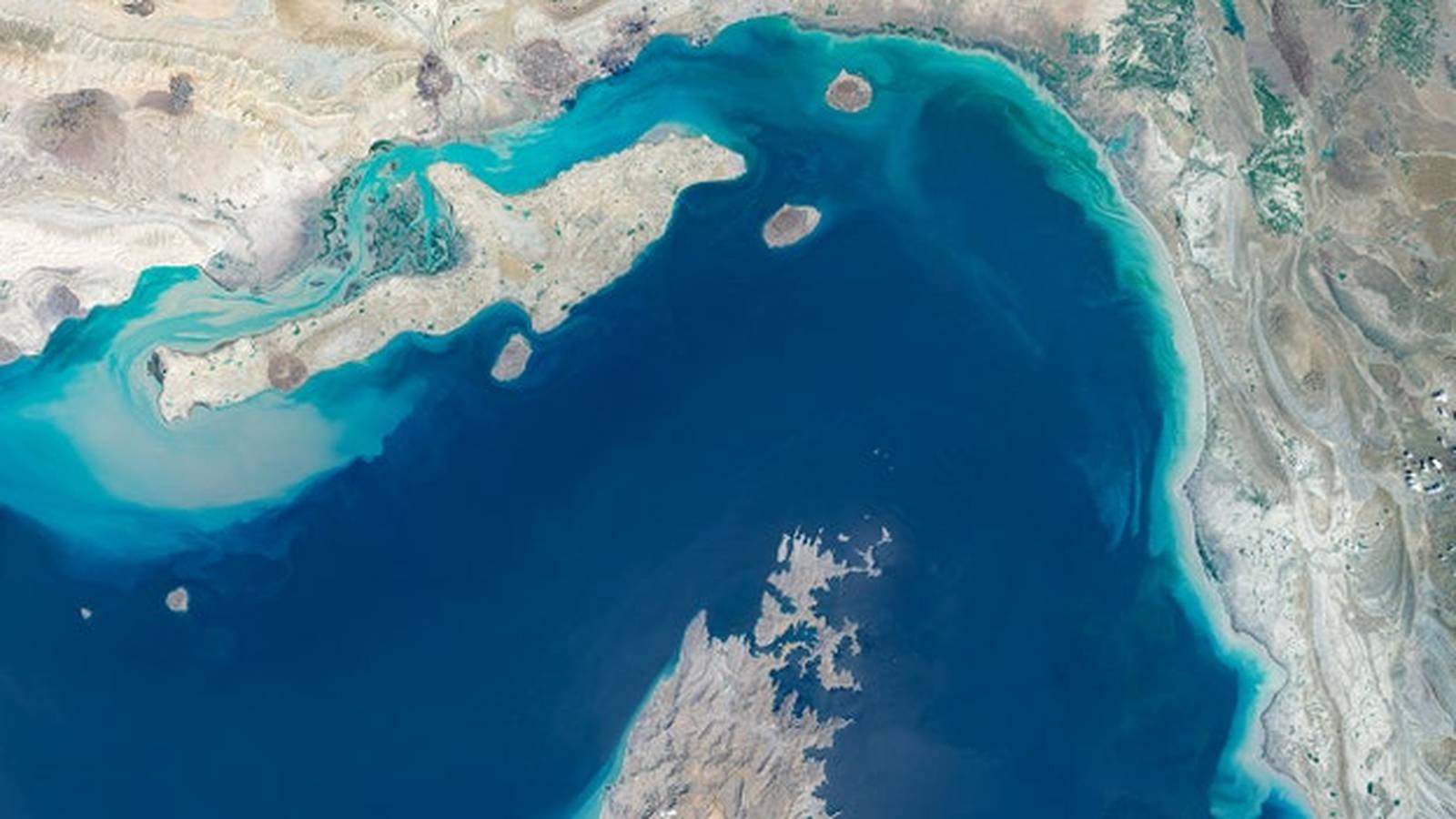
According to official statements from CENTCOM, the coordinated bombardment began at 12:00 p.m. ET, explicitly focusing on key command, control, and operational assets operated by the IRGC. U.S. strikes targeted critical air defense nodes and newly reconstructed radar capabilities, as well as maritime facilities linked to naval interdiction operations. Iranian state-linked media outlets, including Nour News and Nour-adjacent channels, reported heavy explosions near strategic coastal installations in Bandar Abbas, Qeshm Island, and Chabahar along the Persian Gulf and Gulf of Oman.
U.S. President Donald Trump confirmed the escalation, stating that American forces executed precision strikes against IRGC positions near the Strait of Hormuz to degrade Iran’s ability to disrupt international shipping lanes. Trump emphasized that U.S. units had neutralized Iranian attempts to deploy sea mines in the waterway and had intentionally waited for IRGC units to complete radar installations before destroying them. With over 50,000 U.S. service members deployed throughout the region and the aircraft carrier USS George Washington operating nearby, Washington signaled readiness to unleash further offensive power if Iranian retaliation persists.
Iranian Retaliation and Air Defense Responses
Within hours of the U.S. bombardments, Iran’s semiofficial Fars and Tasnim news agencies reported that the IRGC had launched a multi-directional counterstrike utilizing ballistic missiles and uncrewed aerial vehicles. Sirens sounded across several regions in Jordan, specifically in the Mafraq and Aqaba governorates. The Jordanian Armed Forces confirmed that their air defense systems engaged incoming threats, successfully intercepting 10 out of 13 ballistic missiles entering the kingdom’s airspace, while three missiles impacted unpopulated areas without causing injuries.
A senior U.S. official confirmed to Fox News that all American military personnel were fully accounted for and that the vast majority of Iranian projectiles launched toward regional positions were destroyed in transit. No major damage was observed at U.S. installations. However, questions remain regarding the internal command stability of the IRGC. U.S. officials noted that Iran’s command-and-control structure appears decentralized following the strikes, making it difficult to assess the exact operational status of senior IRGC commanders.
Energy Markets and Diplomatic Reactions
The sudden military intensification rocked global energy markets. Brent crude futures jumped 3.8% to $93.93 per barrel, while U.S. West Texas Intermediate (WTI) crude rose 4.3% to $89.48, reflecting acute fears over sustained supply bottlenecks through the Strait of Hormuz. Since the resumption of maritime blockades on July 14, at least eight commercial vessels have been targeted in the waterway, including four attacks reported over the past week by the United Kingdom Maritime Trade Organization (UKMTO).
At a G20 finance meeting in Asheville, North Carolina, ministers issued a joint call demanding free, safe, and predictable navigation through the Strait of Hormuz to sustain global economic stability. China was the sole G20 member to formally object to the resolution language. Meanwhile, on the sidelines of the Shanghai Cooperation Organization (SCO) summit in Bishkek, Iranian Foreign Minister Abbas Araghchi and President Masoud Pezeshkian held high-level talks with foreign leaders, with Araghchi asserting Iran’s right to self-defense against Western pressure. United Nations Secretary-General António Guterres also met with Pezeshkian in Bishkek, calling for immediate de-escalation and adherence to international law.
Strategic Outlook and Regional Stakes
The latest confrontation marks a major structural shift in U.S. posture toward Iran. President Trump publicly dismissed reports suggesting his administration was seeking to force Tehran back to nuclear negotiations, asserting that Washington holds a dominant strategic position while Iran’s economy faces severe degradation. He warned that any subsequent Iranian attack would trigger a far broader strike targeting core regime assets.
With Iran-aligned Houthi forces in Yemen voicing full solidarity with Tehran and threatening retaliation against regional bases hosting American forces, the potential for multi-front escalation remains high. Military analysts note that while immediate U.S. and allied air defenses held firm against Tehran’s missile salvo, sustained conflict around the Strait of Hormuz poses ongoing risks to global trade networks and regional stability.