


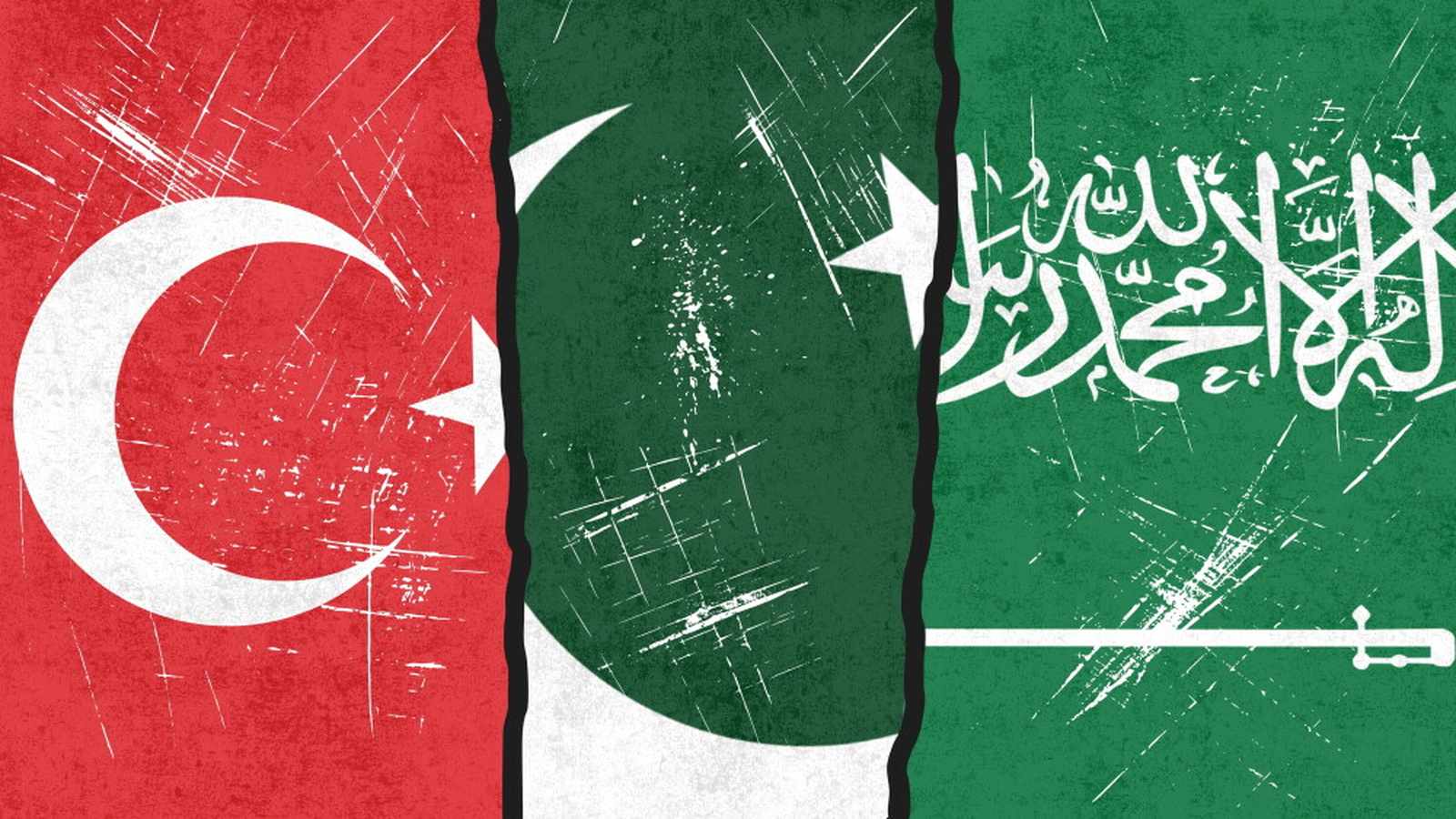
Escalating military actions by Iran-backed Houthi forces in the Red Sea and strategic maritime chokepoints have thrust Saudi Arabia into its most severe security crisis in years, testing the operational reality of the Mecca Joint Defense Agreement signed just weeks prior. Following a series of targeted strikes and maritime blockades, Riyadh faces the complex challenge of activating a defense pact meant for regional deterrence without triggering an unwieldy wider conflict.
Red Sea Blockade and the Closure of Saudi Energy Corridors
The immediate catalyst for the crisis emerged on September 11, 2026, when Houthi drone strikes damaged Saudi Arabia’s crucial East-West crude oil pipeline. The 750-mile infrastructure, designed to bypass the volatile Strait of Hormuz by transporting crude from eastern oil fields to the Red Sea port of Yanbu, was rendered inoperable, forcing Riyadh to halt operations.
Simultaneously, Houthi forces captured Perim Island, a dominant geographic location within the Bab el-Mandeb strait, effectively seizing control of one of the world’s vital maritime trade chokepoints. With the Strait of Hormuz already rendered impassable for Saudi-flagged shipping and the Houthis proclaiming a formal maritime blockade against the Kingdom, Saudi Arabia’s primary energy export routes have suffered unprecedented disruption. The situation has transformed from a localized Yemeni conflict into an existential threat to Saudi maritime and economic security, according to an analysis by the Middle East Forum.
The Mecca Framework: Collective Defense and Institutional Ambitions
The crisis comes on the heels of a landmark geopolitical shift. In August 2026, Saudi Arabia, Turkey, and Pakistan formally executed the Mecca Joint Defense Agreement. Designed to bridge historical bilateral military ties into a unified deterrence architecture across Afro-Eurasia, the pact anchored itself on a core principle: an armed attack against one signatory constitutes an attack against all.
Institutional momentum accelerated on August 31, 2026, when the inaugural Strategic Political and Defense Committee convened in Istanbul. Attended by foreign ministers, defense ministers, and military chiefs of staff from all three nations, the meeting established a permanent secretariat based in Saudi Arabia. The signatories committed to joint defense-industrial production, technology transfers, and military interoperability, signaling an intention to assume autonomous responsibility for security stretching from the Indian Ocean to the Black Sea, as reported by Daily Sabah.
Operational Limits: Deterrence Versus Direct Intervention
Despite the explicit collective defense clause, the practical application of the Mecca pact presents sharp diplomatic and operational friction. While Riyadh urgently seeks concrete security guarantees to reopen its trade corridors, officials in Islamabad and Ankara have stressed that the agreement is still in a consolidation phase and fundamentally defensive in nature.
Pakistani and Turkish strategists maintain that the pact is designed as a strategic deterrence umbrella against state-level military aggression, rather than an automatic commitment to deploy ground forces into active combat zones like Yemen. For Turkey, the alliance is explicitly tailored to complement, rather than replace, its NATO obligations and existing international commitments. Consequently, while intelligence sharing and logistical support may expand, direct foreign combat intervention around the Bab el-Mandeb remains a distant prospect, exposing a gap between Saudi expectations and its partners’ strategic constraints.
Expansion Horizons: The Strategic Roles of Egypt and Syria
As the initial signatories calibrate their response, the broader architecture of the Mecca pact points toward potential regional expansion, particularly involving Egypt and Syria. Cairo already maintains close strategic coordination with Turkey, Saudi Arabia, and Pakistan through the Regional Four (R4) mechanism. Bringing Egypt into the formal defense arrangement would unite the Eastern Mediterranean, Suez Canal, and Red Sea within a single security corridor. For Egypt, where Red Sea instability directly threatens Suez Canal transit revenues, participation aligns economic survival with maritime security.
Conversely, the potential inclusion of post-war Syria presents a structural model centered on state capacity reconstruction. While Syria requires border security, airspace protection, and deterrence against external intervention, the Mecca framework offers a tripartite support system: Saudi financial investment, Turkish military training and institutional expertise, and Pakistani defense-industrial cooperation. This dual trajectory—Egypt offering institutional deepening and Syria providing geographical continuity—could reshape the strategic landscape across the Levant and North Africa.
A New Strategic Realism for Afro-Eurasian Security
The ongoing Red Sea crisis underscores a fundamental evolution in Middle Eastern strategy: state security can no longer be decoupled from trade infrastructure, maritime chokepoints, and energy corridors. As traditional transit routes face growing vulnerability, securing alternative supply lines has become an urgent priority for regional capitals.
Whether the Mecca Joint Defense Agreement evolves into a resilient security structure depends on how effectively Riyadh, Ankara, and Islamabad navigate this first operational test. Balancing high-stakes collective deterrence with pragmatic diplomatic restraint will determine whether the Mecca pact becomes the anchor of Afro-Eurasian stability or remains an ambitious framework tested by asymmetrical warfare.