


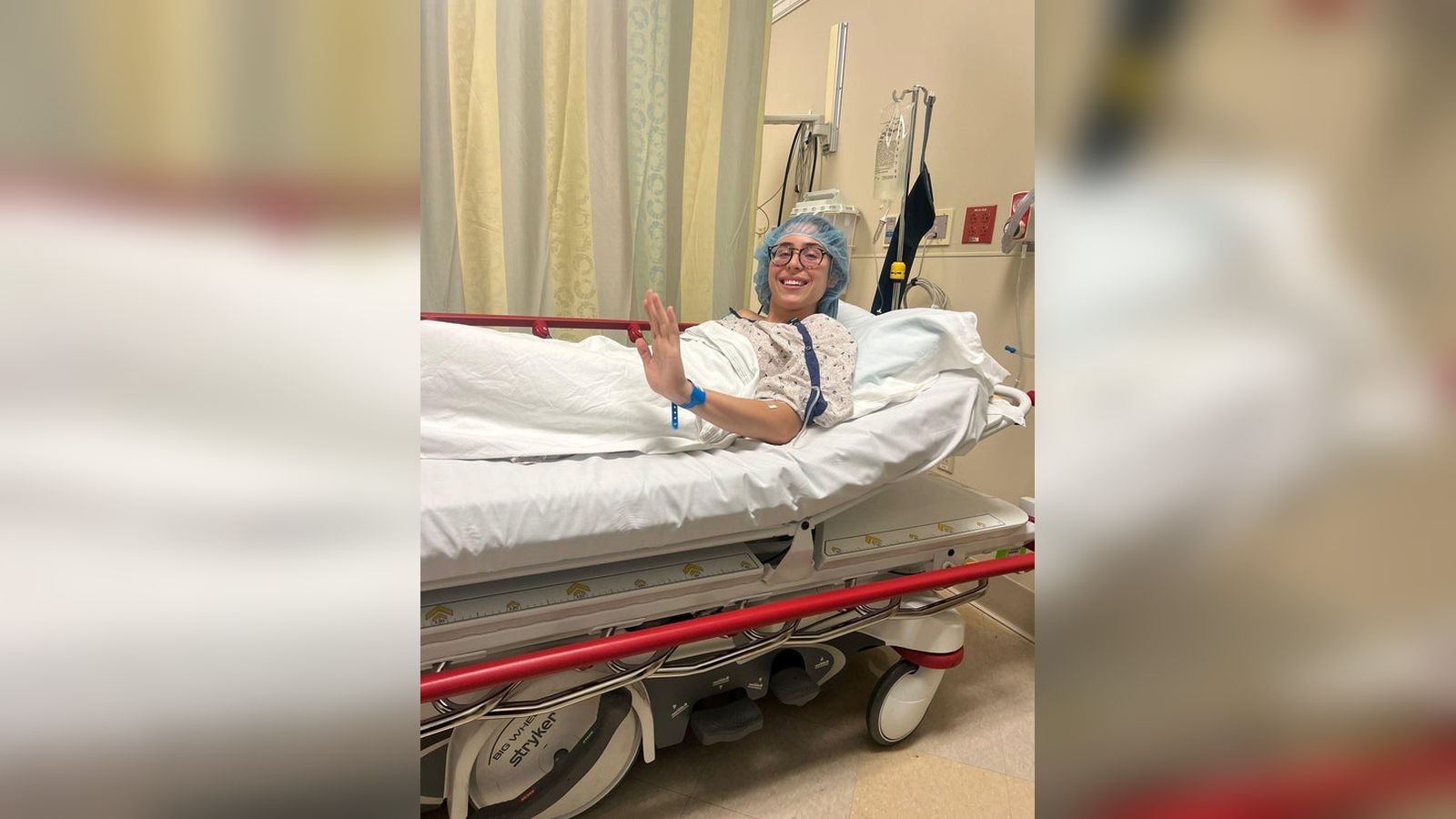
An Unsettling Start in the Diagnostic Waiting Room
When Andrea de Armas discovered a lump in her breast at age 26, her initial interaction with a medical technician set an uncomfortable tone. Preparing to begin a rigorous physician assistant training program, she sought medical evaluation despite having no known family history of breast cancer. Sitting in a waiting room filled predominantly with older patients undergoing routine scans already felt unsettling, she noted CBS News.
De Armas recalled that the technician appeared dismissive and unconvinced of the necessity of the procedure. “The tech had ‘Why are you here?’ vibes,” De Armas said. “Without her explicitly saying that, that’s exactly what she told me. I felt belittled and just weird.” However, a radiologist subsequently reviewed the scan and immediately recommended a biopsy, shifting the trajectory of her care.
Diagnosis and Genetic Findings
De Armas scheduled an appointment at Baptist Health’s Herbert Wertheim Cancer Institute for a secondary evaluation, which included another scan and a biopsy. Four days later, precisely on the eve of her physician assistant program’s start date, she received confirmation that the mass was malignant. Further medical evaluation revealed that she carried a genetic mutation associated with an elevated risk of breast cancer.
According to data from the American Cancer Society, approximately one in 10 new breast cancer diagnoses occur in women under 45, though diagnoses in individuals in their 20s remain much rarer, affecting roughly one in 1,344 women. Dr. Mary Gemignani, director of the Women’s Early Onset Cancer Program and chief of the Division of Breast Surgery at NYU Langone, noted that younger patients frequently face initial dismissal because of their age and are often diagnosed at later stages with more aggressive tumor subtypes.
Balancing Rigorous Treatment With Professional Training
Determined to continue her education, De Armas coordinated a flexible treatment schedule with her medical team. Dr. Cristina Lopez-Penalver, a surgical oncologist at Baptist Health who treated De Armas, facilitated a schedule where the patient underwent chemotherapy sessions at 6:50 a.m. before attending afternoon classes. She underwent a lumpectomy in June during a scheduled school break, followed by a bilateral mastectomy and reconstruction during winter break.
Now 30 years old and working in her field after graduating in 2025, De Armas is cancer-free but continues hormone therapy. The medication induced temporary menopause, presenting fertility decisions typical of the unique challenges younger patients encounter. De Armas encourages others to trust their instincts and advocate for their health despite initial hesitation or institutional skepticism.