


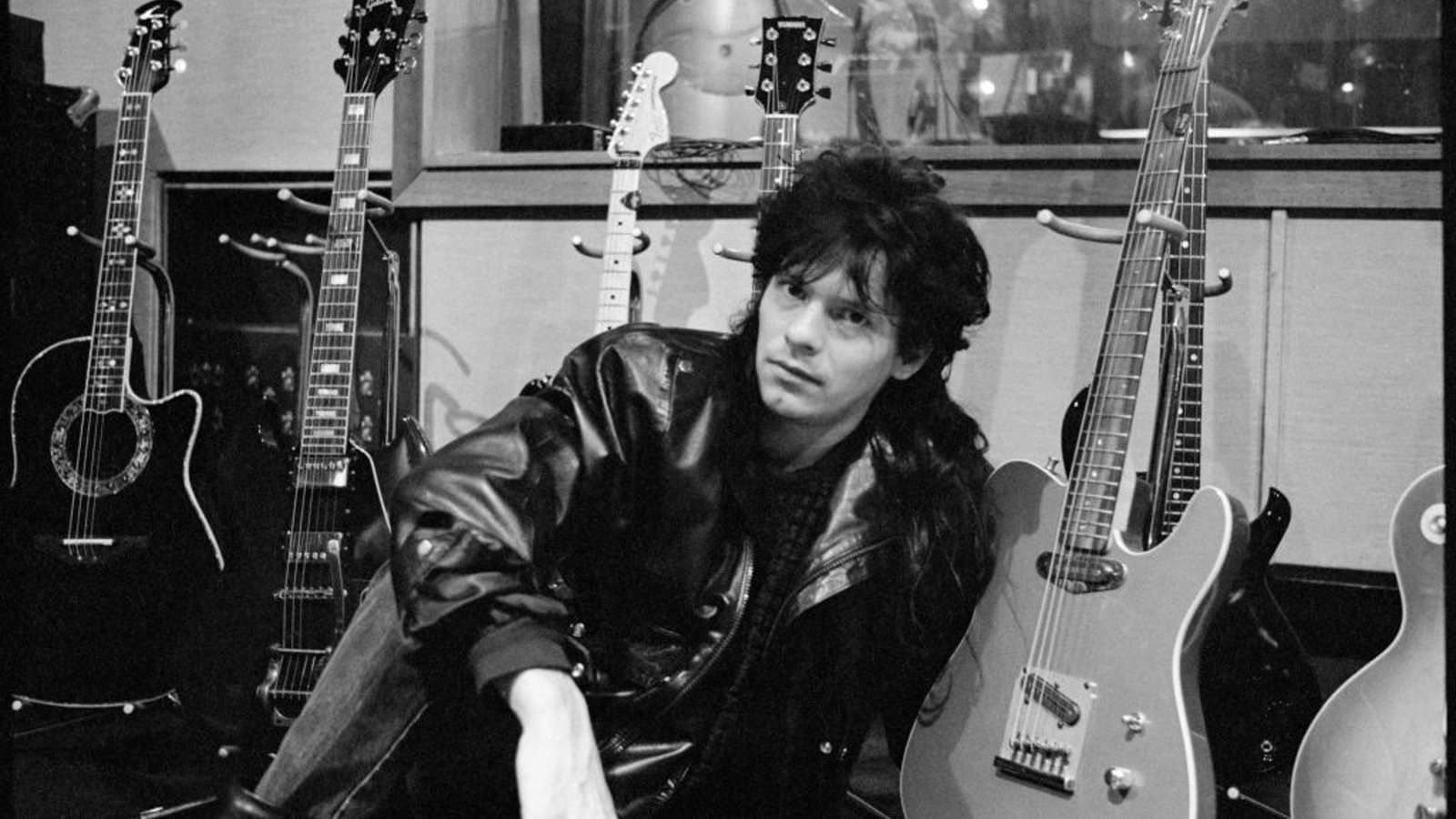
A Legacy of Musical Grit
Andy Taylor, the influential guitarist and founding member of the New Wave band Duran Duran, passed away at his home on Monday, November 23, 2026, at age 65. His family and the band confirmed the news in a joint statement released on Wednesday, November 25, citing his long-term battle with stage 4 metastatic prostate cancer. Taylor, known for his grounded, no-nonsense approach, leaves behind a legacy defined by his ability to bridge the gap between hard rock and the synth-heavy dance-pop that propelled the “Fab Five” to international superstardom.
Born in Tynemouth in 1961, Taylor brought a distinct “swagger” to the band’s sound. As reported by Time, his peers describe his role as foundational to the band’s commercial crossover. While the New Romantic movement was often associated with synthesizers and polished production, it was Taylor’s distorted guitar work—influenced by hard rock titans like AC/DC and Van Halen—that gave Duran Duran their unique commercial edge in the U.S. and beyond.
His unique fusion of hard rock grit with dance-pop precision became the foundational sound for Duran Duran’s international commercial dominance. Music critic Alexis Petridis noted that this traditional rock edge given to the group’s New Romantic disco sound proved particularly vital in the United States, a market that had historically rejected punk and glam rock while viewing disco with skepticism. By embedding a sharp, driving guitar tone into tracks like “Planet Earth” and “Girls on Film,” Taylor helped anchor melodic synth-pop into mainstream American rock consciousness.
The Architect of the ‘Fab Five’ Sound
Taylor’s path to fame began when he answered an advertisement in the music magazine Melody Maker in 1980 for a “live-wire guitarist.” His arrival in Birmingham marked the final piece of the classic lineup, bringing together keyboardist Nick Rhodes, bassist John Taylor, drummer Roger Taylor, and later frontman Simon Le Bon. John Taylor remembered his bandmate as a “killer riff-merchant” whose musical contributions, brought from the Northeast of England, remain unquantifiable. Critics note that his refusal to adopt the purely electronic aesthetic of his contemporaries allowed the band to survive the shifting trends of the 1980s.
His playing is immortalized in anthems such as “Hungry Like the Wolf” and “Rio.” Beyond his technical proficiency, he was viewed by lead singer Simon Le Bon as a “firebrand” who kept the group grounded. This technical versatility—shifting from the nuanced rhythms of funk to the raw power of rock—cemented his status as a key architect of the New Romantic sound. His influence extended through his work with the supergroup The Power Station, which he formed with Robert Palmer, Tony Thompson, and John Taylor in 1984.
Taylor’s career also spanned extensive production and songwriting work for other prominent artists. He co-wrote five tracks for Sir Rod Stewart’s 1988 album Out of Order, played the distinctive guitar solo on Belinda Carlisle’s 1986 hit “Mad About You,” and collaborated with Then Jerico frontman Mark Shaw, as well as indie pop duo The Ting Tings. Stewart, Carlisle, Shaw, and Robert Plant were among the numerous musical figures who paid tribute following the announcement of his death, emphasizing his enduring influence, professional rigor, and distinct creative vision across decades of modern pop and rock music.
A Lasting Impact
Following his departure from Duran Duran in 1986, Taylor pursued a solo career, releasing albums including 1987’s Thunder and 2023’s Man’s a Wolf to Man, though he eventually rejoined the group for the 2001 reunion and contributed to their recent studio projects, including the 2023 album Danse Macabre and a 2025 re-recording of “Shadows on Your Side.” His inability to join the band on stage for their 2022 Rock & Roll Hall of Fame induction was a poignant moment; in an open letter read by Le Bon, he publicly revealed his stage 4 metastatic prostate cancer diagnosis, expressing gratitude for his four bandmates whom he affectionately called brothers.
The band’s statement emphasized that throughout the accolades, recording sessions, and touring, Taylor’s heart remained firmly with his wife, Tracey Wilson, whom he married in 1982, and their children Georgina, Isabella, Bethany, and Andrew, alongside his grandson Albie. His passing marks the final chapter for the original lineup, leaving a profound void in the landscape of 1980s rock history while cementing an enduring legacy in both contemporary music production and prostate cancer awareness advocacy.