


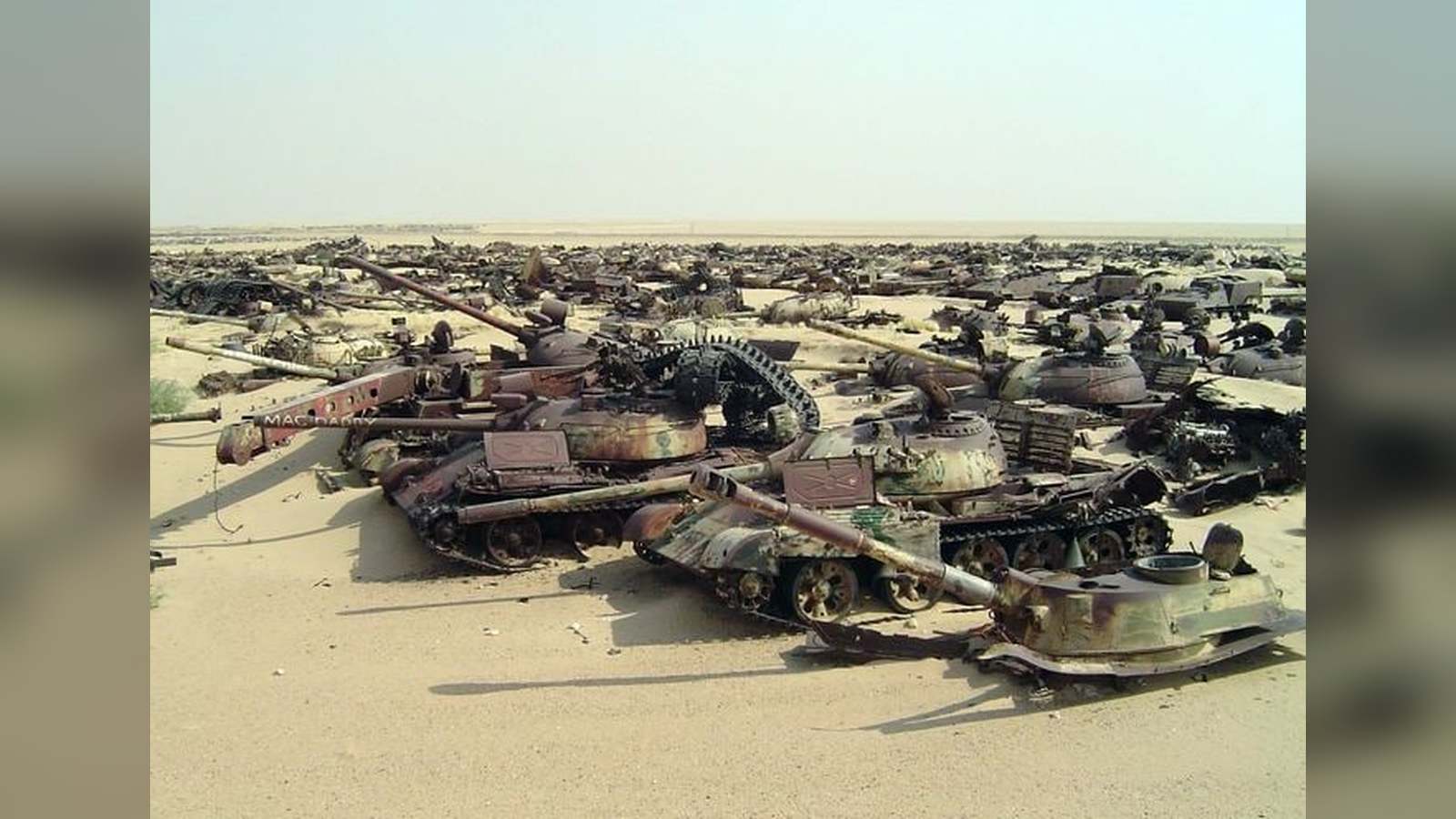
This photograph captures a sprawling, silent graveyard of Iraqi tanks, their steel hulls scorched, twisted, and abandoned in the aftermath of Operation Desert Storm in 1991. The image presents a stark, almost lunar landscape where the remnants of Saddam Hussein’s once-formidable armored divisions lie scattered across the Kuwaiti or Iraqi desert. By examining these gutted machines, we uncover the brutal efficiency of the coalition’s air and ground campaigns that effectively neutralized Iraqi military capabilities in mere weeks. This photograph is not merely a record of scrap metal; it is a visual manifesto of the end of the Cold War era of massed armored warfare.
What the photograph shows
The frame is dominated by the hulking, charred silhouettes of T-55 and T-62 tanks, their turrets often misaligned or blown off entirely by precision munitions. The surrounding desert floor is littered with debris, scrap metal, and the pervasive, fine dust of the Middle Eastern theater. The lighting, captured in the harsh, unforgiving glare of the desert sun, emphasizes the jagged edges of the torn metal, creating a sense of finality and decay that contrasts sharply with the sophisticated, lethal machinery these tanks once represented. One can observe the distinct lack of life in the frame; the absence of personnel turns these tanks into monuments of a failed strategy, where Soviet-era design philosophy was crushed by the rapid integration of satellite intelligence and precision-guided weaponry.
The moment behind the image
Taken in the immediate wake of the February 1991 ceasefire, such images were captured by journalists and military photographers documenting the sheer scale of the Iraqi defeat. The ground war, which lasted only 100 hours, saw the rapid collapse of Iraqi lines. Before this moment, the world held its breath, fearing a long, bloody conflict reminiscent of the Iran-Iraq War; after, the world was confronted with the visual reality of a technological landslide. The silence of the desert in the photo belies the chaos that occurred just days earlier, when these vehicles were subjected to relentless A-10 Warthog strafing and smart-bomb strikes.
Photographer and provenance
While many such images were captured by embedded photographers or military press pools during the mop-up phase of the conflict, they became iconic in the global press. The provenance of these images is often tied to wire services like Getty Images and the Associated Press, which distributed them to newspapers worldwide. Photographers in the field faced immense logistical challenges, working under strict military oversight and in hazardous conditions, often documenting the aftermath while unexploded ordnance still posed a threat. These photographs were intended to serve as the definitive visual record of the ‘New World Order’ era of warfare, where coalition air superiority rendered traditional armored combat obsolete. The lack of a specific individual credit on many of these wire photos reflects the institutional nature of the documentation process at the time.
Historical context
Operation Desert Storm was a response to the August 1990 invasion of Kuwait. By the time the coalition launched its counter-offensive in January 1991, the disparity in training, satellite intelligence, and night-vision technology was undeniable. The destruction of these tanks represents the end of the Cold War-era reliance on massed armor, ushering in an age where precision-guided munitions and electronic warfare defined the battlefield. The war was the first major conflict of the post-Cold War era, testing the resolve of a 39-country coalition and setting a precedent for international interventionism that would influence global politics for decades to come. The scale of the loss—estimated at 25,000 to 40,000 Iraqi deaths—stands in stark contrast to the coalition’s relatively light losses, highlighting the lopsided nature of modern high-tech warfare.
Why it still matters
This photograph remains a chilling reminder of the human and material cost of the 1991 conflict. It serves not just as a historical document of a specific military engagement, but as a cautionary image regarding the speed at which modern industrial warfare can erase an entire army’s offensive capability. As we look back, the image asks us to consider the legacy of the ‘New World Order’—a promise of stability that, as history has shown, proved far more elusive than the swift victory captured in this frame. The image serves as a timeless warning about the fragility of military might when confronted with overwhelming technological and strategic superiority.