


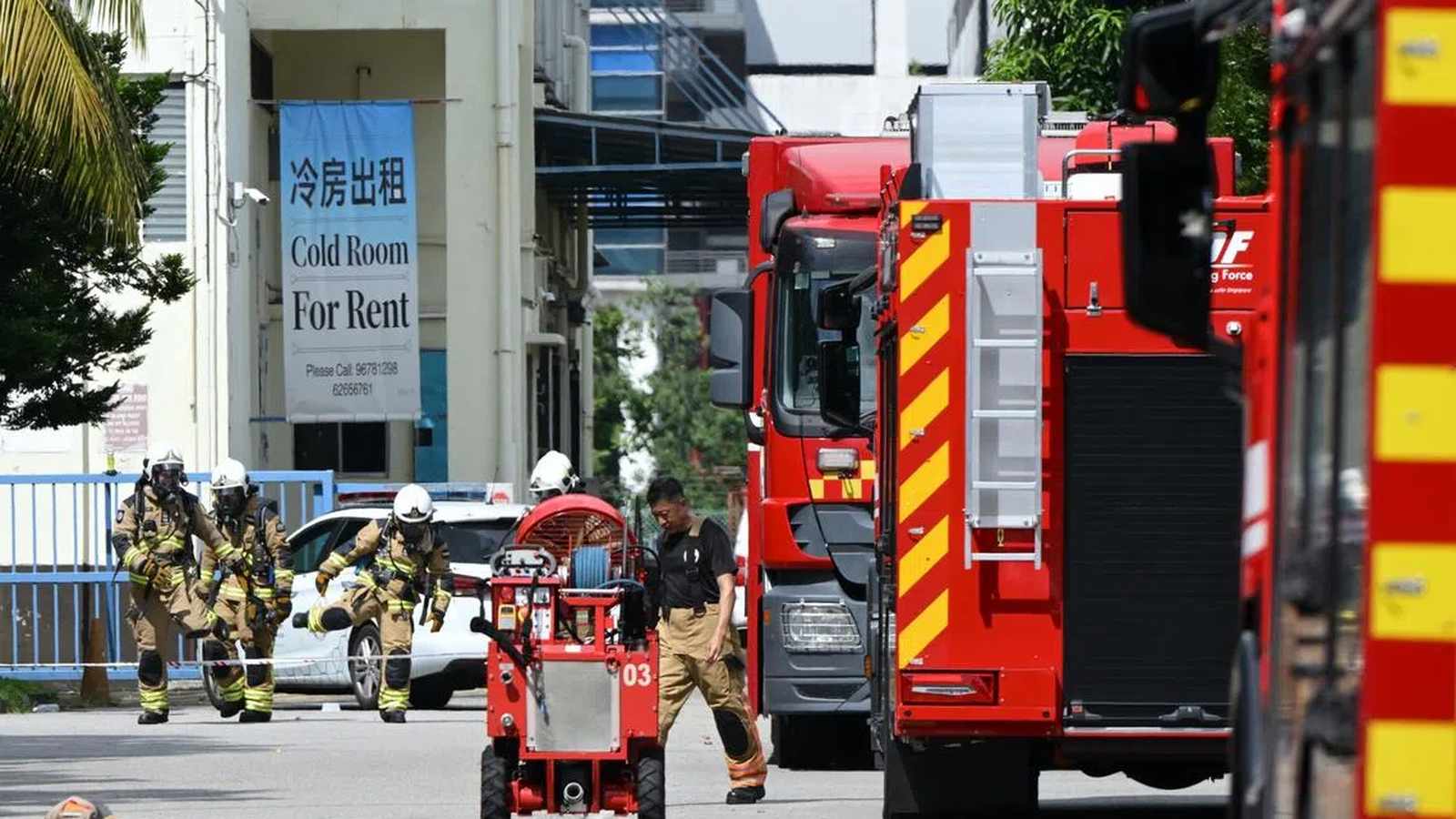
Two individuals were hospitalized following an ammonia gas leak at the Jurong Marine Cold Storage facility on Fishery Port Road in Singapore on June 29, 2026. The Singapore Civil Defence Force (SCDF) launched an emergency response after receiving a distress call at approximately 11:45 a.m., leading to the evacuation of the primary facility and two adjacent buildings at 9 and 15 Fishery Port Road.
Emergency Response and Containment
Upon arrival, SCDF HazMat specialists confirmed the presence of ammonia within the compound. The leak was subsequently traced to a pipe inside one of the facility’s rooms. Emergency teams successfully shut off the supply valve to the compromised pipe, and by 4:45 p.m., official readings confirmed that the leak had been fully contained, allowing for the reopening of the area.
While two individuals were transported to Singapore General Hospital for treatment related to ammonia vapor exposure, the severity of their condition remains undisclosed. Employees from the affected and neighboring buildings were permitted to return to their premises by 5:00 p.m. as the cordon was lifted.
Industrial Safety Implications
Ammonia is a standard, albeit hazardous, refrigerant utilized in large-scale cold storage and ice-manufacturing facilities. The incident highlights the inherent risks associated with industrial cooling systems. While such leaks are infrequent, they pose significant health threats to personnel, as ammonia exposure can cause severe irritation to the skin, eyes, and respiratory system.
The operational disruption at Fishery Port Road underscores the vulnerability of the local cold supply chain. Several ice delivery vehicles were left stranded during the containment operation, highlighting the logistical stakes involved when safety protocols necessitate immediate site closure. Industry experts note that regular maintenance and strict adherence to safety audit protocols are essential to preventing similar failures in high-pressure refrigeration infrastructure.