


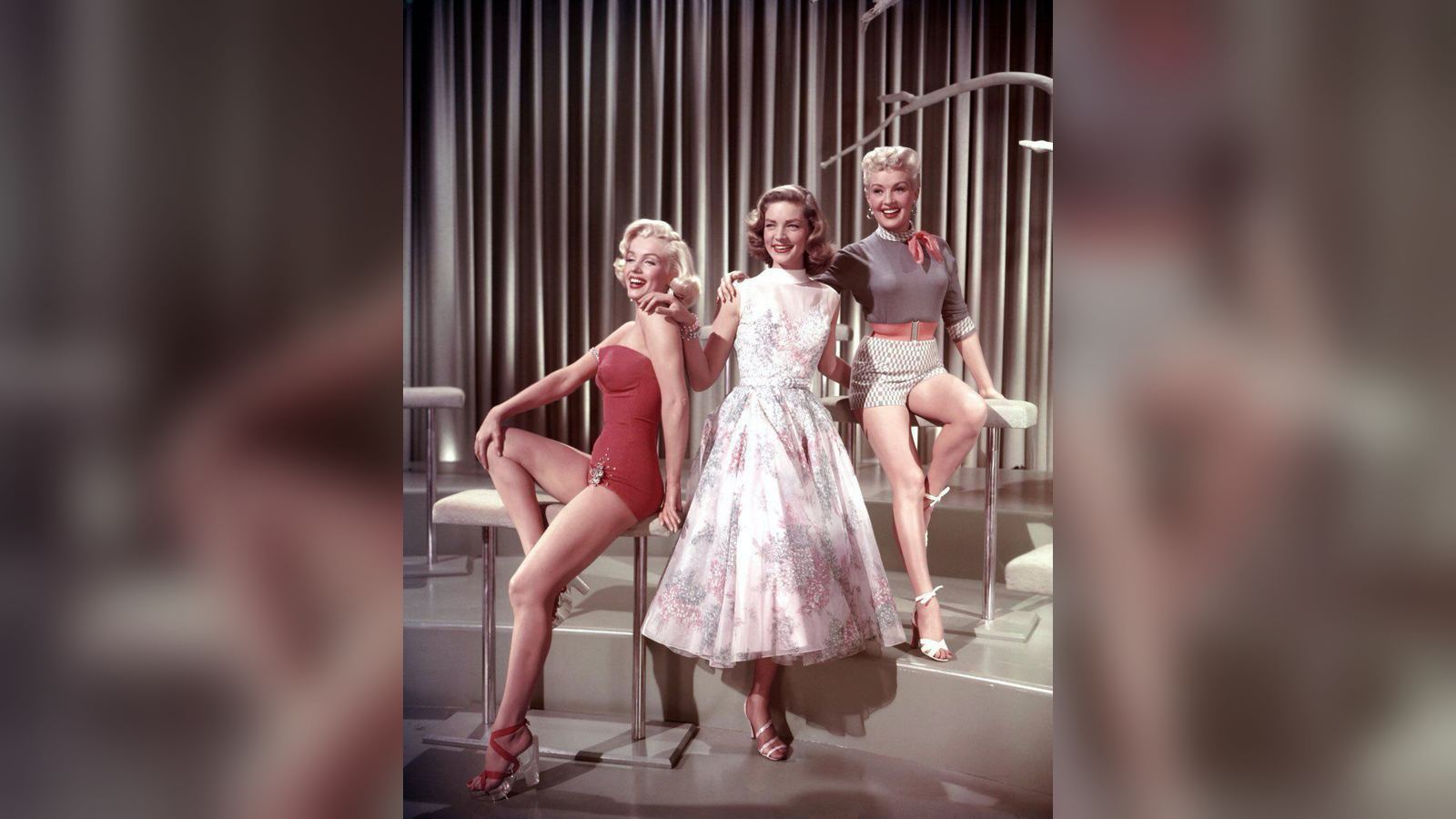
This striking studio photograph, captured in the summer of 1953, presents a masterclass in Hollywood image-making: three of the era’s most formidable actresses—Marilyn Monroe, Lauren Bacall, and Betty Grable—stand shoulder to shoulder, radiating a synchronized, high-gloss glamour designed to sell a cinematic dream. Taken to promote 20th Century Fox’s romantic comedy How to Marry a Millionaire, the image is far more than a routine publicity still. It captures a fleeting moment of equilibrium among three women who represented distinct generations, styles, and philosophies of stardom. This article explores the meticulous craftsmanship behind this photograph, the industrial anxieties that birthed it, the surprising reality of the actresses’ relationship behind the scenes, and how this single frame became a monument to the twilight of the classic studio system.
What the photograph shows
In this carefully composed studio portrait, the physical arrangement of the three stars speaks volumes about their respective status and the archetypes they embodied. Betty Grable, the undisputed queen of the 1940s musical and the ultimate World War II pin-up, occupies a central, anchoring position. Her warm, open smile and classic blonde styling exude the wholesome, accessible charm that had made her the studio’s highest-paid asset for over a decade. To her left, Lauren Bacall provides a sharp, sophisticated counterpoint. With her signature tilted head, smoky, heavy-lidded gaze, and structured dark hair, Bacall projects an aura of modern, intellectual independence—a stark contrast to the traditional studio bombshell. On the right, Marilyn Monroe captures the lens with a luminous, soft-focus allure. Her platinum hair, parted lips, and vulnerable yet magnetic expression hint at the hyper-feminine persona that was rapidly capturing the global imagination. The three women are dressed in coordinated, luxurious evening wear designed by the legendary William Travilla, their gowns clinging to their figures in a way that emphasizes both their individual silhouettes and their collective visual harmony. The lighting is soft yet highly directional, characteristic of mid-century studio portraiture, casting gentle shadows that accentuate their cheekbones and the rich texture of their garments, while the neutral, uncluttered background ensures that the viewer’s focus remains entirely on their faces and forms.
The machinery of the studio portrait
This image was produced on the 20th Century Fox studio lot in Los Angeles, California, under the strict supervision of the studio’s powerful publicity department. While individual promotional stills from this session are often credited to contract photographers like Frank Powolny—famous for his iconic portraits of Monroe—or Gene Kornman, the collective output of these sessions was managed as a corporate asset, distributed globally to newspapers, fan magazines, and theater lobbies. The working conditions for such shoots were highly controlled; the actresses spent hours in hair and makeup before being guided onto a specialized portrait stage where large-format 8×10 cameras were used to capture every detail with pristine clarity. These promotional sessions were grueling, requiring the stars to maintain rigid, physically demanding poses under hot studio lights while projecting an effortless ease. The survival and wide circulation of this particular photograph are due to its success as a marketing tool; it perfectly encapsulated the film’s premise of three women pooling their resources to conquer New York’s high society, while simultaneously reassuring the public of the film’s immense production value.
Behind the smiles: On-set dynamics and the passing of the torch
The immediate historical context surrounding the photograph was charged with industry tension and intense media scrutiny. Before and during the production of How to Marry a Millionaire, gossip columnists eagerly predicted a catastrophic clash of egos on the set, particularly between the veteran Grable and the ascendant Monroe. The studio system thrived on manufactured rivalries, but the reality behind this photograph was remarkably different. Grable, weary of the studio’s demanding schedule and already contemplating her departure from Fox, was famously supportive of Monroe, reportedly telling her, “Honey, I’ve had mine. Go get yours.” Bacall, too, acted as a protective, grounding presence on the set, helping the notoriously anxious Monroe navigate her deep insecurities and chronic lateness. The photograph, therefore, represents a genuine, albeit highly stylized, moment of solidarity. It also marks a historic passing of the torch: How to Marry a Millionaire would be one of Grable’s last major films for Fox, signaling the end of her reign, while it solidified Monroe’s transition from a novelty blonde to an A-list box office powerhouse.
The widescreen battle against television
To fully understand the urgency behind this image, one must look at the technological revolution happening in Hollywood in 1953. The film industry was facing a devastating existential threat from the rapid rise of household television. In response, 20th Century Fox mogul Darryl F. Zanuck bet the studio’s entire future on CinemaScope, a new anamorphic widescreen process that promised an immersive, grand experience that television could not replicate. How to Marry a Millionaire was the first film shot in CinemaScope to be completed, though it was released second. This promotional photograph had to convey that same sense of modern, wide-format luxury. The horizontal composition of the three stars, standing side by side, mirrored the widescreen format of the movie theater, signaling to audiences that they were about to witness a new era of cinematic spectacle. The image was a visual promise of abundance: more stars, more glamour, and a wider canvas than ever before.
Why the image endures
Today, this photograph survives as a poignant monument to a bygone era of cinematic history. Within a decade of this shoot, the classic studio system that engineered this image would begin to disintegrate, giving way to independent productions and a more cynical, raw style of filmmaking. The subsequent fates of the three women add a layer of melancholy to the frame. Grable would fade from the cinematic spotlight, transitioning to stage work before her death in 1973. Bacall would maintain a long, respected career, becoming a symbol of Old Hollywood resilience until her passing in 2014. Monroe’s trajectory, however, would be the most dramatic and tragic; her struggles with anxiety, depression, and substance abuse—hinted at by friends like James Bacon who noted her dangerous mix of pills and alcohol—would culminate in her shocking death in August 1962 at the age of 36. Looking at this 1953 photograph, we see these three legends frozen in a moment of absolute, pristine perfection, untouched by the tragedies and changes that lay ahead, forever united by the brilliant, artificial light of the Hollywood dream.